
Topic starter
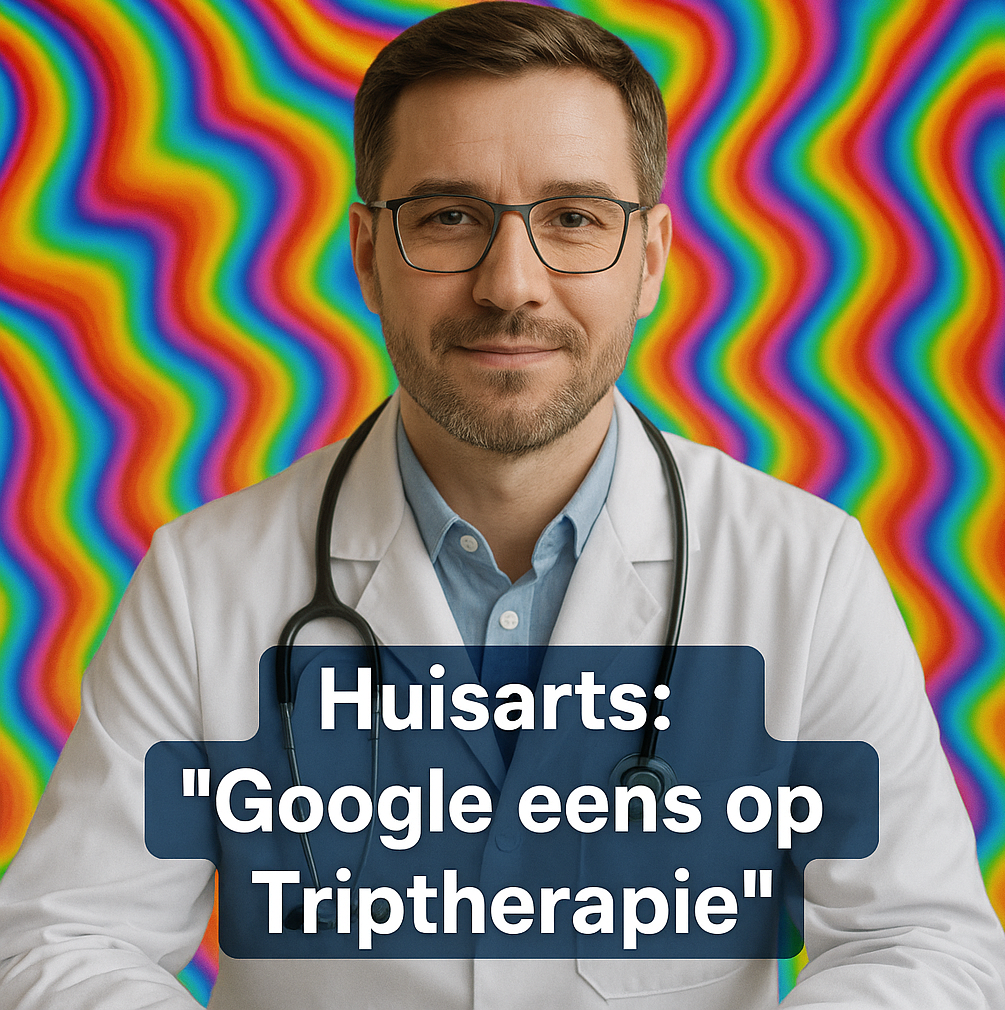
At Triptherapie, we have noticed in recent years that an increasing number of general practitioners, particularly in and around Amsterdam, Haarlem, Leiden, The Hague, Utrecht, and Rotterdam, are unofficially referring their patients to our psychedelic guidance. This often happens with a neutral suggestion such as “Try Googling Triptherapie.” General practitioners are not permitted to make official referrals, but the willingness to mention alternative options is clearly growing. Partly for this reason, we have created a tool to make it easier for GPs to properly inform and support clients.
Experiences of clients and general practitioners
We have meanwhile helped more than 3,000 customers, often with very positive effects. Many of these clients have shared their experiences with their GP, sometimes immediately after a session. Several GPs with whom we have come into contact confirm that it was precisely these personal stories that got them thinking. As a result, it is becoming increasingly common for them to refer patients to Triptherapie as a possible path.
In addition, it occasionally occurs that a general practitioner, not in the role of treating physician but as confidential advisor, is present at a session. This usually happens when the client explicitly requests it and there is a strong bond of trust. The general practitioner then remains outside the substantive guidance, but can offer support and safety by simply being present.
The legal and professional frameworks
General practitioners work within the guidelines of the NHG (Dutch College of General Practitioners) and fall under the BIG Act. They may inform patients about options, but may not make an official referral to treatments outside regular care. Psychedelic sessions with legal substances, such as psilocybin-containing truffles, do not fall under regular care and are therefore not reimbursed.
What is allowed is patients inform about the existence of alternative routes, as long as this is done neutrally. So, for example, a general practitioner can say: “There are organizations that facilitate psychedelic sessions, such as Triptherapie. It does not fall under regular healthcare, but you can explore for yourself whether this is something for you.”
Why GPs mention Triptherapie more often
The growing attention to Triptherapie among general practitioners appears to be caused by a combination of factors:
-
Limits of conventional treatments. Patients on antidepressants or cognitive behavioral therapy often experience insufficient improvement.
-
Supporting research. Scientific studies increasingly show that psilocybin and LSD can be effective for depression, anxiety, and addiction.
-
Client experiences. Our more than 3,000 clients have often achieved such positive results that they share this with their GP, which prompts doctors to suggest alternatives.
-
Direct involvement. The occasional request from clients to have their GP present at a session as a trusted person makes doctors feel more personally involved with Triptherapie.
- Media attention: Increasingly media report on the efficacy of psychedelics!
The medical responsibility
When a GP mentions Triptherapie or is even present as a confidant, he or she remains medically responsible for the actual GP care. This means, among other things:
-
Discussing risks and contraindications (for example, medication interactions or psychiatric sensitivities).
-
Assessing whether regular care or a mental health referral is necessary first.
-
Ensuring a neutral role in alternative pathways.
To make it easier for general practitioners to look up which medication or other contraindications apply, we have an adapted psychedelic ChatGPT available that combines standard knowledge with data from our site. You can type in a condition or medication here, like the example: psilocybin and venlafaxine. The answers serve as non-medical advice that can be further elaborated and validated by the general practitioner or psychiatrist.
Legal and ethical boundaries
The difference lies in the nuance:
-
Allowed: Neutrally point patients to alternative options such as Triptherapie, and be present as a confidant at the client's request.
-
Not allowed: an official referral or prescribing a treatment pathway that falls outside the regular healthcare system.
Conclusion
Although general practitioners are not permitted to make formal referrals to Triptherapie, we observe that doctors, particularly those working in the Randstad area, are increasingly recommending us unofficially. The positive experiences of our more than 3,000 clients play a major role in this. Sometimes this involvement even extends to a general practitioner attending a session as a trusted confidant. All of this confirms that Triptherapie is becoming increasingly visible as a valuable alternative within the broader search for mental health and well-being. Clients referred by a general practitioner should, just like other clients, to complete intake with us.
Posted : 13 September 2025 13:40