19 November 2024 10:42
Topic starter
3

Why are so many ayahuasca sessions still being conducted in the Netherlands, even after the Supreme Court ruling that it is no longer allowed?
5 Answers
5
3 September 2025 14:33

4
3 September 2025 14:38

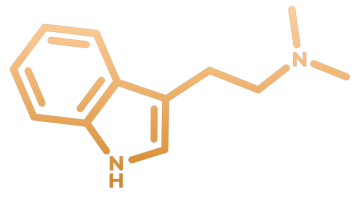
In October 2019, the Supreme Court definitively ruled that ayahuasca falls under the Opium Act and is therefore prohibited. The hallucinogenic brew contains dimethyltryptamine (DMT), a hard drug on List I of the Opium Act. The Supreme Court ruled that the ban a permitted restriction of religious freedom constitutes due to the risks to public health. This put an end to the tolerated status that the Santo Daime church, for example, had held for years to use ayahuasca as a religious sacrament. Previous courts had initially permitted their use under Article 9 of the ECHR (freedom of religion), because at the time no significant health risk was assumed. However, it is now clear that ayahuasca well is considered a risk due to side effects such as vomiting, diarrhea, and potentially uncontrolled use.
Continuation of ceremonies: motives and working methods of organizers
Despite the ban, ayahuasca ceremonies continue to take place in the Netherlands.. Both providers and participants have strong motives for this. Many people seek spiritual deepening, psychological healing, or treatment for depression and trauma in ayahuasca. Where conventional care falls short, they hope to find insight and healing through these plant remedies. Indigenous traditions (e.g., Amazonian tribes such as the Shipibo) even consider ayahuasca to medicine and part of centuries-old cultural rituals – not a “drug” in their eyes. Organizers therefore often present themselves as shaman or therapist who offers safe guidance within a ceremonial framework. They act “undoubtedly with good intentions” and believe they are helping people with life's questions. Legally, some rely (in vain) on freedom of religion or on the cultural value of ayahuasca. For example, the Brazilian Santo Daime congregation views the tea as a holy sacrament, but according to the Supreme Court, these arguments do not outweigh the health risks.
Method and services: Following the ban, the offerings have gone more underground, but certainly have not disappeared. Many ceremonies are organized through private circles, private addresses, or small-scale “retreats” in the countryside. Recruitment is often done by word of mouth or via closed online groups. A few providers promote themselves via specialized platforms or international retreat websites – this shows that dozens of locations are still active in the Netherlands. They advertise using terms such as “plant medicine retreat” or “healing ceremony”, sometimes in combination with other substances (e.g., truffles or San Pedro cactus) to attract less attention. Participants often pay for such a session (hundreds of euros per weekend), giving the offering a semi-commercial character. At the same time, organizers emphasize exclusivity and safety: participation usually requires an intake and registration, with supervision during the night. Because open advertising is risky, providers are more likely to be found through spiritual networks, wellness centers, or international forums than through regular media. The result is a partially underground circuit in which ayahuasca actually tolerated becomes in practice – at least, as long as no problems arise.
Organizers often fall short in their justification cultural and therapeutic arguments on. They point out that ayahuasca has traditionally been used safely for centuries under the guidance of a shaman. Some also refer to scientific interest: research suggests potential against depression and PTSD. In talk shows, well-known Dutch figures emphasized the positive insights ayahuasca gave them (e.g., entrepreneur Duncan Stutterheim, who changed his lifestyle after a ceremony). In their view, such arguments create a gray area: although strictly speaking illegal, they see ayahuasca as valuable ritual or even as a form of (alternative) therapy instead of drug use. Culturally, they state that their ceremony is spiritual gathering is comparable to a religious service, and not a “recreational drug party”. These beliefs explain why one, despite the ban, continues with sessions.
Government approach and enforcement
Since the ban, the government explicitly considers ayahuasca ceremonies illegal, and enforcement agencies take action against them. Police and Public Prosecution Service (OM) are the main players in enforcement. For instance, multiple raids have been carried out at ceremonies or retreat centers, resulting in the seizure of large quantities of ayahuasca tea. In a notorious case in Eersel (Brabant), following the death of a participant, the police found 12 kilos of ayahuasca in a residential home where sessions regularly took place. The foreign organizers (a company named Inner Mastery International) were arrested and prosecuted – not for murder, but for possession and distribution of the prohibited substance DMT. This illustrates the Public Prosecution Service's line: if a direct link to injury or death is difficult to prove, at least drug offenses charged. For example, in 2022, the Haarlem District Court sentenced two facilitators to community service for the “intentional processing, provision, and transport” of 350 grams of ayahuasca brew. The sentence was harsher because they also offered ayahuasca to outsiders (not just close friends) for payment – it therefore had a business character. Smaller-scale or private ceremonies within a circle of friends are given lower priority, but the police can intervene there as well if they become aware of them. The East Netherlands Police indicated that the ban is “still new” and that officers initially had to get used to actively enforcing where they previously sometimes held such ceremonies tolerated. Meanwhile, the police and municipalities are consulting on how to take action against spiritual sessions where the tea is served..
In addition to criminal prosecution through the Public Prosecution Service, municipal authorities intervene. Mayors have powers based on public order to close locations or ban gatherings if drugs are used there. For example, in 2019, the Mayor of Arnhem (Ahmed Marcouch) urged the Public Prosecution Service to conduct an investigation and to act immediately against ayahuasca ceremonies in his city. Marcouch called the sessions “too dangerous” and warned that participants could endanger themselves or others due to hours of hallucinations. Under this pressure, an Arnhem-based organization (“Beyond Illusion”) voluntarily ceased its ceremonies. There is also increased vigilance in other municipalities: if a building or yoga center holds “tea ceremonies” suspiciously often, the mayor can issue a warning or close the premises under the Damocles Act due to drug use. The Health and Youth Care Inspectorate (IGJ) It can also play a role when providers promote ayahuasca as a medical treatment. Although there is little public case law regarding this, the IGJ will take action against irresponsible care practices – for example, when unauthorized “therapists” work with this illegal substance and thereby endanger health. In practice, however, primary enforcement lies with the police and the judiciary.
Response to incidents: injuries, fatalities and consequences
Every serious incident during an ayahuasca ceremony attracts the attention of authorities. In the event of injury or death of participants, an investigation almost always follows. and often criminal prosecution. In recent years, multiple fatal incidents have been reported. For example, a 31-year-old Hungarian died in April 2019 after a session in Eersel, and shortly thereafter a Russian man died after a ceremony in Haarlem by the same organization.. In both cases, the facilitators involved were arrested; ultimately, they were prosecuted for possession/supply of the prohibited tea, because a direct causal link between the death and ayahuasca was difficult to establish.. A more recent example is the Heesselt case: in 2022, a 35-year-old Belgian woman died during a weekend “healing” session. The Public Prosecution Service found the two Dutch organizers guilty of manslaughter (negligence) and demanded 12 months in prison. It was stated that the suspects acted irresponsibly – they served the woman a mix of psychedelic mushrooms, capi-vine (ayahuasca component) and other substances, had her drink an extreme amount of water, and offered no medical help when she lost consciousness. However, the Arnhem District Court acquitted the duo of manslaughter in early 2025, ruling that they could not have foreseen that this combination would prove fatal.. However, they did receive a fine of €1,000 for the possession and distribution of the illegal magic mushrooms..
These lawsuits show that the Public Prosecution Service is prepared to take criminal proceedings after incidents, but also that a conviction for the death itself is not a given – partly due to complex evidence regarding the cause (was it the ayahuasca, a combination with medication, lack of medical care, etc.). Nevertheless, fatal incidents invariably lead to action: at the very least, providers are legally prosecuted for drug trafficking. Also policy-related Such events lead to stricter oversight. Every death or serious injury fuels the public debate about the risks of ayahuasca, putting pressure on politicians and government to intervene more forcefully. For instance, following the incidents in 2019, the call for enforcement grew louder, and the “proliferation” of ayahuasca providers was explicitly identified as a problem. Experts warned that groups with insufficient knowledge were active, which can result in life-threatening situations.. Such signals have made municipalities and the police more alert and have contributed to the grace period was definitively terminated in 2019.
This has not needed to lead to actual new legislation – the existing Opium Act suffices to prohibit ayahuasca, and it is now strictly enforced. However, we do see locally policy initiatives: providing information about the dangers, discouraging such ceremonies, and consultation between authorities to prevent incidents. Furthermore, when a participant dies, it is examined whether those responsible can potentially be dealt with more severely (for example, prosecution for negligence or – in extreme cases – even manslaughter). For instance, in a single case in Belgium, an organizer was convicted of manslaughter after administering ayahuasca, which is also fueling the debate in the Netherlands about whether stricter penalties are possible..
In summary, the government responds to incidents with a mix of enforcement and warning: punishment for the offenders, and renewed emphasis on the ban and the dangers. Every serious incident leads policymakers to reconsider whether additional measures are needed. For the time being, the course remains: actively detect and prevent ayahuasca ceremonies, especially involving commercial providers or when there are signs of dangerous practices. The era of tolerance is over – but practice shows that underground interest in these “plant medicine” rituals remains undiminished. The challenge for the authorities is therefore ongoing: maintain to protect health, without the phenomenon completely disappearing from view.
2
7 September 2025 09:19

In the Netherlands, the government is not yet that strict, but in the Czech Republic, Mauro (well-known underground in the Dutch ayahuasca scene) was arrested for possessing ayahuasca. Previously, a couple who organized these ceremonies there had already received an 8-year sentence. So be careful where you take the risk. Right now, it is still okay in the Netherlands, but you never know if it might suddenly become stricter.
1
5 September 2025 12:25

So it is only possible if you don't mind participating illegally. The risk of a raid during such an underground ritual is reasonably small, which is why people still do it through word of mouth.
0
7 September 2025 20:54

In the Netherlands, there is increasing crackdown on drugs, and that includes ayahuasca. I also don't understand why people are willing to take such risks and specifically choose to use ayahuasca in countries with a ban. In the Netherlands, you can get pretty far with truffles and their variants. For ayahuasca, you are better off actually going to the Amazon and doing it in the completely traditional way. That is better, and it is legal in many countries there.