28 March 2024 19:24
Topic starter
0

Can ego death help with depression?
Yes, according to various users of psychedelic substances, ego death can help with depression. Ego death is the loss of the ego, the feeling of a separate self. During an ego death experience, the boundaries between the individual and the rest of the world blur, allowing one to experience a sense of unity and connectedness.
Depression is often associated with an overactive ego that constantly criticizes itself and reinforces negative thoughts and emotions. By experiencing ego death, the ego can be temporarily switched off, allowing one to break free from negative thought patterns and limiting beliefs that contribute to depression.
During an ego-death experience, one can experience a deep sense of connection and love, which can lead to a feeling of liberation and healing. It can help release old emotional blockages and gain new perspectives and insights. This can lead to a change in the way one views oneself and the world, and can help in overcoming depression. An ego-death experience is not a guarantee nor an official treatment for the permanent cure of depression, but it can be a valuable part of a holistic approach to depression treatment.
More info: Ego death in depression
3 Answers
1
21 May 2025 09:24

Depression is a serious condition that affects many people worldwide. Traditional treatments such as therapy and antidepressants do not work equally well for everyone. Increasingly, scientists and therapists are looking at psychedelic substances (such as psilocybin, the substance in magic mushrooms and truffles) as a possible supplement. A striking concept that emerges in this context is “ego death” – the temporary disappearance of the feeling of a yourself. Could such a deep, spiritual experience during a psilocybin session help with depressive symptoms? In this article, we explain what ego death is, how it might contribute to recovery from depression, and examine both scientific insights and personal experiences of users.
What is an 'ego death'?
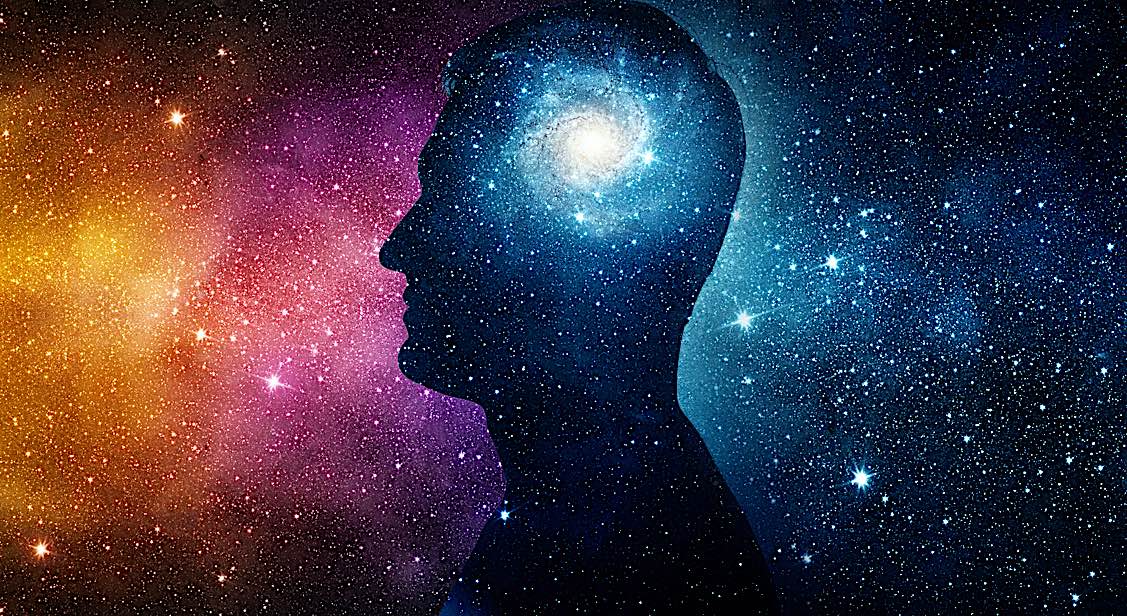
Image: Artistic impression of “ego death” – the feeling that your ego dissolves into something infinitely larger (depicted here as a human silhouette merging into a galaxy). During a psychedelic trip, this type of experience can occur: one temporarily loses the sense of being a separate individual and feels completely one with the environment. A ego death (also ego-death (mentioned) implies that a person's sense of a defined “self” temporarily disappears. Boundaries between oneself and the rest of the world blur completely. People who experience this often describe an overwhelming feeling of oneness with everything around them – as if they to rise in the experience. A metaphor: imagine that your consciousness is, as it were, a wave in the ocean. Normally, you experience yourself as that separate wave, but during ego death, you realize that you were actually always part of that vast ocean. The “I” merges with the whole. This can be accompanied by intense feelings of connectedness, love, and insight. Such an experience is usually only possible with a high dose of psychedelics (for example, a trip level 5 with psilocybin truffles, the very highest intensity) under the right conditions.
The concept might sound abstract or even frightening – you ego Losing is no small thing. Yet, many people actually report it as something positive and liberating. After all, during an ego death, all worries, fears, and inhibitions that normally circle around in your head also temporarily disappear.. You could say that the “little voice” of self-criticism and doubt falls completely silent for a moment. What remains is a state of deep silence and connectedness, in which new perspectives can emerge.
Why would that help with depression?
Depression is often accompanied by negative thoughts, self-criticism, and the feeling of being stuck in a dark pattern. According to some psychedelic therapists, the cause lies partly in a overactive ego: an overdeveloped sense of self that constantly criticizes itself and perpetuates it with gloomy, brooding thoughts. The ego sees all kinds of problems and shortcomings, causing a downward spiral of negativity. Ego death temporarily breaks this mechanism. Because it I-realize when that falls away, that constant stream of self-criticism and fear also stops. People then often experience getting “out of their heads” and breaking free from ingrained thought patterns. This can create space for new insights, self-compassion and a broader view of life.
Triptherapie, a Dutch organization that facilitates psychedelic sessions, even calls a controlled ego death “the most intense but also the most effective form of therapy to combat depression, anxiety, and other psychological discomfort.” In other words: precisely because losing your ego is confronting, you can penetrate to the core of underlying problems on a deep level. Someone described it as “a hard reset” of your thoughts – briefly resetting completely to factory settings, after which you can rebuild fresh courage and clarity. As a forum user emphatically stated: “I would like to experience an ego death and thereby get a thought reset.” This person hoped to break out of a negative thought spiral through that experience.
It is important to realize, however, that ego death is not a magic trick or instant cure. It is no guarantee of permanent recovery. People can gain profound insights, but after that, it comes down to integration: what do you do with those new insights in your daily life? The ego-death experience can be seen as a kickstart or breakthrough in a longer process. Many therapists therefore consider it part of a holistic approach, including preparation and aftercare. Nevertheless, the first signs are hopeful that such an experience can be a powerful catalyst in the vanquish of depression – something that was unthinkable in psychiatry until recently.
Scientific insights
Not only anecdotal but also scientific research is beginning to support the link between deep psychedelic experiences and a reduction in depression. Here are some key findings:
-
Rapid reduction of depression: In a clinical study with adults with severe depression, it has been shown that two supervised sessions with psilocybin can lead to rapid and large decreases in depressive symptoms. Most participants felt significantly better shortly after the treatment; in about half, the depression was even in complete remission after four weeks. Such results (albeit in a small group) suggest that psychedelics can bring about a powerful, lasting reset compared to conventional medication, which often only takes effect after weeks—if it works at all.
-
“Ego center” in the brain calms down: Neuroscientific research provides clues as to what such a mystical experience might look like in the brain. A study at Johns Hopkins University scanned the brains of people under the influence of psilocybin and found that the claustrum, an area that plays a role in self-awareness and filtering stimuli, became significantly less active. This “switching off” of the ego center is accompanied by what users report: the feeling to be connected to everything and the loss of the sense of being a separate self. In other words, the brain scans support the idea that the brain literally functions differently during ego death – just as if it is forming temporary new connections and letting go of rigid, self-centered patterns.
-
Extensive experience, better results: It is interesting that multiple studies a bandage find between how intense or mysticism the trip experience is and how strong the therapeutic improvement turns out to be afterwards. For example, a scientific review showed that in most of 44 included studies a positive correlation was reported between experiencing a so-called mystical experience (feelings of unity, deep insight, spirituality) and reduction of symptoms or improvement of well-being afterwards. In other words: the deeper the “ego death” or spiritual peak experience, the greater the chance of a breakthrough in depression. This does not mean that everyone necessarily *must* have such an experience to benefit, but it suggests that this special state of consciousness can play a key role. Scientists suspect that during such a state, people view their problems from a completely different perspective – for example, with much more acceptance or from a feeling that life is worthwhile after all – and that this causes the healing effect.
Scientifically speaking, we are still at the beginning of understanding exactly how this works. Researchers emphasize that more studies are needed. However, the results so far offer hope that psychedelic therapy—provided it is properly supervised—can offer a breakthrough for people for whom other treatments fail. The combination of neurobiological findings and clinical outcomes suggests that the phenomenon of “ego death” is more than just airy-fairy talk: it has measurable effects on the brain and potentially life-changing consequences for the mind.
Experiences from practice
Beyond the science, there are the personal stories – sometimes impressive testimonials from people who saw an improvement in their depression after a deep psychedelic experience. We have scoured the forums and experience stories of Triptherapie for such tales. Below is a selection of these experiences:
-
“Mentally 10 kilos lighter” – A 53-year-old woman (KM) decided to undergo a psilocybin session after years of struggling with recurring depression. She describes her experience as very positive: “The psilocybin trip therapy was a good move for me. It has done me a lot of good. I am much less gloomy.” After the session, she felt remarkably relieved – “Mentally 10 kilos lighter, so to speak” – and even two months later, that effect persisted. “I am starting to get hope again,” she writes, “and I haven't felt this well for so long in years.” For someone who was previously chronically depressed, that is a huge change. She is determined to repeat it, if necessary, to maintain the progress.
-
Fear and negative thoughts vanished like snow in the sun. – Another user, Maike, shared her story about a very intense truffle ceremony (she calls it “Alice in Wonderland became reality”). Maike struggled primarily with social anxiety and recurring worrying thoughts. Her trip was bizarre and almost indescribable, but what she noticed afterward was astounding: “There was a feeling as if my mind had undergone a major clean-up; everything felt new and fresh. In the days after the trip, I noticed that something had indeed changed. The ballast was gone. I remember the social anxiety and those endlessly rehashed scenarios, but they seem like nothing more than that, a memory. Wonderful.” In the weeks that followed, Maike noticed that situations that used to paralyze her with fear now unfolded effortlessly. She talks about a party with strangers where she “at not a single moment even a trace of fear” felt and could simply focus on the conversations – “An obstacle has disappeared that sometimes made it difficult to make contact. And that is truly a miracle!”. Here too we see: old patterns broken, new freedom rediscovered. Maike initially also had spiritual growth as a goal, and now says she realizes that both that spiritual depth and letting go of fear actually came down to one thing: rediscovering a sense of affiliation. She cherishes the wonder at how “such a bizarre experience this result has”, and concludes with gratitude for the guidance that made it possible.
-
From a black hole to a “fat 8” – Perhaps the most impressive is the story of a mother over 70, recorded by her daughter (forum username) Coco). This mother had suffered from severe depression and obsessive-compulsive disorder (OCD) for twenty years, resulting in deep lows. Years of therapy and medication offered little relief. In December 2023, at her lowest point, she decided to have a psychedelic session at Triptherapie on the advice of her daughter and her daughter's positive experiences. That one session was very heavy and emotional, but the effect turned out to be life-changing: “My mother now gives her life a 'solid 8'. That is fantastic. And that after just 1 session! A complete turnaround..” writes the daughter. Her mother's OCD symptoms also decreased significantly: things she previously compulsively worried about, she experiences after the trip as “it’s all not that important”, which relieves her enormously. This elderly woman has, thanks to that experience “zest for life again”, something her family had not seen for years. Such a dramatic improvement after a single profound experience demonstrates the potential of this approach, even for elderly people with chronic conditions.
A common thread emerges from these stories: a Ego death or a deep mystical trip experience can feel like a liberation from a mental prison.. People let go of fears, grief, and old pain, making room for new energy, perspective, and zest for life. Of course, everyone's experience is unique—not everyone will achieve exactly such results—but the fact that such experiences occur understandably generates enthusiasm among both users and therapists.
Conclusion
Back to the question: Can ego death help with depression? If we combine preliminary science and stories from practice, the answer is: “Yes, possibly” – albeit with caveats. An intensely psychedelic experience in which the ego temporarily disappears. can bring about a breakthrough in some people: negative thought patterns are broken, one feels connected to life, and perspectives shift for the better. This can result in the alleviation of depressive feelings, as both scientific studies (with remarkable remission rates) and personal testimonies demonstrate. For people who have felt trapped in their depression for years, ego death can be like a breath of fresh air through the mind – an experience of “rebirth” from which one draws new hope.
Nevertheless, caution is advised. An ego-death experience is not a miracle cure or instant healing. for everyone. Some people get great results from it, others possibly not. Moreover, such an intense trip also involves risks. During an uncontrolled psychedelic experience, someone may become overwhelmed, panic, or conversely have difficulty processing all the impressions afterwards. Good guidance is therefore crucial. Experts emphasize that this is not something to try out at home by yourself as self-medication. All the successes we discussed took place in a setting with experienced facilitators (therapists or trip sitters), carefully adjusted dosages, and follow-up conversations. Those set and setting make the difference between a healing experience and a potentially dangerous situation.
In addition, it should be noted that psychedelic therapy with, for example, truffles is not yet regular care available to everyone. It is currently conducted within a research context or by specialized providers, but falls outside standard mental healthcare. More research is needed to understand exactly how it works and for whom it is most suitable.
In short, an ego death can It helps with depression – we see astonishing results in some people – but it is not a guaranteed “off switch” for all depression. However, it does open a door to a whole new treatment paradigm, one in which deep inner experiences take center stage. As one participant put it after her transformation: “An obstacle has disappeared… and that is truly a miracle!”. That wondrous glimpse of relief gives hope that in the future we might be able to tackle depression more often at a fundamentally different level than before.
Sources: This text is based on both scientific publications and anecdotal evidence from Triptherapie (triptherapie.nl) and Tripforum, including user reviews and Q&A discussions from triptherapie.nl hopkinsmedicine.org triptherapie.nl triptherapie.nl. The quotes and examples have been taken directly from forum posts and articles (shared publicly with permission) to paint a nuanced and realistic picture. As always, the rule applies: consult a professional first for mental health issues and never experiment with these substances unprepared. However, the first signs indicate that, under the right guidance, looking “beyond the ego” can be a powerful remedy against the deep darkness of depression.
0
21 May 2025 08:39
Yes, a ego death can in many cases help alleviate or even break through depressive symptoms — provided this takes place in a safe, supervised context such as a psilocybin session at Triptherapie.
During an ego death experience, the sense of separation—the ego—temporarily falls away. This causes people to no longer experience themselves as isolated individuals, but rather as part of a larger whole. This can bring about a deep sense of connection, love, and acceptance. For people with depression, who often struggle with self-criticism, negative thought patterns, and feelings of isolation, this can represent a breakthrough.
According to this blog about the ego During ego death, space is created to let go of old patterns and gain new insights. The result can be that clients begin to view themselves in a new, gentler, and more loving way, which is essential for recovery from depression.
Although ego death is not a 'magical solution,' for many it proves to be a powerful component within a holistic approach to depression. The combination of biochemical changes (such as increased serotonin activity and BDNF production) and the subjective experience makes it effective.
Do you want to know if a psilocybin experience with the risk of ego death suits you? Then fill out the intake for trip therapy in. This is without obligation, and we can then look at contraindications, your goals, and which dosage or approach suits you best.
0
24 May 2025 18:18

Ego death should be viewed as a spiritual experience in which everything is connected. This feeling, or the insights gained during it, can help with depression.