13 March 2026 15:46
Topic starter
1

Is a psychedelic session possible for anxiety and Crohn's disease?
I am considering a guided psychedelic session and wonder if this is possible and wise in my situation. My main goal is to feel safer in my own body and mind, so that I can be more myself and experience less anxiety in social situations.
At the moment, I occasionally use a low dose of alprazolam (0.5 mg) when the anxiety intensifies.
Psychologically, I primarily suffer from anxiety and emotional or social insecurity. There is no psychosis or suicidal tendencies.
Physically, I have Crohn's disease. For this, I take immunosuppressive medication: infliximab (Remicade).
My question is whether someone with anxiety and Crohn's disease qualifies for a psychedelic session?
1 Answer
1
16 March 2026 14:52

In many cases, a psychedelic session may be possible for anxiety disorders, but with Crohn's disease and the use of infliximab (Remicade), it is important to pay extra attention to safety, medication, and physical stability. Below you will find a realistic assessment based on scientific literature and practical experience in psychedelic therapy.
Anxiety disorders and psychedelic therapy
Psilocybin-assisted therapy can be particularly relevant for anxiety, social insecurity, and the feeling of not being safe in one's own body. In clinical studies, researchers observe that psilocybin, in combination with psychotherapeutic guidance, can lead to:
-
reduction of anxiety and depressive symptoms
-
more self-acceptance and emotional processing
-
greater connection with the body and feelings
-
less avoidance behavior in social situations
Many participants describe that a session helps to better understand underlying emotions, shame, or old patterns. This aligns well with your goal of feeling safer and more yourself.
It is important, however, that the session is part of a therapeutic process involving preparation and integration, not just the experience itself.
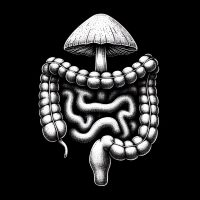
Crohn's disease and psilocybin
There is currently no clinical research in Crohn's patients demonstrating that psilocybin improves or worsens the disease. However, there are some interesting indications from preclinical research.
Psilocybin and related substances appear to influence inflammatory processes via serotonin receptors (especially 5-HT2A). For example, cell and tissue studies have shown that psilocybin can reduce the production of inflammatory substances such as TNF-α, IL-6, and IL-8. These are the same inflammatory pathways that are also involved in Crohn's disease.
However, that does not mean that psilocybin is a treatment for Crohn's. The current state of the science is:
-
There are theoretical anti-inflammatory effects
-
There are no clinical studies in Crohn's patients yet.
-
The safety of immunosuppressive medication has not been properly investigated.
Therefore, Crohn's is usually not automatically considered a contraindication, but rather a medical factor that must be assessed beforehand.
Infliximab (Remicade)
Infliximab is a TNF-α inhibitor and suppresses the immune system to reduce inflammation.
A few important points:
-
The half-life of infliximab is around 8 to 10 days, and the drug can remain in the body for up to approximately 8 weeks.
-
There is no known direct pharmacological conflict between psilocybin and infliximab.
-
Because infliximab suppresses the immune system, extra attention must be paid to:
- general physical stability
- infections
- body's recovery capacity.
In practice, attention is usually paid to:
-
how stable the Crohn's is
-
when the last infliximab infusion was
-
general health and energy level.
Incidentally, many people with autoimmune diseases have indeed undergone psychedelic sessions without problems, but this remains anecdotal experience and not hard evidence. For the time being, psilocybin appears to be safe and can be taken together with TNF-α inhibitors. As a precaution, a psilocybin session can be planned to coincide with lower levels of active substances that suppress the immune system, since psilocybin may help to lower inflammation levels.
Alprazolam (0.5 mg)
The use of a benzodiazepine such as alprazolam is usually not an absolute contraindication, but there are two points to consider.
-
Benzodiazepines can weaken the effect of psilocybin.
-
During psychedelic therapy, benzodiazepines are sometimes actually used as a safety measure to stop a trip.
If someone uses it only occasionally, as in your case, it is often advised not to take it for a few days before the session, provided that is safe and comfortable.
However, abruptly stopping regular use is not recommended. This should always be done gradually and, if necessary, in consultation with a doctor.
When a session is usually possible
For someone with your profile, a session is often considered possible if:
-
there is no psychosis or bipolar disorder (as you indicate)
-
the Crohn is relatively stable
-
the attending physician has no objection
-
a proper screening takes place
When extra caution is needed
An additional check is usually carried out first if:
-
Crohn's is active or severely inflamed
-
there has recently been an operation or infection
-
multiple strong medications are being used at the same time
-
fear is so strong that loss of control is likely to cause panic.
In such cases, one can first work with preparation, therapy, or, for example, breathwork before undergoing a psychedelic session.
Summary
Based on what you describe, there is no immediately clear reason why a psychedelic session would be impossible. Anxiety and social insecurity are actually common reasons why people consider this type of therapy.
The most important points of attention in your situation are:
-
Crohn's disease
-
the use of infliximab
-
occasional alprazolam use.
Because there is little research into the combination of psilocybin and immunosuppressants, it is advisable to have a therapist or doctor assess your medical situation beforehand.
If Crohn's is stable and the screening is positive, a individual psychedelic session in many cases take place safely.
See also: Psilocybin may even help with Crohn's.