26 October 2024 16:42
Topic starter
0

What are the similarities between ayahuasca and psilocybin?
3 Answers
2
1 April 2025 17:48

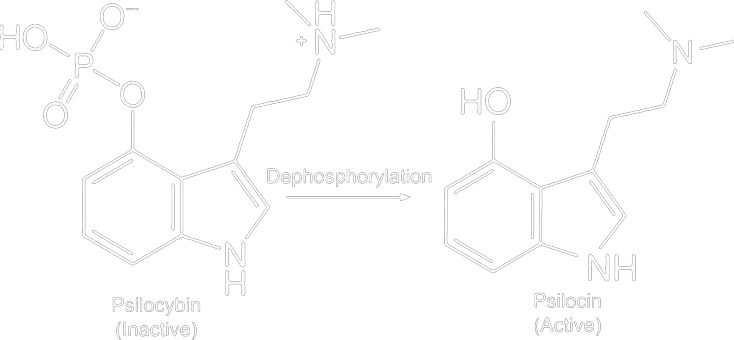
There are more similarities between ayahuasca and psilocybin than most people think. In particular, the substances with hallucinogenic effects resemble each other. In Ayahuasca contains DMT and if you when psilocybin is taken, it is converted into psilocin.
Molecular structure of DMT and psilocin
To indicate the similarities in molecular structure between the DMT from ayahuasca and psilocin, we will provide the names here and an image showing how similar the molecules are.
Psilocin = 4-HO-DMT or written out 4-hydroxy-N,N-dimethyltryptamine
DMT = N,N-dimethyltryptamine

The actual molecular difference between psilocin and DMT is that psilocin has a hydroxyl group (OH) at the 4th position of the hexagon. Since the rest of the DMT and psilocin molecules have a similar structure, both molecules fit into approximately the same receptors. This explains the similar effects they have on serotonin receptors, particularly the 5-HT2A receptor, which contributes to their psychedelic properties.
The similarities in the experience
The experiences with psilocybin and ayahuasca show several similarities, particularly the psychedelic effects and the impact on mental health. Both substances therefore belong to the class of tryptamines with minimal differences, and the effects on users can lead to personal growth, introspection, and spiritual insights.
An important similarity is that both psilocybin/psilocin and DMT (the active substance in ayahuasca) bear a strong resemblance to serotonin, which may contribute to their effects on mood and perception. Both substances can lead to experiences of connectedness, transcendence, and the release of emotional blockages.
In addition, users of both substances often report gaining deeper insights into their lives, emotions, and behavioral patterns. This can help process trauma and improve mental health, such as reducing symptoms of depression and anxiety.
Both experiences can also contain spiritual or mystical elements, where users experience feelings of oneness with the universe or a deeper connection with themselves. This can result in a sense of gratitude and a renewed perspective on life.
The similarities in hallucinations
Ayahuasca and psilocybin share several common hallucinations, including visual effects that are often characterized by geometric shapes, vivid colors, and sometimes the perception of
entities.
During psychedelic sessions with both substances, users often experience a heightened perception of geometric patterns and fractals, particularly during the onset and landing of the trip. These geometric shapes are sometimes referred to as sacred geometry, suggesting that they represent the building blocks of the universe.
Additionally, the visual effects of ayahuasca and psilocybin can also be characterized by a wide range of colors and complex, dreamlike hallucinations. The experiences can vary depending on the dose and the individual sensitivity of the user, but the presence of geometric patterns and vivid colors is a common feature of both psychedelics.
It is also worth noting that experiences with entities are frequently reported during ayahuasca use, where users feel as though they are communicating with non-physical beings or spiritual entities. This may occur less frequently with psilocybin, but some users also report similar experiences when increasing the psilocybin dosage.
See also: Psychedelic hallucinations explained
1
1 April 2025 17:51

Ayahuasca and psilocybin are both psychedelic substances that can induce deep, consciousness-altering experiences. They share some similarities, but also differ on important points.
Chemical Structure and Function
Psilocybin, the active substance in certain mushrooms and truffles, and DMT (N,N-dimethyltryptamine), the main psychoactive component in ayahuasca, both belong to the tryptamine class. Their structures closely resemble serotonin, a neurotransmitter in the brain. As a result, they can bind to serotonin receptors, particularly the 5-HT2A receptors, which leads to their psychedelic effects.
Effects and Experiences
Both substances can cause intense visual and emotional experiences. Ayahuasca is often associated with spiritual insights and is traditionally used in shamanistic rituals for healing and divination. Psilocybin can induce similar mystical experiences, with users often reporting a sense of connection with nature and the universe.
Duration and Physical Effects
The duration of the experience varies: an ayahuasca ceremony can last up to eight hours, while a psilocybin trip usually lasts about six hours. In addition, ayahuasca is known for its physical effects, such as nausea and vomiting, often referred to as 'the purification'. Psilocybin causes such physical reactions less frequently, although mild nausea may occur.
Consistency and Safety
Psilocybin generally offers a more consistent experience, as the dosage can be determined more accurately. Ayahuasca's effects can vary depending on the specific preparation and the plants used. Both substances should be used with caution and under the guidance of experienced facilitators, particularly due to potential interactions with medications and underlying medical conditions.
0
1 April 2025 19:47

You will hallucinate heavily from both, and emotions will surface. In this regard, truffles are more manageable and gentler.