6 October 2025 15:54
Topic starter
2

What has worked better for your patients with OCD? LSD or psilocybin?
4 Answers
2
6 October 2025 16:02

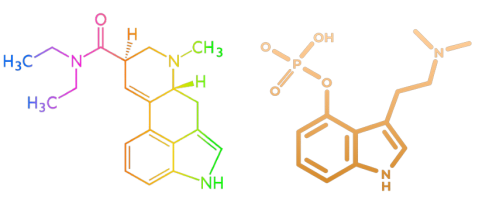
In clients with OCD (obsessive-compulsive disorder), we generally see that psilocybin is used as the first choice, and not without reason. After all, most scientific studies into psychedelic therapy for OCD have so far focused on psilocybin. This substance has been shown in multiple studies to loosen rigid thought patterns and increase cognitive flexibility. These are the two key factors in reducing compulsive symptoms.
In practice, however, we notice that LSD or a combination of LSD with psilocybin (the so-called wizard flip) has a greater effect on some clients, especially when there are deeply ingrained patterns or a highly analytical brain. LSD often has a slightly more stimulating effect on visual and cognitive processes, allowing certain insights to have a more powerful or longer-lasting effect.
Our usual working method at OCS is therefore step-by-step: we almost always start with a psilocybin session to see how someone reacts to psychedelics in a therapeutic setting. Afterwards, if desired, we can proceed to LSD therapy or a wizard flip, where the depth and duration of the experience are extended. This tactic offers safety, build-up, and room for evaluation, and in our experience leads to the best results.
Do you want to know which approach suits you? The intake for trip therapy is the first step towards personalized advice.
1
3 November 2025 13:43

OCD is essentially a disorder of cognitive rigidity – certain neural circuits are stuck in a pattern. Psilocybin works very effectively in this regard because it can 'unlock' precisely that frontal cortex connectivity.
But where it gets even more interesting: the differences between psilocybin and LSD for OCD have to do with timing and duration. Psilocybin works for 4-6 hours, LSD for 8-12 hours. This means that with deep-seated OCD patterns, LSD can sometimes work better because it allows more room for insight. It is as if psilocybin opens the lock, but LSD gives you more time to really look around in that space.
The wizard flip that Marcel mentions is actually very clever: psilocybin provides that initial opening, and the addition of LSD after a few hours strengthens that effect and prolongs it. What makes this more therapy-oriented is that you then have more time for interaction with your therapist in the middle of that process.
One point I would add: with OCD, preparation and the therapeutic framework are even more important than for other conditions. After all, OCD is built on insecurity and compulsive spirals. A very clear, safe setting with a great deal of clarity helps many patients more than others. Ensure that your intake is really good and that you trust your therapist.
Also: after the session, especially with OCD, integration work is crucial. The insights you gain must truly take root in your daily behavior; otherwise, OCD quickly reverts to those old patterns. Many patients say that the real change happens in the two weeks that follow.
My advice: follow Marcel's step-by-step approach, and be patient. Not everyone feels a big difference after just one session. Sometimes the full effect only becomes clearly apparent after two or three sessions.
1
19 February 2026 16:15
Lately, we have also been seeing an increasing number of people with OCD who do not react as strongly to psilocybin, but do to LSD analogues. The underlying reason why people have OCD (OCS in Dutch) can sometimes be the cause of this. People with OCD may already have a different biochemical makeup, and this can provide the basis for a reduced response to psilocybin and psilocin. However, OCD/OCS is somewhat complex and can have multiple causes, which is why people's reactions to psychedelics vary from person to person.
1
27 February 2026 21:06

Summary of the most important answers regarding LSD or psilocybin for OCD:
-
Psilocybin is the first choice for OCD
The first and most voted comment indicates that psilocybin is usually used first in clients with OCD because this agent has been particularly examined in research, and it appears effective in studies and a therapeutic context for loosening rigid thought patterns and increasing cognitive flexibility — two core problems in OCD. -
When LSD is being considered
It is noted that LSD or a combination of LSD with psilocybin (sometimes a “wizard flip” mentioned) can yield better results in some clients, especially with deeply ingrained patterns or in people with a strong analytical brain. According to this response, LSD has a slightly more stimulating effect on visual and cognitive processes, which would allow certain insights to have a longer-lasting and more powerful effect. -
Therapy-focused perspective: step by step
The stated practical approach is to start with a psilocybin session to see how someone responds within a therapeutic setting. Afterwards, depending on the response and need, a LSD session or a wizard flip take place. According to the respondent, this offers more structure and safety during treatment. -
Explanation of the differences between psilocybin and LSD for OCD
Another participant explains that the difference in OCD often lies primarily in the duration and structure of the experiencePsilocybin has a shorter duration of action (4-6 hours), while LSD has a longer duration (8-12 hours). As a result, in some cases, LSD can provide more time to deepen insights and utilize them therapeutically. Combining psilocybin and LSD then offers more time and space for interaction with a therapist. -
Biochemical variation between individuals
In a later response, it is mentioned that some people may react less strongly to psilocybin but do to LSD analogues, possibly due to individual differences in biochemistry or OCD mechanisms.
Key practical conclusions
-
Psilocybin is mentioned by most forum members as first choice for OCD due to the relative amount of research and experience.
-
LSD can be more effective for deeper patterns or as a follow-up on psilocybin, especially due to the longer duration of action and cognitive stimulation.
-
Therapy setting, preparation, and integration are implicitly seen as crucial for effectiveness, not only the choice of substance.
Important notes
This is based on experiences of users and therapists, not based on controlled clinical research data. Scientific studies on psychedelics for OCD are limited, and effectiveness, safety, and risks vary by individual.
Here you will find the most important research findings:
Spoiler
LSD in OCD research
Based on scientific literature, a nuanced picture emerges of LSD therapy and the wizard flip (LSD + psilocybin) for anxiety and OCD. Below, the experiences of clients and therapists at Tripforum are supplemented with research data.
Research findings on LSD therapy
-
LSD reduces anxiety, but the dose is important. A Swiss study in people with anxiety disorders (with or without life-threatening illness) compared LSD sessions with placebo in a crossover design. Two 200 μg LSD sessions led to large and long-lasting reductions in anxiety and depression scores; the difference from baseline was –21.6 points (95 % CI –32.7 to –10.4) on the Spielberger State Trait Anxiety Inventory (STAI).. The effects were still present after 12 months; both the LSD-first and the placebo-first groups retained an effect size of approximately 1 (Cohen's d).
-
A modern randomized study of LSD (MM120) in generalized anxiety disorder 198 adults were randomized to 25, 50, 100, or 200 µg LSD or placebo. After 4 weeks, only 100 µg and 200 µg proved to be significantly better than placebo; the Hamilton Anxiety Rating Score decreased by an average of 5 points (95 % CI –9.6 to –0.4) at 100 µg and 6 points (95 % CI –9.8 to –2.0) at 200 µg.. Microdoses of 25 or 50 µg achieved no significant effect.
-
LSD microdosing has little effect on anxiety or mood. A recent review of 19 placebo-controlled microdose studies concluded that microdoses of LSD or psilocybin do cause physiological and subjective changes, but do not result in a significant improvement in depression, anxiety, or stress scores.. This is consistent with other studies in which microdoses showed no difference on standard measures such as the Depression Anxiety Stress Scale..
-
LSD therapy for life-threatening illnesses: In a pilot study, 10 patients with anxiety due to a life-threatening condition received two LSD-assisted psychotherapy sessions. One year later, 77.8% reported a sustained decrease in anxiety and 66.7% reported an improvement in quality of life.. The sessions were experienced as insightful and cathartic..
-
LSD-assisted therapy for depressionIn a randomized trial involving 61 individuals with severe depression, they received two LSD sessions (high dose: 100 + 200 µg or low dose: 25 + 25 µg). After two weeks, the decrease in self-reported depression scores was greater in the high-dose group (–11.8 versus –3.9; difference –7.9), and this improvement remained visible for 12 weeks.. The effects on anxiety were not specifically investigated, but suggest a dose-dependent antidepressant effect that may also relieve anxiety.
Comparison of LSD and psilocybin
A double-blind study compared the acute effects of LSD (100 and 200 µg) with psilocybin (15 and 30 mg) in 28 healthy volunteers. The high doses (200 µg LSD and 30 mg psilocybin) produced comparable subjective effects; however, 200 µg LSD caused stronger ego-loss experiences and higher anxiety scores during the peak.. LSD lasted longer than psilocybin and increased the heart rate more strongly, while psilocybin increased blood pressure more.. The research shows that LSD and psilocybin cause similar changes in consciousness, but that higher LSD doses can also trigger more acute anxiety.
Data on the 'wizard flip' (LSD + psilocybin)
Scientific data on the simultaneous use of LSD and psilocybin is virtually absent. Researchers have only investigated combinations with MDMA:
-
LSD + MDMAIn a double-blind crossover study, 24 healthy volunteers received 100 mg MDMA + 100 µg LSD, LSD alone, MDMA alone, and placebo. The combination prolonged the LSD experience but did not change the subjective effects; however, heart rate and blood pressure increased more strongly than with LSD alone.. The authors concluded that co-administration of MDMA yielded no clear benefits..
-
Prospective research into natural users shows that people who use psilocybin or LSD combined with low doses of MDMA experience less intense negative emotions (such as anxiety and sadness) and more feelings of self-compassion and love.. However, this involves a small convenience sample without randomization, making causal statements impossible..
For LSD + psilocybin (the so-called wizard flipThere are no randomized or observational studies. Therapy websites describe the combination as useful for clients with both anxiety and depression: LSD is said to facilitate the cognitive detachment from ingrained patterns, while psilocybin provides access to deeper emotions.. As a result, the combination can be visually and emotionally intense and is primarily used in settings with experienced guidance.. Since these claims are largely based on experience and small series of practices, they should be interpreted with caution.
Conclusions and recommendations
-
LSD therapy has significant and long-lasting effects on anxiety and depression in controlled studies.. Doses around 100–200 µg appear effective; microdoses do not..
-
LSD and psilocybin have similar therapeutic potential, but LSD lasts longer and can induce more anxiety during the peak at higher doses..
-
The 'wizard flip' (LSD + psilocybin) is used in practice, but there is no scientific evidence.. Therapists report synergy between the cognitive openness of LSD and the emotional depth of psilocybin., but there are no clinical trials; safety and effectiveness still need to be investigated.
-
The combination with MDMA is being investigated.: low doses of MDMA seem to reduce negative experiences with psilocybin/LSD, but with LSD + MDMA, co-administration yielded no clinical benefit.
In the current state of science, therefore, there is limited hard evidence to substantiate the experiences of Triptherapie clients regarding the wizard flip. LSD-assisted therapy, on the other hand, has a growing scientific foundation for anxiety disorders, making it plausible that scientific evidence will emerge in the future.