28 November 2023 21:20
Topic starter
0

What is psilocybin? The active ingredient in magic mushrooms and truffles.
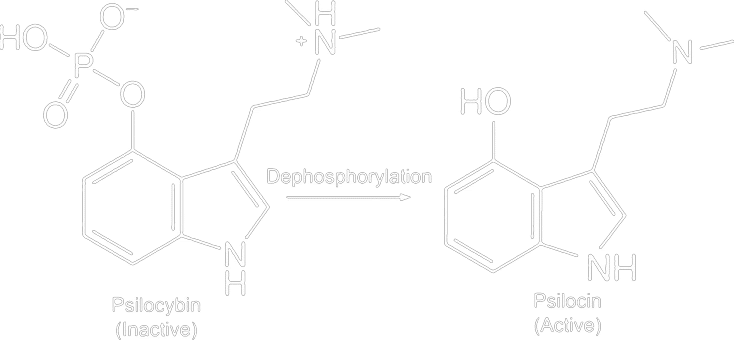
Psilocybin is the prodrug of psilocin and is found in magic mushrooms and truffles. It is a naturally occurring psychedelic alkaloid belonging to the tryptamine family. After conversion to the metabolite psilocin, psilocybin is responsible for the psychedelic effects that occur after consuming magic mushrooms or truffles.
In the body, psilocybin is converted into psilocin, the active form of the substance, by the enzyme phosphatase. Psilocin has a structure similar to that of the neurotransmitter serotonin, and it specifically affects serotonin receptors in the brain. This interaction leads to changes in neurotransmission and results in the characteristic psychedelic experiences, including visual hallucinations, changes in perception, and heightened awareness.
The use of magic mushrooms and truffles to consume psilocybin is often associated with ritual, spiritual, recreational, or therapeutic purposes.
More about psilocybin:
|
|
|
|
|
6 Answers
2
14 April 2025 09:23
Topic starter
Psilocybin is a natural psychedelic substance found in certain types of mushrooms and truffles, better known as “magic mushrooms” and “magic truffles”. In the body, psilocybin is converted into psilocin, the actual active substance responsible for the psychedelic effects. Psilocin is structurally very similar to the neurotransmitter serotonin and binds primarily to the 5-HT2A receptors in the brain, leading to changes in perception, mood, sensory experience, and consciousness.
Psilocybin therapy or a truffle ceremony is used to break through mental blocks, often for complaints such as depression, anxiety, burnout, or addiction. The Truffles contain the same active substances as magic mushrooms, but are legal in the Netherlands, unlike magic mushrooms, which have been banned since 2008. Therefore, in legal settings, magic truffles are always used as a safe and permitted source of psilocybin.
Psilocybin is a prodrug which is converted into psilocin in the body. This substance induces psychedelic effects such as visual hallucinations, distortion of the perception of time, and heightened awareness. These experiences can be used therapeutically, provided they take place in a safe, supervised setting.
Would you like to discover more about how a psilocybin session works, what the pros and cons are, and whether this suits your situation? Then check out the explanation about truffle therapy with magic truffles or fill out the without obligation intake for trip therapy in. That way, we can see if psilocybin could be something for you.
2
14 April 2025 09:25
Topic starter
These are terms that refer to or are associated with the use of psilocybin:
1. Psilocybin – The chemical substance that occurs naturally in certain mushrooms and truffles. It is a so-called prodrug, which means that it is converted into the active substance psilocin in the body.
2. Psilocin – The actual active substance in the body, which binds to serotonin receptors and is responsible for the psychedelic effects.
3. Magic mushrooms – The English term for magic mushrooms containing psilocybin. Is often used in scientific and popular literature.
4. Magic truffles / sclerotia – Underground nodules of certain types of fungi, which also contain psilocybin. In the Netherlands, truffles are legal and are often used as a substitute for magic mushrooms.
5. Magic mushrooms / magic mushrooms – Dutch name for psilocybin-containing mushrooms. Banned in the Netherlands since 2008.
6. Psychedelic mushrooms – General term for mushrooms with hallucinogenic effects, primarily due to psilocybin and psilocin.
7. Psilohuasca / psiloflora – Combinations in which psilocybin is used with an MAO inhibitor to prolong or enhance the effect.
1
14 April 2025 09:28
Topic starter
The chemical names (synonyms) for psilocybin are:
-
4-Phosphoryloxy-N,N-dimethyltryptamine – this is the systematic IUPAC-like name.
-
O-phosphoryl-4-hydroxy-N,N-dimethyltryptamine
-
Psilocybin – Dutch name.
-
Psilocybin – English name, often used in scientific literature.
-
Indocybin – a trade name that occurs in some older pharmaceutical contexts (indocybin in Dutch).
The full IUPAC name is:
3-[2-(dimethylamino)ethyl]-1H-indol-4-yl dihydrogen phosphate
The molecular formula :
C12H17N2O4P
1
14 April 2025 13:39

Psilocybin is magic. It is a key that opens the door to the subconscious!
0
14 April 2025 18:51
Topic starter
Here is a list of 55 names and synonyms for psilocybin:
Common names
- Psilocybin
- Psilocybin
- Psilocibin
- Psilocibin
- Psilocybin
- Psilocybin
Brand names / Street names / Traditional names
- Indocybin
- Teonanacatl (traditional/Aztec name)
- Component of magic mushrooms
Chemical names
- Psilocin phosphate ester
- O-Phosphoryl-4-hydroxy-N,N-dimethyltryptamine
- 4-Phosphoryloxy-N,N-dimethyltryptamine
- 4-Phosphoryloxy-omega-N,N-dimethyltryptamine
- 3-(2-Dimethylaminoethyl)indol-4-yl dihydrogen phosphate
- 3-[2-(Dimethylamino)ethyl]indol-4-yl dihydrogen phosphate
- 3-[2-(Dimethylamino)ethyl]-1H-indol-4-yl dihydrogen phosphate
- 3-[2-(Dimethylamino)ethyl]indole-4-ol dihydrogen phosphate ester
- ({3-[2-(Dimethylamino)ethyl]-1H-indol-4-yl}oxy)phosphonic acid
- 1H-Indole-4-ol, 3-(2-(dimethylamino)ethyl)-, dihydrogen phosphate (ester)
- Indole-4-ol, 3-(2-(dimethylamino)ethyl)-, dihydrogen phosphate (ester)
Synonyms with abbreviations or codes
- CY-39
- Cy 39
- CY39
- PSILOCYBIN [MI]
- PSILOCYBINE [INN]
- PSILOCYBINE [HSDB]
- PSILOCYBINE [MART.]
- PSILOCYBINE [WHO-DD]
- Psilocybin [INN:BAN:DCF]
- Psilocibin [INN Spanish]
- Psilocybinum [INN-Latin]
Registration numbers & database identifiers
- CAS number: 520-52-5
- UNII: 2RV7212BP0
- EINECS: 208-294-4
- BRN: 0273158
- DEA number: 7437
- Beilstein Reference: 4-22-00-05665
- ChEBI: CHEBI:8614
- ChEMBL: CHEMBL194378
- DrugBank: DB11664
- ZINC: ZINC1530830
- Tox21: Tox21_112898
- BindingDB: BDBM50171269
- DSSTox_CID: DSSTox_CID_28824
- DSSTox_RID: DSSTox_RID_83093
- DSSTox_GSID: DSSTox_GSID_48898
- PDSP1: PDSP1_001391
- PDSP2: PDSP2_001375
- NCGC: NCGC00247732-01
- KEGG: C07576
- SCHEMBL: SCHEMBL158945
- SIDER: SB18760
- PubChem ID: P-7825
- Wikidata: Q208118
- DTXSID: DTXSID0048898