11 January 2026 09:45
Topic starter
1

What is psychedelic therapy, how does it work, what is it used for, what does science say, what are the risks, and what is its legal status in the Netherlands?
2 Answers
1
11 January 2026 10:21

Psychedelic therapy is a rapidly growing form of treatment involving substances such as psilocybin (from truffles), MDMA, LSD or DMT are used to deepen psychological processes, break through mental blocks, and support sustainable personal transformation. In the Netherlands, the use of psilocybin truffles legally and professionally applicable in therapeutic settings that are not classified as medical applications
What is it and how does it work?
At psychedelic therapy becomes a psychedelic substance used in combination with supervision (coaching, psychotherapy or integration sessions), to initiate a profound process of change. The mechanisms of action are both psychological as biochemical substantiated:
-
Psilocin (the active substance from psilocybin truffles) binds to serotonin receptors (especially 5-HT2A), which leads to more intense emotions, deep introspection, and changes in perception and consciousness.
-
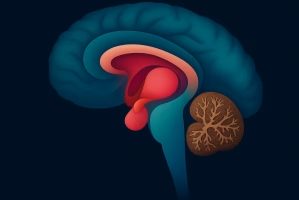
It Default Mode Network (DMN), the brain network responsible for self-reflection but also rumination, is temporarily suppressed — this opens up space for fresh perspectives and letting go of ingrained patterns.
-
An increase occurs in BDNF (Brain-Derived Neurotrophic Factor), which promotes neuroplasticity — the brain's ability to reorganize itself.
-
Psychedelics lower neuroinflammation and activate recovery pathways such as SIRT1, which supports cell rejuvenation and the reduction of oxidative stress.
In short: psychedelic therapy works at the level of brain connections, emotions, traumas, and even cellular health.
What is it used for?
Psychedelic therapy is successfully used in scientific studies for:
-
Depression and burnout: Thanks to the inhibition of negative thought patterns and emotional reprocessing.
-
Anxiety disorders and OCD: Through a breakthrough of controlling or obsessive thoughts.
-
Post-traumatic stress disorder (PTSD): Especially during MDMA-assisted sessions.
-
Addictions: Through changes in behavioral patterns and self-image.
-
Finding meaning, grief, and existential questions: Through spiritual or mystical experiences.
-
Chronic stress complaints and psychosomatics: Via anti-inflammatory and relaxing effects on the body.
Also read the personal story: Triptherapie: not two years with a therapist but one good trip for a mental breakthrough (AD)
What does science say?
Leading studies worldwide, including those by Johns Hopkins, MAPS, and Imperial College, demonstrate that psychedelics are powerful therapeutic tools. Key insights:
-
Psilocybin and BDNF: Stimulates brain growth and learning ability. See: BDNF and psychedelics
-
Inflammation suppression: Psilocybin inhibits inflammatory pathways such as NF-κB, IL-6, and TNF-α. See: New mechanism of action of psilocybin discovered – anti-inflammatory in the brain
-
SIRT1 activation: Supports cell health, stress recovery, and insulin sensitivity — see: Psilocybin and the biochemical action
-
Pancreas and insulin resistance: Possible support for type 2 diabetes through protection of beta cells. See: Psilocybin and type 2 diabetes
-
Brain network restructuring: Improvement of connectivity and reduction of pathological thinking.
Many clients report achieving more insight and processing in one session than in months of regular therapy.
What are the risks?
As is evident from these forum discussions and practical experience:
-
Emotional overwhelm: Especially with high dosages or unresolved trauma. Therefore, professional guidance is crucial.
-
Reactivation of psychosis: For people with a predisposition to schizophrenia or bipolar disorder, psychedelics are usually not suitable.
-
Medication interactions: Antidepressants (SSRIs) or antipsychotics can reduce the effect or make it unsafe.
-
After-effects: Temporary confusion, insomnia, or heightened emotionality may occur.
At Triptherapie, every client is screened prior to the session via the iintake for psychedelic therapy, so that safety always comes first.
Legal status in the Netherlands (2026)
-
Psilocybin in truffles is legal and may be freely sold and used. That is why Triptherapie works with magic truffles.
-
Magic mushrooms (Mushrooms) are prohibited.
-
LSD and MDMA are illegal, but:
- Legal analoguesVarious analogues of, for example, LSD and ketamine are legal to possess.
Effective without psychotherapy as well?
A session can also work without formal psychotherapy, as shown by this forum topic: Psilocybin session without psychotherapy. Many processes arise purely from the means and the introspective journey. Yet experience shows that the most people do benefit from guidance, especially with retroactive integration.
Conclusion: Is psychedelic therapy right for you?
Psychedelic therapy is not a miracle cure, but it is one of the most promising developments in the field of mental health. Thanks to the unique combination of scientifically proven effectiveness, deep personal insights, and a holistic approach, it offers much more than classic talk therapy alone.
Are you curious if it's something for you? Then take the intake for psychedelic therapy — you will then receive personal advice regarding your suitability, potential risks, and the most appropriate session format (individual or group). You can also look at the availability of supervisors or the agenda for group ceremonies.
Do you want to book sessions on location yourself? Then use the price calculation tool.
Your transformation begins with a first step towards inner work, professionally guided.
1
11 January 2026 10:01

Psychedelic therapy (internationally referred to as psychedelic therapy or psychedelic-assisted therapyis a form of mental health care in which psychedelic substances such as psilocybin, MDMA, LSD, or ketamine are used within a strict therapeutic framework, always in combination with psychotherapy. The goal is not the experience itself, but facilitating profound psychological processing, breaking ingrained thought patterns, and increasing emotional flexibility.
Function and neurobiology
Psychedelic substances work primarily through the serotonin system, particularly the 5-HT2A receptor. This leads to temporary changes in brain networks, including reduced activity of the default mode network, which is involved in self-image, rumination, and rigidity of thought. At the same time, functional connectivity between brain regions increases. This combination can lead to:
-
increased emotional accessibility
-
new perspectives on trauma, depression, or addiction
-
increased neuroplasticity, which can make therapy more effective
Therapeutic process
A course of psychedelic therapy almost always consists of three phases:
-
Preparation – extensive intake, psychological and medical screening, formulating intentions and explanation of the experience
-
Dosing session – controlled administration of the substance in a safe setting, supervised by one or more therapists
-
Integration – multiple therapy sessions in which insights are processed and translated into lasting behavioral and thought changes
The therapeutic effect appears to stem primarily from the combination of substance + guidance + integration, not from the remedy alone.
Applications and indications
Scientific research focuses particularly on:
-
Treatment-resistant depression
-
Post-traumatic stress disorder (PTSD)
-
Anxiety disorders, including existential anxiety in serious illness
-
Addiction problems (alcohol, nicotine)
MDMA-assisted therapy shows strong effects in clinical studies for PTSD, while psilocybin shows promising results for depression and anxiety. Ketamine and esketamine are already regularly used within mental healthcare in some countries for treatment-resistant depression.
Scientific state of affairs
The field of psychedelic therapy is rapidly growing and is supported by:
-
randomized clinical trials
-
meta-analyses with significant effect sizes
-
increasing academic and medical interest
At the same time, important caveats apply:
-
Many studies have relatively small sample sizes.
-
long-term effects are still being investigated
-
optimal dosage, frequency, and indications have not yet been fully established
Risks and safety
The safety of psychedelic therapy depends heavily on the preparation, setting, guidance, and the type of substance used. At Triptherapie Every effort is made to provide a safe, effective, and personalized experience, both physically and mentally.
An important pillar is the intake procedure, during which health, medication use, and psychological background are carefully reviewed. This rules out, for example, whether someone has an increased risk of psychosis, drug interactions, or physical complications. It is also assessed whether you are psychologically stable enough for the depth of a session.
In addition, the psychedelic sessions guided by professionals who have experience with harm reduction and therapeutic support. This lowers the risk of so-called 'bad trips' and ensures a safe processing of emotions during the session. The setting itself is a crucial factor for a safe experience.
The substance also plays a role. Psilocybin truffles are most frequently used with Triptherapie and are known to be relatively safe when used properly. With MDMA and LSD analogues, more attention is needed regarding heart rate, blood pressure, and interactions with other substances, but these sessions can also proceed safely with the right precautions.
What is striking: with proper application the risks are small and the potential benefits often outweigh any potential side effects. According to a recent article by Triptherapie The incidence of lasting negative effects is extremely low — provided it is properly supervised. However, it is advised to always take a few days of rest after the session and to draw conclusions about the effects only later.
Legal status in the Netherlands
The legislation regarding psychedelic therapy in the Netherlands is in a transitional phase. On the one hand, there is scope for the therapeutic application of legal psychedelic substances, such as with Triptherapie, but on the other hand, the government is working on legislation that may limit this in the future.
Currently, substances such as psilocybin, MDMA, LSD, and magic mushrooms are under the Opium Act fall and be illegal (List I). But the active substances in truffles are legal, because truffles themselves are not on that list. Also so-called analogs Ketamine and LSD (chemically related compounds) are currently used as long as they are not explicitly prohibited.
An important development in this regard is the so-called NPS law (New Psychoactive Substances), which makes it possible to declare entire groups of substances illegal at once. This law has already been passed and entered into force on July 1, 2025. This prohibits working with direct MDMA analogues.
At the same time, there is hope for recognition of psychedelic therapy as a medical treatment. For instance, the European Parliament has made 6.5 million euros available for research into psilocybin in palliative care. As soon as sufficient scientific evidence is available, experts expect that regulated, reimbursed psychedelic care becomes possible — probably from 2025 or later.
For now, therefore, it remains legal to offer psychedelic sessions with truffles and certain unnamed analogues, as long as these do not fall under the Opium Act or the NPS Act. This makes the Netherlands relatively unique and attractive for this form of therapy, including for foreign clients.
Future prospects
The expectation is that psychedelic therapy in the coming years:
-
is further integrated into evidence-based psychiatry
-
becomes more strictly regulated but more widely available
-
can become part of guidelines for specific indications