
Topic starter
You probably know yourself quite well. You know what you like, what you are sensitive to, how you react when someone is late, and which thoughts keep recurring during stressful moments. You also recognize that voice in your head, the inner commentator that assigns meaning to situations and constantly makes a story out of what you experience. For many people, that voice feels like their identity. As if that is who they really are.
Yet that is only part of the story. Much of what we call “ourselves” turns out not to be a fixed core, but a collection of habits, beliefs, memories, and defense mechanisms. These are patterns formed over the course of your life by upbringing, experiences, pain, success, rejection, love, expectations, and repetition. They have become familiar and therefore feel true. But familiar is not always the same as essential.
Therefore, the question is not only: do you know yourself? But also: do you know your true self? Do you know the construct you have built to be able to function in this world? And what remains when that story temporarily fades into the background?
The self as a construction
The self-image you use in daily life is useful. Without a certain identity, you would struggle to navigate relationships, work, social roles, and choices. You have a name, a history, a preference, and a way of reacting. That is practical and often necessary. But practical does not necessarily mean absolute.
Many people carry beliefs with them such as: I am just sensitive, I am not a talker, I am bad at letting go, I am too much, I am not creative, I am someone who always has to be strong. Such sentences often sound as if they describe facts, but usually they are conclusions that once seemed logical and have subsequently become part of their identity.
Perhaps as a child you were often told to keep quiet. Perhaps you were once laughed at when you showed your true self. Perhaps you learned that it was safer to suppress your emotions, avoid conflict, or conversely, always maintain control. What once began as adaptation is often later referred to as personality. In this way, a strategy grows into an identity.
That doesn't mean your self-image is fake. It does mean, however, that it is changeable. It is constructed. And what is constructed can also be re-examined.
The subconscious controls more than you think.
A large part of human behavior occurs automatically. Not because we are weak, but because the brain works efficiently. Experiences are stored, reactions become ingrained, and over time we no longer need to consciously think about how we behave. That is useful for simple routines, but less useful when old pain, fear, or shame still unconsciously influence our decisions.
The subconscious is not a dark storehouse filled with nothing but repressed misery. Rather, it is a vast collection of everything you have ever learned, felt, and internalized. It holds not only memories, but also bodily experiences, automatic associations, relational expectations, and beliefs about yourself and the world.
Precisely because these processes largely remain out of sight, they can have a significant impact without you understanding exactly why. For example, you might notice that you become tense in the face of criticism, shut down during intimacy, or repeatedly find yourself caught in the same relational dynamics. You may consciously know what you would like to change, but something within you seems to move faster than your willpower. That “something” is often not a character flaw, but an old pattern.
The shadow: not only the difficult, but also the unused
Carl Jung described how people repress not only unwanted traits, but also parts of themselves that were once denied a place. The shadow, therefore, does not consist solely of anger, fear, jealousy, or shame. Spontaneity, sensitivity, playfulness, creativity, sensuality, strength, or zest for life can also disappear into the shadow if they were not welcome.
Someone who learned as a child that emotion is difficult may later build an adult identity around reason and control. Someone who was once rejected for their softness may harden and subsequently call that “my character.” In this way, parts of the personality become split off, not because they are gone, but because they are no longer consciously lived.
Self-knowledge therefore requires looking not only at what is visible, but also at what is absent. What are you afraid of within yourself? What do you quickly judge in others? Which qualities do you admire, but hardly give yourself permission to embody? Often, important parts of the shadow lie there.
The ego as the inner storyteller
In this context, the ego is not simply arrogance or self-conceit. The ego is the organizing narrative about who you are. It is the structure by which you link experiences together into an understandable whole. It says: this is me, this is how I am, this suits me and that doesn't.
That mechanism is not wrong. Without such an inner order, life would feel chaotic. The problem arises when the ego begins to mistake its own story for the complete truth. Then a habit becomes an identity. Then a fear becomes a definition. Then a defense mechanism becomes a personality trait.
Moreover, the ego thrives on consistency. If you believe that you are someone who is not good at setting boundaries, your brain will constantly seek confirmation of this. If you think that you must always be responsible for the well-being of others, your behavior will organize itself accordingly time and again. The ego loves familiar roles, even if they are painful. The familiar feels safer than the new.
That is precisely why change can feel so strange. Not because it is impossible, but because the old story tries to preserve itself.

You are not everything you think
There is yet another layer in the human experience, a layer that is quieter than the ego and more subtle than thoughts or emotions. That is the capacity for perception itself. The consciousness that notices that there are thoughts. The part that notices: I feel fear. I notice tension. A memory arises. There is sadness.
That simple realization is profound. For if you can observe your thoughts, you are not identical to your thoughts. If you can observe an emotion, you cannot be fully summarized as that emotion. There is apparently something within you that remains present while the content changes.
Many contemplative traditions have pointed out this distinction for centuries. Not to reject the everyday self, but to show that there is more space than we often think. Instead of becoming completely absorbed in every thought or emotional wave, you can learn to rest in a more observing attitude. That creates space. And it is precisely in that space that freedom of choice arises.
Know yourself also means: investigate it yourself
The famous call to “know thyself” sounds simple, but philosophically speaking, it is quite radical. It is not just about knowing your strengths or weaknesses. It is also about examining the nature of the one you call “I.” What part of that is direct and alive, and what is learned, adopted, or has become automatic?
That search often begins in a very practical way. By observing your reactions. By asking yourself why a particular situation affects you so strongly. By writing down recurring beliefs and examining where they come from. By noticing how much behavior stems from protection rather than free choice.
Sometimes you discover that your anger actually masks fear. That your perfectionism stems from an old belief that love must be earned. That your aloofness is not coldness, but self-protection. Such insights are not always spectacular, but they are essential. They bring you closer to who you are beneath the automation.
What a truffle experience can make visible
During a guided truffle session Many people notice that their usual way of thinking temporarily becomes less dominant. Thoughts are still there, but they sometimes feel less absolute. You can suddenly see a belief moving around in your head without it immediately feeling like the truth. What normally coincides with “this is me” then becomes more like: “this is a pattern moving through me”.
That is an important difference. Not because all insights during a psychedelic experience are by definition true, but because identification with the usual narrative can temporarily diminish. This creates space to look at yourself, your relationships, your fears, and your life story with different eyes.
Sometimes it is very subtle. You notice that you have been repeating the same sentence about yourself for years and suddenly feel that that sentence originated from pain, not from truth. Sometimes it is bigger, and you experience intensely that the usual boundaries of your identity are loosening. You feel less separated, less stuck in your role, less limited by the familiar description of who you are.
The default mode network and the sense of a self
In neuroscience, attention is often focused on the default mode network, abbreviated as DMN. This network is associated with self-referential thinking, autobiographical processing, and the inner narrative about who you are. Under the influence of psychedelics such as psilocybin, activity within this network appears to change temporarily. That is one of the reasons why people may experience their usual sense of self differently.
It is important not to speak too simplistically about this. The ego is not literally located in one place in the brain, and a person is more than just a brain network. Nevertheless, this model helps to understand why psychedelic experiences sometimes feel as though the fixed narrative about oneself becomes less rigid. When that narrative is less compellingly present, a more direct way of perceiving often emerges. Less filtering, less automatic interpretation, more experience in the moment.
For some people, that feels liberating. For others, it is disorienting. Both reactions are understandable.
Ego dissolution and ego death
A distinction is often made between ego dissolution and ego death, although in practice those terms are used interchangeably. Ego dissolution usually refers to the loosening of the sense of self. The narrative about yourself plays less of a foreground role, boundaries feel more fluid, and you notice that identity is less fixed than normal.
Ego death typically goes a step further. In this case, the sense of a separate “I” can temporarily disappear almost completely. People sometimes describe no longer experiencing their name, role, or personal history as the center of their experience. This does not necessarily mean literal memory loss, but it can feel as if the familiar anchor point has dissolved.
Such an experience can be perceived as unity, peace, connectedness, or a deep spiritual truth. But the same process can also evoke fear. Especially when someone clings to control or does not understand what is happening. After all, the disappearance of the familiar psychological structure can feel as if you are dying, whereas in essence it concerns the temporary shedding of identification with the familiar self-image.
The good of ego death
Under favorable circumstances, an experience of ego dissolution or ego death can be extraordinarily valuable. People sometimes report that, for the first time in a long time, they were not preoccupied with their shortcomings, their social role, or their concerns about how they come across. A direct experience of being then arises, without the usual tension of self-monitoring.
This can lead to more compassion for yourself and others, greater connectedness, and less rigid thinking. Some people suddenly realize how harshly they have been treating themselves for years. Others experience a deep emotional release, as if the defense mechanisms momentarily cease and something essential becomes palpable. It can also help to put limiting beliefs into perspective. What initially felt like a fixed identity turns out to be more of a temporary pattern.
For people with depressive tendencies, persistent self-criticism, or stuck life narratives, this can be very meaningful. Not as a magical solution, but as an opening. A moment in which it becomes visible that the familiar story is not the only way to experience yourself and reality.
The difficult and the disruptive
At the same time, it is important to remain honest about the other side. Ego resolution is not only beautiful, light, or sublime. It can also be raw, confusing, and intense. When familiar control falls away, it can trigger panic. Especially in people who derive a great deal of stability from overview, rationality, or a grip.
Some people experience moments of fear, disorientation, or existential unease. The question “who am I without all this?” sounds philosophically interesting, but in the midst of an intense experience, it can feel very direct and frightening. Suppressed emotions, old memories, or relational pain may also suddenly surface. This is not necessarily a bad thing, but it does call for safety and support.
In a spiritual and therapeutic context, there is sometimes talk of a dark night of the soul. This refers to a phase in which the old sense of self crumbles, but the new sense of stability is not yet palpable. Such a phase can bring much insight, but is rarely comfortable. Precisely for this reason, good guidance and integration are more important than spectacular language about enlightenment.
Your behavior is not the same as your essence
One of the most valuable insights that can emerge from self-inquiry or a guided psychedelic experience is that your behavior is not the same as your essence. You can have a habit without being that habit. You can experience fear without being fearful in essence. You can survive in a certain way for years without that survival style shaping your deepest identity.
That insight creates space. Not the space of denial, but of choice. Perhaps you are used to withdrawing, but that does not mean that connection does not suit you. Perhaps you are usually hard on yourself, but that does not mean that gentleness is fake. Perhaps you have built a narrative around hardness, independence, or control, while underneath there is also a need for surrender, support, or contact.
Self-knowledge then becomes no longer a list of characteristics, but a living process of discernment. What is learned? What is protection? What is old? What is still relevant? What truly suits me, and what once arose out of necessity?
Why guidance is so important
When you temporarily detach from your fixed self-image, it can be clarifying, but also make you vulnerable. Good guidance is therefore not a luxury, but an important part of working responsibly with psychedelics. A guide does not need to fill in or steer your process. The core of good guidance is precisely that someone remains present, safeguards safety, and helps prevent you from drowning in confusion, fear, or meaning-making that is moving too fast.
A safe setting can make a big difference. Not only during the session itself, but also in the preparation and integration. Preparation helps to clarify intentions, nuance expectations, and better identify any potential psychological or medical risks. Integration then helps to translate insights into daily life. Otherwise, an impressive experience sometimes remains merely impressive, without lasting change.
Integration: where real change begins
The experience itself is rarely the endpoint. Often, it is more of an opening. The moment when you see how you are put together, where you protect yourself, which stories you have been repeating for years, and which parts of you need attention. But after that, the slower work begins. The work of integration.
Integration means not only admiring the insights from an experience, but also exploring and applying them. This can be done by writing, reflecting, talking to a therapist or counselor, approaching relationships more consciously, or implementing concrete changes in your daily life. Sometimes it involves small things. Letting someone finish speaking instead of reacting defensively immediately. Being more honest about your needs. Living less out of duty and more out of alignment.
A profound experience without integration can fade or even cause confusion. An insight that is lived through and practiced can slowly support a new way of life.
See here: integration options
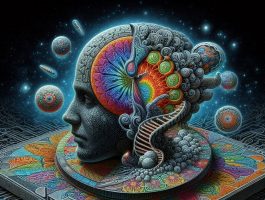
The paradox of the ego
There is an intriguing paradox in all of this. You need a self to function, but precisely that self can also limit you when you think it is absolute. The goal, therefore, is not to destroy the ego or get rid of it permanently. That would not be desirable either. You need an identity to act, to choose, to enter into relationships, and to bear responsibility.
What matters, however, is a different relationship with that ego. Less rigidity. Less complete identification. Less belief in every story your mind produces. The ego then becomes a tool instead of a prison. A functional structure instead of an absolute truth.
That brings freedom. Not because all problems disappear, but because you are less stuck in the belief that you are one rigidly defined individual who must always react in the same way. You become more flexible, more human, and often gentler.
Without your self, you are sometimes more yourself.
That sounds contradictory, but many people recognize it. Precisely when the identified version of yourself fades into the background for a moment, something sometimes emerges that feels more real. Not necessarily bigger or more spiritual, but simpler. Less acting, less defense, less narrative. More presence.
This can manifest as gentleness, truth, crying, laughing, wonder, silence, or connection. Not because you have become someone else, but because the layers that normally stand between you and your experience have become thinner, even if only for a moment. What then becomes visible is not always new. Often it was already there, only covered.
Perhaps that is also why letting go of a fixed self-image does not feel like a loss, but like coming home. Not for everyone, not always, and not without nuance. But often enough to be taken seriously.
Finally
Knowing yourself is a fine assignment, but perhaps it is even more valuable to get to know your true self. Not just your preferences and character traits, but also the construction of beliefs, patterns, defense mechanisms, and stories that shape your identity. For as long as you do not see through that construction, you are not truly controlling it. Then you are primarily controlled by what has once become self-evident.
Psychedelic experiences, including guided truffle sessions, can sometimes temporarily reveal how relative that story actually is. For some, this manifests as a mild shift in perspective. For others, as a more intense experience of ego dissolution or even ego death. That can be liberating, disruptive, or both at the same time.
Ultimately, the value lies not only in the experience itself, but in what you do with it. In how you learn to recognize when an old pattern is speaking. In how you create space between stimulus and reaction. In how you slowly become less identified with everything you think. And in how you dare to live increasingly honestly from what truly wants to be felt and seen.
Perhaps, then, you are not a fixed being waiting to be discovered. Perhaps you are rather a living process that can become increasingly clear. A consciousness that learns to perceive itself, not to fix itself, but to become freer.
Know yourself. Know yourself. And dare to remain present in the space in between.
Curious what a guided truffle session can mean for this?
A well-guided truffle session is neither a quick fix nor a guaranteed route to ego death. However, it is a way in which, in the right setting and with proper preparation, you can explore with greater openness how your thinking, feeling, and self-image are constructed. Sometimes the greatest gain lies not in a spectacular experience, but in the realization that you do not fully identify with your old story.
Anyone who wants to learn to look at themselves with fresh eyes can benefit greatly from a safe, professional setting with room for preparation, guidance, and integration.
If you want to read experiences regarding ego death, you can read some reviews about it here on the Tripforum.
Less ego | Ego death on a high dose | Death and rebirth | All reviews containing the word ego
Posted : 16 March 2026 09:00