
Topic starter
LSD is a classic psychedelic substance that primarily exerts its effects through the 5-HT2A receptor in the brain. This receptor for serotonin is mainly present in the cortex, the brain layer responsible for perception, thinking, and consciousness. LSD causes a shift in the regulation of proteins and signaling pathways that together create a unique state of heightened brain plasticity.
Activation of the 5-HT2A receptor
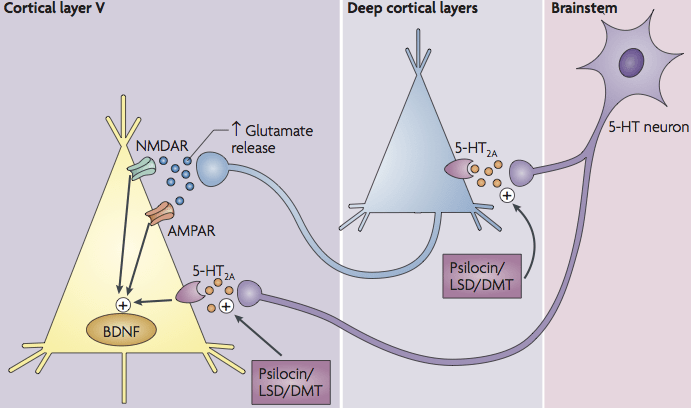
When LSD binds to the 5-HT2A receptor, deep cortical layers are activated which in turn trigger the release of glutamate stimulate. Glutamate is the main excitatory neurotransmitter in the brain and plays a crucial role in learning, memory, and synaptic changes. This increased glutamate signal enhances the activity of other receptors such as NMDA- and AMPA receptors, whereby the cell becomes more receptive to stimuli.
Increase in BDNF
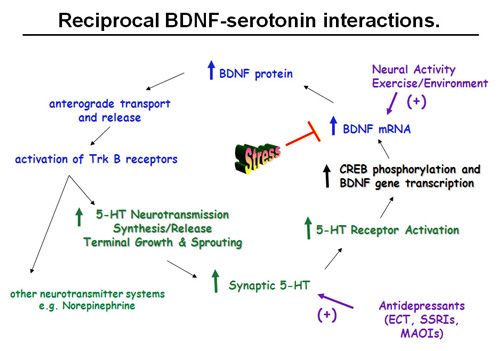
One of the most important effects of LSD is the increase of Brain-Derived Neurotrophic Factor (BDNF). This protein supports the growth and survival of nerve cells and plays a key role in neuroplasticity. Increased BDNF allows neurons to form new connections and restructure existing circuits. This mechanism is likely one of the reasons why LSD can have a strong therapeutic effect on depression, trauma, and anxiety disorders.
Downregulation of cleanup mechanisms
At the same time, LSD causes a temporary downregulation of proteostasis and autophagy see. Normally, these processes ensure the clearing and repair of cellular structures. Due to this temporary inhibition, certain proteins and structures remain present longer, giving the brain more room to form new connections and try out alternative patterns.
Upregulation of growth processes
In contrast stands a clear upregulation of growth-oriented pathways:
-
The mTOR signal path is more strongly activated, which is important for cell growth, synaptic plasticity, and memory formation.
-
It DNA repair improves (just like with psilocybin), whereby damaged neurons are protected against further deterioration.
-
Axon conduction is supported, which facilitates the growth and reorientation of nerve endings.
-
At the synaptic vesicle fusion the efficiency of neurotransmission increases, leading to stronger signal transmission.
-
Also the cellular energy metabolism is strengthened, so that neurons have sufficient energy to carry out all these processes.
The neurobiological foundation of psychedelic therapy
This combination creates a neuroplastic condition: a brain that is temporarily less rigid and can therefore explore new pathways. This explains why LSD sessions often lead to breakthroughs in therapy, deep insights, and lasting behavioral changes. The brain enters a state in which both chemical signals and structural building blocks are prepared for change.
Conclusion
So LSD does not only work on the level of consciousness and perception, but intervenes deeply in the biochemistry of the brain. It activates growth factors such as BDNF, stimulates glutamate release, and improves communication between neurons, while temporarily releasing the brakes on cellular cleanup processes. This interplay of effects forms the foundation upon which psychedelic LSD therapy derives its strength from: giving the brain the opportunity to reinvent itself.
Posted : 21 August 2025 08:47