
Topic starter
When we think of psilocybin, the active ingredient in magic truffles and magic mushrooms, we often focus on the deep psychological and spiritual effects. However, a large part of its action does not take place solely in the brain. The first place psilocybin reaches is the gut — and that is where the interaction with the microbiome: the billions of bacteria, yeasts, and other microorganisms that help determine our health.
From psilocybin to psilocin: the journey begins in the gut
After ingestion, psilocybin is converted in the stomach and liver into psilocin, the active form that resembles serotonin. This explains why psilocybin acts so powerfully on the serotonin receptors in the brain, but also why the microbiome and the intestinal wall are directly affected.
Serotonin is known as the happiness hormone, but did you know that more than 90% is produced in the gut? Here, it regulates not only digestion and intestinal peristalsis but also the communication between immune cells and microbes. Because psilocin is so similar to serotonin, it can send comparable signals to microorganisms in the gut.
How does the microbiome respond to psilocybin?
Preclinical studies and biological hypotheses suggest that psilocin may have a dual effect:
-
Inhibition of harmful bacteria
With species such as Escherichia coli and Salmonella is via the so-called CpxA/CpxR system The virulence is reduced. This means that the bacteria are less able to adhere and produce fewer toxins. This is beneficial for the host, as the intestinal wall and the immune system are subjected to less strain. -
Possible stimulation of opportunistic bacteria
With bacteria such as Pseudomonas aeruginosa can psilocin via the LasR system actually lead to more biofilm and more aggressive behavior. This would hardly cause problems in a healthy microbiome, but can be temporarily detrimental to people with a disturbed gut flora or a weakened immune system.
Psilocybin, inflammation and aging
An important consequence of the interaction with the microbiome is the influence on inflammatory processes. Less virulent behavior of harmful bacteria means less activation of the immune system, which lowers overall inflammatory pressure. This is of great importance, because chronic low-grade inflammation accelerates cell aging, damages DNA, and increases the risk of disease.
Due to its anti-inflammatory effect, psilocybin can contribute to a calmer microbiome, a stronger intestinal wall, and even protection against biological aging.
The interaction between the gut and the brain
The gut-brain axis makes clear that our mood and gut health are closely linked. A stable microbiome supports the production of neurotransmitters such as serotonin and GABA, which positively influence our mood. During a psilocybin session insights and emotional breakthroughs can emerge that motivate healthier lifestyle choices, such as better nutrition, more exercise, and stress reduction.
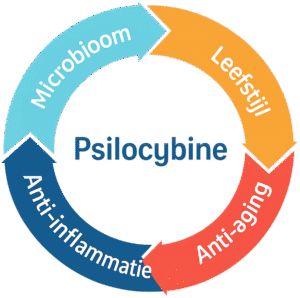
This behavioral change has a direct effect on the gut flora: a fiber-rich diet, sufficient sleep, and reduced stress strengthen the microbiome. This creates a positive vicious circle: psilocybin influences the microbiome, reduces inflammation, and psychologically opens the door to a lifestyle that further enhances these effects.
Conclusion: a bridge between mind and body
Psilocybin does much more than open our consciousness. It also acts on the microbiome, the immune system, and inflammatory processes. In doing so, it forms a bridge between body and mind, where changes in the gut flora contribute to both physical health and mental balance.
Although many findings still come from laboratory and animal studies, we see in practice that a truffle session can often bring relief not only mentally but also physically. The microbiome appears to play a key role in the holistic effect of psilocybin.
See also:
Posted : 29 August 2025 19:40

The available literature (2016–2026) shows that psilocybin/psilocin measurable gastrointestinal (GI) effects can have, but that the Direct human data on gut function and gut microbiome are scarce. is. In human RCTs with therapeutic doses (usually 25 mg orally) become nausea (typical ~4–48%, depending on the study and measurement method) and less often vomiting and diarrhea reported; most GI complaints are short-term (hours to <48 hours) and occur mainly around the dosing day.
Pharmacokinetically, psilocybin is a prodrug that in vivo is rapidly dephosphorylated to psilocin, with a after oral administration Tmax for psilocin of ~1.8–4 hours and a elimination half-life (psilocin) of roughly ~2–4.8 hours; metabolism proceeds mainly via glucuronidation (UGTs, incl. intestinal UGT1A10) and to a lesser extent via MAO-A/CYPs, followed by elimination primarily renal takes place; a Biliary fraction (order of magnitude 15–20%) is described in (particularly) toxicological/forensic literature and animal data.
Animal studies that explicitly measure the microbiome show no consistent change in global diversity, but taxonomic shifts (rat: oa. Verrucomicrobia; mouse: reductions in oa. Lactobacillus- and Alistipes-species) and in one mouse model a dose-dependent effect on intestinal motility with chronic administration. Human studies with fecal 16S/metagenomics before/after psilocybin are largely absent from the core peer-reviewed literature.
For immunomodulation the picture is mixed: there are indications for anti-inflammatory effects (including acute decline in systemic TNF-α and IL‑6/CRP after 7 days in healthy volunteers), but preclinical syntheses emphasize that psychedelics under 'normal' circumstances sometimes also pro-inflammatory signals can enhance; in intestinal cell/tissue models, psilocybin reduces multiple pro-inflammatory mediators.
Key research gaps are: lack of human microbiome and metabolomics data (incl. SCFAs), insufficient direct measurements of motility/secretion/barrier permeability in humans, and uncertainty regarding the clinical relevance of hypothetical pathways such as (entero)hepatic recycling of psilocin-glucuronides in interaction with microbial β‑glucuronidase.
Delimitation and quality of the evidence
This report focuses on psilocybin (synthetic/pharmaceutical or as an isolated substance) and its active metabolite psilocin, with emphasis on: pharmacokinetics, local GI effects, microbiome, intestinal immunology, and clinical GI adverse effects. The core of the evidence consists of (i) humane RCTs in which GI outcomes are almost always as adverse events (AEs) are registered, (ii) preclinical studies with targeted microbiome or motility measurements, and (iii) mechanistic In vitro/ex vivo models of intestinal inflammation.
Methodologically, there are recurring limitations: functional unblinding (classic problem with psychedelics), heterogeneous AE registration (solicited vs spontaneous), limited follow-up for somatic outcomes, small sample sizes, and often in microbiome studies 16S at the (sub)taxonomic level without metabolomics.
Pharmacokinetics and enteric processing
Absorption and conversion of psilocybin → psilocin
Psilocybin is produced in vivo rapidly dephosphorylated to psilocin; in a recent systematic review, the Tmax values for psilocin after oral psilocybin typical between ~1.8 and 4 hours (human data), with clear variation due to dose and design.
Dephosphorylation is linked in the literature to (intestinal) alkaline phosphatase and non-specific esterases; the point that intestinal alkaline phosphatase is relevant in the enteric context is explicitly mentioned in recent review literature, among others.
Metabolism: glucuronidation as the dominant route and the role of intestinal UGTs
Psilocin undergoes extensive phase II metabolism (glucuronidation). In vitro enzyme work shows that especially UGT1A10 has a high capacity for psilocin glucuronidation and that this UGT prominent in the small intestine is expressed—which offers a plausible mechanism for intestinal first-pass glucuronidation.
In addition, recent metabolism studies and reviews describe contributions from UGT1A9 (more hepatic) and a smaller role of MAO-A and CYPs (including CYP2D6/CYP3A4) in secondary pathways (such as 4‑HIAA/related metabolites).
Elimination and (hypotheses regarding) enterohepatic components
In human PK syntheses, elimination is predominantly renal, with half-lives (psilocin) after oral administration in the order ~2–4.8 hours.
A biliary excretory fraction is mentioned in (particularly) toxicological/forensic sources and recent review articles (order of magnitude) ~15–20%), with animal data showing excretion within hours after administration via bile and feces to show.
Entorohepatic Cycle (EHK) in the strict sense, however, requires not only biliary excretion, but also deconjugation in the intestine and reabsorption. Direct, psilocybin-specific human ECG data (e.g., measured 'secondary peaks', bile sampling, tracer studies) are present in the recent peer-reviewed core literature. not robustly documented; what is strongly substantiated, however, is that the gut microbiota β‑glucuronidase-possesses enzymes that can hydrolyze glucuronides and thereby (in general) promote enterohepatic recirculation of some substances—a mechanism that may be theoretically relevant for psilocin-glucuronide, but has not yet been sufficiently directly tested.
flowchart LR A[Oral ingestion of psilocybin] --> B[Intestine: de-phosphorylation to psilocin] B --> C[Absorption -> portal circulation] C --> D[Intestinal first-pass: UGT1A10 -> psilocin-O-glucuronide] C --> E[Liver: UGT1A9 + MAO-A/CYPs -> secondary metabolites] D --> F[Elimination: mainly urine] E --> F E --> G[Part via bile/feces] G --> H[In intestine: microbial β-glucuronidase -> deconjugation? (hypothesis)] B --> I[Local 5-HT receptor action (ENS/epithelium)] I --> J[Motility/secretion/visceral sensation -> GI symptoms] I --> K[Vagus/ANS -> central-peripheral feedback] I --> L[Immunomodulation in mucosa (cytokines/barrier)] L --> M[Possible microbiome shifts]The sections “deconjugation? (hypothesis)” and “possible microbiome shifts” are explicitly stated as insecure marked because direct human data is limited.
Local gastrointestinal effects
Motility
Serotonergic signaling is deeply intertwined with GI physiology: 5-HT in the gut modulates, among other things. motility/transit, secretion and visceral sensitivity, and multiple 5-HT receptor families are present in the GI system.
For psilocybin-specific effects on motility, the strongest direct evidence comes from a recent mouse study with chronic oral bloating (0.1 and 1 mg/kg), in which a dose-dependent effect on intestinal motility was reported. Details regarding direction/clinical equivalence are model- and measurement method-dependent; the key point is that motility itself changed as an outcome upon repeated exposure.
Mechanistically, this is biologically plausible because 5‑HT2A‑receptors (the primary central target of psilocin) also occur in the gut on, among others. smooth muscle cells and enteric neurons.
Secret
Direct, psilocybin-specific measurements of intestinal secretion in humans (e.g., chloride secretion, water flux, gut hormones in relation to GI symptoms) have been found in recent clinical literature. usually unspecified; what is firmly substantiated, however, is that serotonin in general can affect secretory reflexes and mucosal functions.
Mucosal integrity and barrier function
There is growing literature suggesting that serotonergic signaling and stress-related 5-HT dynamics the intestinal barrier function can influence, including effects on tight-junction-related processes in experimental models.
For psilocybin itself, there is direct evidence regarding barrier function in humans. hardly available; intestinal inflammation models at the tissue/cell level (see next section) primarily provide information about inflammatory mediators and less about hard barrier measurements (TEER/permeability).
Effects on gut microbiome and microbial metabolites
Human data: virtually no direct microbiome research
In the most important human therapeutic RCTs, the microbiota is usually not central; there are (in the core sources identified here) no standard fecal 16S/metagenomics series as a primary outcome before/after psilocybin. Consequently, any statement regarding “microbiome improvement” in humans is currently primary hypothesis-driven.
Animal data: composition and diversity
There are, however, recent preclinical studies that measure microbiome changes after psilocybin:
-
In rats (male Long Evans) after single oral gag of 0.2 mg/kg (“low”) or 2 mg/kg (“high”) no significant effect was found on Shannon diversity (at the phylum level), but indeed phylum-specific shifts, including an increase in Verrucomicrobia at week 1 (low) and week 3 (high), while dominant phyla (Firmicutes/Bacteroidetes) remained relatively stable.
-
In mice at chronic oral bloating (0.1 and 1 mg/kg) also showed no significant change in global diversity reported, but species-level reductions (among others). Lactobacillus murinus, Lactobacillus animalis, Alistipes dispar) in male wild-type animals, with sex and genotype dependence.
Functional changes and metabolites (incl. SCFA)
The available animal studies above are methodologically primarily 16S-based and focus primarily on taxonomy; direct measurements of microbial metabolites (such as SCFAs: acetate, propionate, butyrate), secondary bile acids, or broad fecal metabolome are in these core studies not reported / unspecified.
This leaves an important knowledge gap: if psilocybin truly acts (partly) via the microbiota, then the mechanism is best tested via integrated metagenomics + metabolomics and linkage to (i) motility, (ii) inflammatory markers, and (iii) pharmacokinetics (psilocin/psilocin-glucuronide). Review articles on psychedelics and the microbiota-gut-brain axis explicitly mention this as a research agenda.
Immunomodulation in the gut
Intestinal inflammation and mucosal mediator profiles
There are intestine-targeted experimental models that point to anti-inflammatory potential:
-
In a human 3D Epiintestinal tissue model with TNF-α/IFN-γ-induced inflammation, psilocybin reduced several pro-inflammatory mediators (including TNF-α, IFN-γ, IL-6, IL-8, MCP-1, GM-CSF) in the assay context.
-
In human small intestine epithelial cell experiments, it has also been reported that psilocybin (and related 5-HT2A ligands) can reduce inflammatory markers (such as COX-2/IL-6 in specific designs); however, mechanistic interpretations remain provisional and model-dependent.
Important: these types of models are not the same as clinical IBD or IBS—they provide indications for direction (“can suppress inflammatory mediators”) but do not prove clinical efficacy in bowel diseases.
Systemic immune markers in humans and relevance to the gut
In healthy volunteers, psilocybin (0.17 mg/kg; placebo-controlled) has been associated with acute drop in TNF‑α and more persistent decline of IL‑6 and CRP after 7 days; this concerns systemic markers, but is relevant because systemic inflammation and gut-brain axis processes can influence each other.
Other human data suggest that cytokine responses not uniform be and can vary depending on context or population (e.g., transience and inconsistency across populations).
Finally, preclinical syntheses (cross-psychedelic) emphasize that classical psychedelics often in animal and in vitro studies anti-inflammatory effects show signs of pre-existing inflammation, but that there are also indications for pro-inflammatory effects when administered under “normal” physiological conditions—which underscores the need to explicitly measure intestinal outcomes in controlled clinical trials.
Clinical side effects and differences between animal and human data
Summary table of relevant human and animal studies
| Author (first author) | Year | Model/population | Dosage & route | Gut/microbiome outcomes (key) | Comments |
|---|---|---|---|---|---|
| Robin Carhart-Harris | 2021 | Humans, MDD RCT (psilocybin vs escitalopram) | 25 mg orally (psilocybin arm; 2 sessions) | Nausea 27% (6 weeks), diarrhea 3%, vomiting 7% (6 weeks). | AE registration over 6 weeks; GI outcomes as AEs, no microbiome. |
| Charles L. Raison | 2023 | Humans, MDD RCT (psilocybin vs niacin) | 25 mg orally (single dose) | Nausea 48% (solicited AE); other GI-AEs not specified in main table. | Solicited AEs may show a higher incidence than spontaneous reporting. |
| Guy M. Goodwin | 2022 | People, TRD RCT (dose-finding) | 25 mg vs 10 mg vs 1 mg orally | Nausea: 22% (25 mg) vs 7% (10 mg) vs 1% (1 mg); other GI details unspecified. | Extraction via systematic AE review (not full-text in this tool context). |
| NL Mason | 2023 | People, healthy volunteers | 0.17 mg/kg psilocybin (route in study: oral; placebo-controlled) | Systemic: acute TNF‑α↓; after 7 days IL‑6↓ and CRP↓. Gut-specific markers not measured. | Relevance to the gut: indirect (gut–immune–brain). |
| M.Xu | 2024 | Rats (male Long Evans) | 0.2 vs 2 mg/kg psilocybin, oral gavage (single) | No change in Shannon diversity; however, phyla shifts: Verrucomicrobia↑ (dose/time-dependent). | Small n per group; phylo-level; no metabolomics (SCFA) reported. |
| James J. Gattuso | 2025 | Mice (WT and SAPAP3 KO; male/female) | 0.1 and 1 mg/kg psilocybin, oral gavage (chronic) | Dose-dependent effect on motility; overall diversity not significant; species shifts (e.g. Lactobacillus/Alistipes) in male WT. | Strong indication of sex/genotype dependence; causal direction microbiome↔motility still uncertain. |
| G. I. Robinson | 2023 | Human 3D intestinal tissue model | In vitro (concentrations dependent on assay) | TNF‑α/IFN‑γ-induced inflammation: multiple cytokines/chemoattractants reduced with psilocybin. | Translation to clinical IBD/IBS unspecified; barrier measures limited. |
Table of gastrointestinal side effects and frequencies
The frequencies below are derived from well-documented RCTs and a systematic AE review; differences are strongly associated with context, ascertainment (solicited vs spontaneous), and comparator.
| Side effect | Frequencies (examples from RCTs with therapy doses) | Comments/interpretation |
|---|---|---|
| Nausea | 13% on dosing day, 27% over 6 weeks (psilocybin-arm) in MDD RCT. \n48% (solicited) in MDD RCT with 25 mg vs niacin. \nDose response in TRD RCT: 22% (25 mg) vs 7% (10 mg) vs 1% (1 mg). | Nausea is the most consistent GI-AE in therapeutic settings; incidence varies widely by measurement method. |
| Vomiting | 7% (6 weeks) in MDD RCT (psilocybin arm). \nIn oncology/psychological distress RCTs: “nausea/vomiting” 15% (high) vs 0% (low). | Often lower than nausea; sometimes combined as “nausea/vomiting”. |
| Diarrhea | 3% (6 weeks) in MDD RCT (psilocybin arm). | Diarrhea appears relatively infrequently in therapeutic psilocybin RCTs; it may be underreported as non-solicited. |
| Abdominal pain/cramps | In core RCT tables often unspecified (not for “≥3 patients” or not reported separately). | Abdominal pain may be more severe in a real-world setting with the ingestion of whole mushrooms (matrix/fibers), but that is a different exposure than pure psilocybin; quantitative RCT figures are limited here. |
Animal versus human: what translates and what doesn't?
At human studies its GI effects are mainly visible when symptom-AEs (nausea, sometimes vomiting/diarrhea), while objective GI physiology (motility measurements, secretion tests, barrier time series, fecal biomarkers) is rarely measured.
At animal studies While it is possible to collect feces directly and test (chronic) motility, signals appear to suggest that psilocybin can influence motility and microbiome composition, but with strong dependence on species, sex, genotype, and dosage schedule. Extrapolation to humans is uncertain due to (i) mg/kg to mg translation, (ii) differences in diet/housing, (iii) 16S resolution and batch effects, and (iv) the fact that “set & setting” differs fundamentally in animals.
Uncertainties, methodological limitations, and research gaps
A core uncertainty is the causal direction between (a) psilocybin → microbiome shifts → GI function/immune, versus (b) psilocybin → neural/ANS changes → motility/secretion → secondary microbiome shifts. The mouse data with correlation clusters support “feedback” hypotheses but do not prove causality.
For enterohepatic circulation There is a lack of specific, modern human evidence (bile sampling, tracer design) for psilocin-glucuronides; at the same time, the underlying microbial mechanism (β-glucuronidase hydrolysis) is so general that it is testable and must be regarded as a plausible interaction route, not as an established fact.
Microbiome studies to date are limited by: small n, one sex (rat), single vs. chronic scheme, taxonomic focus, and absence of metabolomics (SCFAs, bile acids, tryptophan metabolites) and host readouts (fecal calprotectin, zonulin/permeability assays).
Finally, clinical AE frequencies are sensitive to measurement strategy: solicited symptom checklists yield higher incidences (such as nausea 48%) than spontaneous reporting or “≥3 patients” tables, making cross-trial comparison without harmonization methodologically risky.
Posted : 22 February 2026 11:23

1. Direct Physiological Effects (The Enteric Route)
The gut contains more serotonin than the brain. Because psilocin (the active form of psilocybin) is a structural analogue of serotonin, it "hijacks" the local infrastructure of the intestines, as it were.
-
Motility (Bowel movement): The strongest hypothesis, supported by animal studies, is that psilocin the 5-HT2A receptors activates the smooth muscles and enteric neurons. This explains why many users experience acute intestinal cramps or altered bowel movements; the intestines simply start moving faster or more irregularly.
-
Visceral Sensitivity: Psilocybin can temporarily alter the threshold for pain and discomfort in the intestines. This is a "double-edged sword": it can lead to nausea (hypersensitivity), but in the long term may contribute to relief from functional bowel complaints such as IBS (Irritable Bowel Syndrome) by "resetting" the brain-gut axis.
2. Microbial Interaction: The "Sleeping Giant""
The text of Research points to a fascinating, but as yet unproven area: the direct influence of bacteria.
Hypothesis: Microbial Communication (Quorum Sensing)
Bacteria communicate with each other via chemical signals. There is a growing hypothesis that certain bacteria have receptors that are sensitive to human neurotransmitters (such as serotonin and thus psilocin).
-
Favorable scenario: Psilocin reduces the virulence of pathogenic bacteria (such as E. coli), causing them to have less grip on the intestinal wall.
-
Risk scenario: With opportunistic bacteria such as Pseudomonas it can actually lead to increased biofilm formation, which can cause a temporary imbalance (dysbiosis) in people with an already weak immune system.
3. Inflammation and Barrier Function
The most promising hypothesis for overall health is the anti-inflammatory effect.
-
Reduction of Cytokines: Research shows that psilocybin reduces the production of pro-inflammatory substances (such as IL-6 and TNF-α) inhibits. In the gut, this can mean that the intestinal wall reacts less "fiercely" to allergens or harmful bacteria.
-
Leaky Gut: Although direct evidence in humans is scarce, the decrease in inflammatory markers suggests that the integrity of the tight junctions (the "sealants" between intestinal cells) can be improved. A calmer immune system in the gut often translates directly into better barrier function.
4. The Enterohepatic Circulation (Recycling)
A technical but crucial aspect is the glucuronidation. The intestines and liver attach a sugar molecule to psilocin to render it harmless.
-
The role of bacteria: Some gut bacteria produce the enzyme β-glucuronidase. This enzyme can cut off the sugar molecule again, allowing the active substance to be reabsorbed into the blood.
-
Consequence: This could explain why some people experience a "second wave" or an extended trip; their microbiome is effectively busy recycling the active substance.
Conclusion & Outlook
The gut is not only the place where psilocybin is absorbed, but an active participant in the experience. The effects likely vary greatly from individual to individual, depending on:
-
The composition of your current microbiome (which bacteria do you have?).
-
Your genetics (how fast do your UGT enzymes work?).
-
Your diet (fibers can slow down or buffer the interaction with the intestinal wall).
Posted : 22 February 2026 11:27