
Topic starter
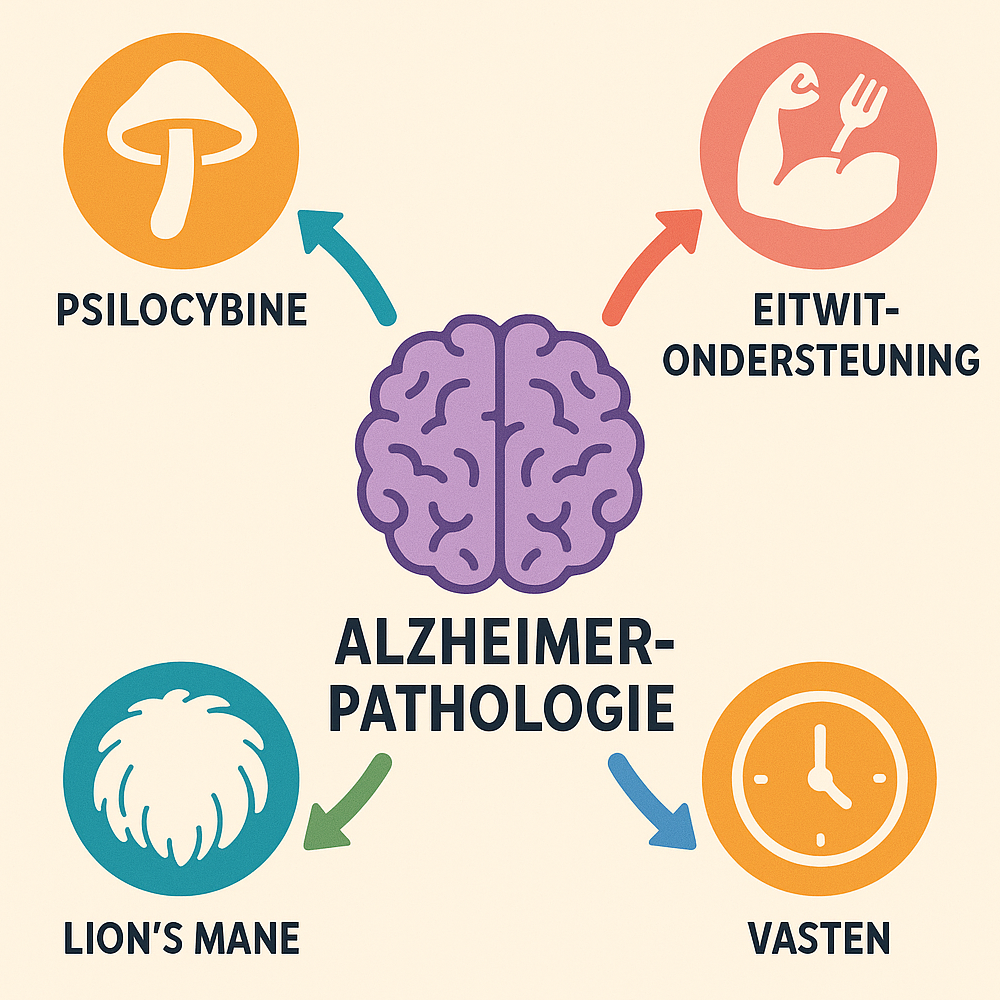
Alzheimer's disease and other forms of neurodegeneration pose a growing public health challenge. In addition to conventional medication, there is growing attention to holistic approaches that focus on strengthening brain plasticity, reducing inflammation, and supporting neuronal repair mechanisms. Within Triptherapie, we closely investigate these developments and apply insights in practice. One of the most promising approaches combines four pillars: psilocybin, Lion's Mane, intermittent fasting and targeted nutritional and supplement support.
Psilocybin: powerful driver of neuroplasticity
Psilocybin acts as a prodrug for psilocin, which, via activation of the 5-HT₂A receptor and direct connection to the TrkB receptor leads to increased production of BDNF (Brain-Derived Neurotrophic Factor). This neurotrophin is essential for synaptic plasticity, memory, and learning. Preclinical research shows that psilocybin causes a significant increase in dendritic processes in the cerebral cortex within 24 hours, with long-lasting structural adaptations.
At Triptherapie, we use psilocybin in controlled sessions aimed at strengthening neuroplasticity and reducing psychological stress—factors that both influence the progression of neurodegeneration.
Lion's Mane: neurotrophin booster with anti-inflammatory effect
Hericium erinaceus, better known as Lion's Mane, contains hericenones and erinacines that the production of NGF (Nerve Growth Factor) stimulate, with a secondary increase in BDNF. NGF plays a crucial role in maintaining cholinergic neurons – the first cells to die in Alzheimer's. Additionally, Lion's Mane has anti-inflammatory and antioxidant properties thanks to, among other things, ergothioneine – a rare amino acid that is actively taken up by the brain and may protect brain cells against oxidative damage.
Small clinical studies show cognitive improvements in people with mild cognitive impairment (MCI) or early-stage Alzheimer's. In our practice, we recommend Lion's Mane as daily support in combination with psychedelic sessions.
Furthermore, there are also others edible mushrooms with a positive effect on health.
Intermittent fasting: natural activation of recovery mechanisms
Fasting and a better diet triggers a metabolic switch whereby the body switches to fat burning and produces ketones. These ketones, including β-hydroxybutyrate, activate BDNF and inhibit inflammatory pathways. Fasting also increases autophagy – the cellular cleanup process that breaks down amyloid proteins and damaged structures, which is of particular importance in Alzheimer's.
In mouse models, we see that fasting leads to reduced amyloid and tau accumulation, improved vascular function, and increased cognitive performance. In practice, we recommend a short period of fasting on the day of a truffle ceremony to optimize both physiological and psychological effects. Intermittent fasting can be done before and after the psilocybin sessions in any case.
Protein, amino acids, and antioxidants: foundation for recovery
For neuronal repair processes, there are sufficient building materials needed: amino acids such as L-serine, tryptophan and glutamine to support neurotransmission, plasticity and stress resilience. Moreover, tryptophan is a precursor to serotonin, which, in addition to mood, also indirectly influences BDNF. Ergothioneine – present in Lion's Mane – offers additional antioxidant protection.
A diet rich in protein, omega-3 fatty acids, berries, and polyphenols (such as in the MIND diet) has been shown to increase BDNF and slow cognitive decline.
Synergy: more than the sum of the parts
The shared signaling pathways of psilocybin, Lion's Mane, fasting, and nutrition converge at core mechanisms such as BDNF increase, anti-inflammatory and synaptic enhancement. Triptherapie applies this synergy in session preparation, guidance, and aftercare. By fasting before a session, utilizing psilocybin during the session, and subsequently supporting neurorecovery with nutrition and supplements (including Lion's Mane), a comprehensive protocol for brain health is created.
Future vision and practical application
On Tripforum.nl, users share experiences with combinations such as the Stamets Stack (psilocybin + Lion's Mane + niacin). Scientific studies suggest that such combinations can enhance neurotrophin activation. Although Alzheimer's is a complex condition, both preclinical data and clinical experience point to the potential of this integrated approach as disease-modifying strategy.
People with cognitive complaints can already explore these interventions under guidance. Would you like to know if this suits you? Then start with a no-obligation consultation. intake for psychedelic therapy and discover how we can work on your brain health together.
Posted : 28 May 2025 12:08