
Topic starter
A psychedelic session is simultaneously something very old and something very contemporary. For thousands of years, people have used consciousness-altering plants, mushrooms, and brews to connect with the invisible, to process emotional pain, to find direction in life, or to have a spiritual experience. What used to take place primarily in rituals and sacred contexts is today increasingly taking shape within guidance programs, therapeutic sessions, ceremonies, and retreats. At the same time, the modern perspective has changed. While psychedelics were long viewed primarily as dangerous drugs or relics from the hippie era, interest in their role in depression, trauma, addiction, self-development, and finding meaning is growing again.Triptherapie)
Therefore, anyone looking at psychedelic sessions is not just looking at a substance, but at a much larger story. That story begins with ancient civilizations that used magic mushrooms, peyote, ayahuasca, and other plant medicines as sacraments. It continues through the discovery of LSD, the cultural explosion of the 1960s, and the ideas of pioneers like Timothy Leary and Terence McKenna. Subsequently, it culminates in the present, where science, psychotherapy, retreats, and organizations like Triptherapie are each re-examining, in their own way, what these substances can mean. In the Netherlands, this is particularly interesting because psilocybin-containing truffles can be legally used within guided sessions, creating a bridge between centuries-old insights and modern guidance.
What is a psychedelic session?
A psychedelic session is a guided experience in which a consciousness-altering substance is used to promote introspection, emotional processing, insight, connection, or spiritual deepening. The term can be interpreted broadly. Sometimes it involves a therapeutic session with a clear request for help, sometimes a ceremony, sometimes a retreat, and sometimes a personal journey with an emphasis on awareness. The core remains the same: a person temporarily steps out of their usual way of thinking and perceiving, allowing new perspectives to emerge on themselves, relationships, old pain, and the direction of life.
Within the modern context, psychedelic sessions are often associated with terms such as psychedelic therapy, trip therapy, psilocybin therapy, or truffle therapy. In theory, these words seem very similar, but in practice, there is a difference. A therapeutic process usually involves more screening, preparation, and integration. A ceremony or retreat may be more focused on experience, community, spirituality, or personal growth. At Triptherapie, we explicitly work from the idea that the session itself is only one part of a larger process, with preparation beforehand and integration afterward. On the page regarding individual sessions, for example, it is emphasized that customization, contraindication screening, personal preparation, and the choice of a suitable therapist and location are an essential part of the overall guidance.
What are psychedelics and how do they work?
Psychedelics are substances that can temporarily alter perception, sense of self, mood, and the way brain networks communicate with one another. Classic psychedelics such as psilocybin, LSD, mescaline, and DMT work largely through serotonin regulation, particularly via the 5-HT2A receptor. As a result, sensory experiences can become more intense, boundaries between thinking and feeling can blur, and people can step out of their normal cognitive patterns. This sometimes leads to visual distortions or synesthesia, but at least as often to deep introspection, emotional release, and a sense of connectedness.
An important modern insight is that psychedelics not only alter subjective experience but likely also temporarily influence brain flexibility. Research often discusses changes in network dynamics and a temporary reduction in rigid thought patterns. The default mode network receives particular attention in this context, as this network is involved in self-reference, habit formation, and the narrative a person constantly tells about themselves. This also explains why higher doses sometimes evoke experiences of ego blurring or unity.
However, pharmacological effects are only one side of the story. Perhaps even more important is that psychedelics do not work in a vacuum. A person's intention, mental state, history, expectations, environment, and guidance strongly influence the outcome. That is precisely what later became known as set and setting. Therefore, anyone wishing to work with psychedelics safely and meaningfully must look beyond just the substance and the dose.
The oldest roots of psychedelic use
Psychedelic sessions are not an invention of the modern wellness world, nor of the 1960s. Their origins lie deep in human history. Ancient cultures did not view certain plants and fungi as drugs in the modern sense, but as sacred keys, medicines, or teachers. The experiences they evoked were often seen as a direct encounter with gods, spirits, ancestors, or the deeper layers of reality.
In Mesoamerica, the Aztecs and Mayans used psilocybin-containing mushrooms in a religious context. The Aztecs spoke of teonanácatl, which is usually translated as flesh of the gods. The mushrooms served not for entertainment, but for visions, divination, healing, and contact with the divine. The rituals were embedded in song, dance, and a worldview in which the boundary between man, nature, and spirit was not rigidly separated.
In the Amazon region, ayahuasca traditions emerged in which the experience centered as a form of healing, moral purification, and spiritual schooling. During such ceremonies, a shaman or curandero guided the participants with icaros, rituals, and energetic interventions. The experience could be both visionary and physically intense, often involving purging in the form of vomiting or diarrhea, which was interpreted not only physically but also symbolically.
North American peoples developed peyote rituals in which mescaline was used for visions, prayer, spiritual cleansing, and communion. In Africa, too, iboga became part of initiation rites and healing traditions, particularly within the Bwiti. Even in Europe and the Middle East, there are indications that altered states of consciousness through plants or ritual drinks played a role, such as the Eleusinian Mysteries in Greece or the use of blue lotus in Egypt.
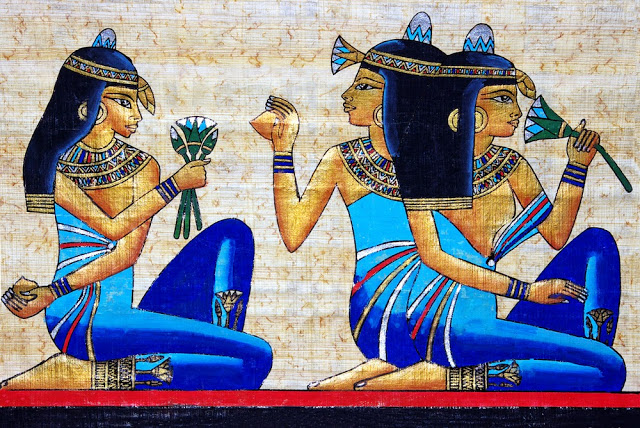
The major difference compared to today is not that people were less serious back then, but rather that these methods were almost never viewed in isolation from ritual, community, preparation, and meaning. In a sense, the modern emphasis on guidance, intention, and integration aligns surprisingly well with this.
The discovery of LSD and the break with modern times
The history of modern psychedelics took a decisive turn in 1938, when Albert Hofmann synthesized LSD at Sandoz. It was not until 1943 that he discovered its exceptional psychoactive effects, first by accident and then during his famous bicycle ride home. This marked the beginning of a new chapter: for the first time, modern science held an extremely powerful mind-altering substance in its hands that did not originate from a traditional ritual, but from a laboratory.
In the 1950s, psychiatrists and researchers initially viewed LSD as a promising tool in psychotherapy. The substance appeared to release emotions, open up the imagination, and soften rigid patterns. Around the same time, interest in traditional substances such as psilocybin also grew, partly because R. Gordon Wasson drew attention to Mazatec mushroom rituals and Hofmann later succeeded in isolating psilocybin.
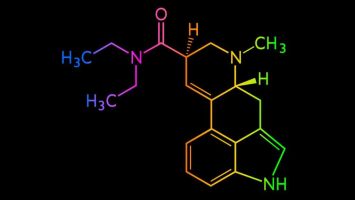
What began as serious research exploded culturally in the 1960s. LSD and psilocybin left the clinic and became symbols of the counterculture. Music, art, spirituality, and protest became intertwined with it. Precisely because of this, resistance also arose. Governments became concerned, legislation was tightened, and scientific research largely came to a standstill. The War on Drugs cast a shadow over the entire field for decades.
Timothy Leary, Terence McKenna and the modern consciousness debate
Timothy Leary was one of the first public figures to radically link psychedelics to personal and societal liberation. He was a psychologist, but became best known as a cultural figure. His influence was significant because he not only discussed psychedelics scientifically but also presented them as an instrument for consciousness alteration. The concept of set and setting, which remains central to safe guidance, was articulated partly by him and his colleagues.
Terence McKenna later gave the debate a different twist. While Leary was strongly associated with LSD and the counterculture, McKenna brought more attention back to natural psychedelics, shamanistic traditions, mushrooms, ayahuasca, and the philosophical side of consciousness. He spoke not only about healing, but also about language, evolution, ecology, and the possibility that psychedelics confront humans with forgotten layers of existence.
Both figures were controversial, but their influence is lasting. Leary helped bring psychedelics into the public debate. McKenna helped reconnect them with nature, ritual, and mysticism. The current renaissance is much more scientific and cautious, but historically, it stands on ground prepared in part by them.
The contemporary renaissance of psychedelics
Since the beginning of the twenty-first century, there has been a clear psychedelic revival. Universities and clinical centers are once again exploring the potential of psilocybin, MDMA, and ketamine for depression, trauma, anxiety, and addiction. This renewed interest is not only cultural but increasingly institutional as well. Major research centers and medical journals are taking the subject seriously, precisely because initial studies show that carefully guided sessions can support profound and sometimes long-lasting changes.
For depression, the signals are particularly striking. Studies with psilocybin-assisted therapy show that depressive symptoms sometimes decrease rapidly and that some participants continue to benefit from this in the long term. This does not mean that psychedelics are a miracle cure or that one session heals everyone. However, it does point to a different model of change than daily symptom management. Instead of continuous medication, a limited number of intensive sessions, provided they are properly embedded, can bring about a breakthrough in entrenched patterns. Among others, studies in JAMA Psychiatry and later follow-up data support that picture, although further research remains necessary.
Something is also shifting at the policy level. In some countries, cautiously regulated therapeutic applications are being permitted. In the Netherlands, the situation is unique because psilocybin-containing truffles are legally available. In our view, no change is expected in the legislation surrounding these magic truffles in 2026, meaning that guided truffle sessions in the Netherlands will remain a relatively stable and accessible form of psychedelic guidance.
Psychedelic therapy and Triptherapie in practice
While many articles get bogged down in theory, it is particularly enlightening to see what a psychedelic session looks like in practice. At Triptherapie, the session does not stand alone. A process begins with screening for contraindications, mapping out goals, health, and medication, and completing a neurotransmitter test. This information forms the basis for personalized preparation advice. Next, the participant chooses a therapist and a location, after which the session and integration are tailored to the personal situation.
This approach aligns well with the modern view that a psychedelic experience can only be safe and effective when context is taken into account. Choosing private sessions can offer extra room for privacy, customization, a higher dosage when appropriate, and the possibility to work at home, on location, or in rented accommodation. A trusted person, such as a friend, partner, or one's own therapist, may also be present. These are not minor details. It is precisely such elements that often determine how safe someone feels and how much depth a process can achieve.
In doing so, Triptherapie positions itself not as a standalone ceremony organization, but as a broader guidance practice offering various forms of psychedelic support. The programs are conducted under the supervision of a BIG-registered advisor and guided by academically trained psychologists and therapists with relevant registrations, supplemented by internally trained guides. At the same time, it is clearly stated that psychedelic therapy is not yet a recognized medical treatment and does not serve as a substitute for conventional care. This combination of ambition and boundaries is important, as it offers room for development while maintaining realistic expectations.
Why truffles are so central in the Netherlands
Although LSD, MDMA, and ayahuasca are widely discussed internationally, psilocybin-containing truffles are particularly relevant in practice in the Netherlands. They contain the same active substance as magic mushrooms but are legally positioned differently. As a result, in the Dutch context, they form the most logical basis for guided psychedelic sessions outside of research.
Truffle therapy is therefore the most important offering and the most chosen service. According to the 2026 page, this involves a complete package of preparation, truffle session, and integration. These private sessions often take place at home, in an Airbnb for international clients, or at one of the Triptherapie locations. The participant can choose their own therapist and, if desired, invite a trusted person.
This clearly shows why the Dutch situation is unique. In many countries, psychedelic therapy remains largely limited to clinical research or strictly regulated exceptions. In the Netherlands, thanks to the legal status of truffles, there is more room for supervised programs that are careful and professional, but do not need to take place entirely within a hospital context.
Psychedelic therapy, ceremony, or retreat?
Not everyone is looking for the same thing when signing up for a psychedelic session. One person wants to break free from persistent depressive patterns, another wants to process trauma, while a third seeks spiritual deepening or an emotional reset. Therefore, it is useful to distinguish between therapy, ceremony, and retreat.
Psychedelic therapy is usually most appropriate when there is a clear psychological need for help and when screening, customization, and integration must be central. A private session then offers the most room for attunement. The advantage of an individual session is precisely that full attention and customization provide more safety, depth, and space to achieve personal goals.
A ceremony often involves more group dynamics. This can be particularly powerful for people who feel supported by community and shared intention. Triptherapie has been organizing truffle ceremonies in Schiedam since 2018 and will continue doing so in 2026 with additional locations. These ceremonies intentionally remain small-scale, with a maximum of six participants and two facilitators. Overnight accommodation is included but not mandatory. Higher dosages and certain additions are also available upon request.
A retreat takes things a step further. There, the session is embedded in several days of slowing down, bodywork, reflection, and integration. The multi-day psychedelic retreat in Schiedam, designed as a profound therapeutic journey featuring a truffle ceremony, body-oriented therapy, IFS, breathwork, meditation, and integration, is guided by two experienced therapists. This format is intended for people seeking lasting personal change.
See also: Group ceremonies with psychedelics
Set and setting as a bridge between old and new
One of the most striking lines throughout history is that virtually every serious psychedelic tradition, ancient or modern, understands the importance of context. The Aztecs did not use magic mushrooms carelessly. Amazonian peoples do not drink ayahuasca without a ritual framework. Peyote is not consumed randomly, but in prayer, community, and ceremony. And modern facilitators speak of set and setting.
Thus, set and setting are actually not a new discovery, but a modern formulation of something ancient cultures already knew. The experience is shaped in part by mental preparation, the physical space, the relationship with the facilitator, the presence of others, music, intention, and aftercare. Those who look only at the substance understand half of the experience. Those who also look at the context understand why the same psilocybin can be chaotic for one person and healing for another.
This is also reflected in Triptherapie, where preparation, intake, choice of therapist, choice of location, confidant, and integration all together form the field in which the session takes place. The session is then not just a trip, but a process in which someone is prepared step by step for what may emerge.
Integration as the key to lasting change
Perhaps the most important difference between an impressive experience and a truly transformative session is integration. During a psychedelic experience, insights can come lightning-fast and intensely. Someone might suddenly understand why certain patterns keep recurring, feel deep sadness that has been stuck for years, or experience a great sense of love and unity. But without integration, such an experience sometimes lingers as a beautiful or intense moment without lasting impact.
Therefore, integration receives much more attention nowadays. Integration is an important part of both private programs and group settings. At Triptherapie, we also offer separate integration days with two specialized therapists, where, if desired, a low dose of truffles or other psychedelics can be used. Methods such as Internal Family Systems, psychodrama, and the Therapeutic Spiral Model are mentioned in this context. The goal is not only to talk about the experience, but also to process emotions, understand symbolism, recognize inner parts, and anchor new habits.
This point deserves special emphasis. The future of psychedelic sessions will likely not be just about better substances or more precise dosages, but rather about better integration. Those who take this step seriously increase the chance that the experience will have an impact on relationships, lifestyle, self-care, and choices in daily life.
New directions: relationship therapy, microdosing, and follow-up programs
An interesting development is that psychedelic guidance is being applied increasingly broadly. It is no longer just about an individual session for someone with depressive symptoms. Relational and preventive applications are also emerging. More possibilities are also becoming available, including relationship therapy with truffles, integration days, and microdosing programs. In relationship therapy, it is often wise to first work on personal growth individually and only then on the mutual relationship. This makes sense in terms of content, because relational tensions are often intertwined with insecure attachment, old pain, and self-protection patterns.
The future of psychedelic sessions
When we consider past, present, and future, what stands out most is that history does not repeat itself exactly, but it does rhyme. Ancient cultures used psychedelics in ritual, spiritual, and healing contexts. Modern science later discovered part of their pharmacological effects. The 1960s brought a cultural explosion, but also a backlash. Now a third phase is emerging, in which science, therapeutic guidance, cautious policy, and practical experience are beginning to converge once again.
The future probably lies neither in boundless enthusiasm nor in fearful rejection. Rather, it lies in mature interaction. This means proper screening, clear contraindications, professional guidance, honest expectations, attention to set and setting, and serious integration. It also means distinguishing between those primarily seeking personal growth and those with clear psychological symptoms requiring clinical care and precision.
For the Netherlands, the role of legal truffles remains important for the time being. In our view, it will remain legal to use magic truffles during guided psychedelic sessions in 2026, and no change is expected in that legislation. This creates room to further professionalize the field through private sessions, ceremonies, retreats, integration days, and complementary forms such as microdosing.
Conclusion
A psychedelic session is not a fashion trend without a past, but a modern form of something humanity has known for a very long time. From Aztec mushroom rituals and ayahuasca ceremonies in the Amazon to peyote, iboga, and the mysteries of Eleusis, runs a long line of consciousness expansion, healing, and meaning-making. Modern times added LSD, neuroscience, psychotherapy, and cultural criticism to this. Today, we see a new phase emerging in which psychedelics are once again taken seriously, not as a miracle cure, but as powerful instruments that, under the right conditions, can set much in motion.
Within this development, our organization Triptherapie clearly demonstrates how past and future can intersect. The ancient intuition that context, ritual, and guidance are crucial is returning in modern forms of intake, screening, preparation, truffle therapy, ceremony, retreat, and integration. It is precisely therein that the greatest promise of psychedelic sessions lies: not in the substance alone, but in the way an experience is embraced, understood, and transformed into real change.
See also: To register | Psychedelic therapy
Posted : 16 March 2026 12:53