9 March 2024 19:05
Topic starter
1

Does the LSD analogue work differently than LSD?
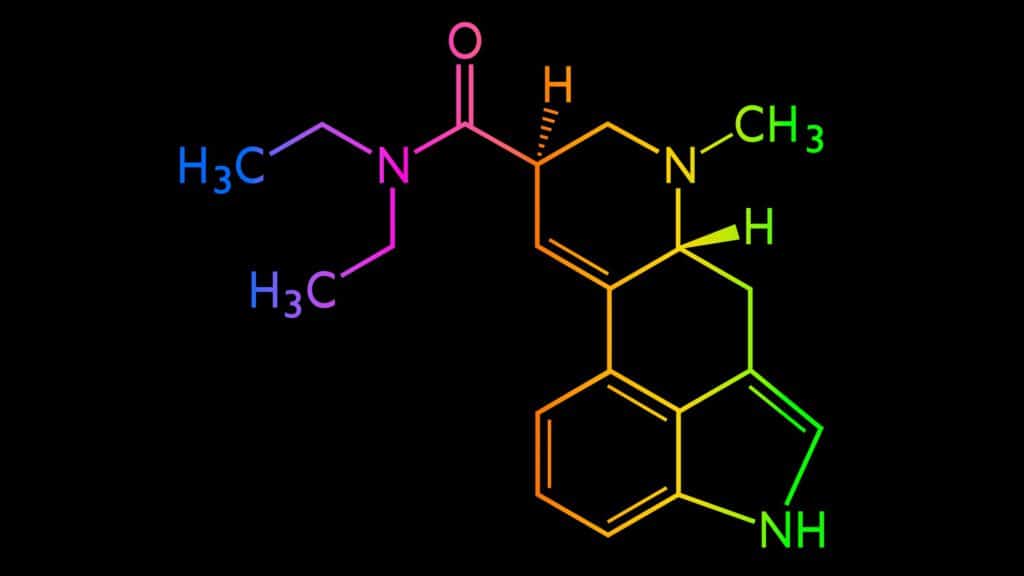
The only known difference between LSD and the LSD analogue is that it takes slightly longer for the first effects to appear. The fact that it takes a little longer to become active is due to the fact that some extra atoms, such as propionyl, have been added to LSD analogues. After ingestion, enzymes cause these extra atoms to split off, leaving LSD behind; consequently, the availability of LSD is somewhat delayed.
Some say that LSD analogs have a less potent effect. If you adjust the analogs for the amount of LSD per analog, there will be no difference. In the case of an extra propionyl group, 1 mole of analog weighs 56.06 grams more than LSD itself, with a total of 327.43 grams per mole. Relatively speaking, therefore, there is just as much LSD in 327.43 grams as in the 383.49 grams of propionyl-LSD. In micrograms, 100µg of LSD would correspond to 117µg of propionyl-LSD.
See also: Effects of LSD | LSD therapy
2 Answers
2
26 May 2025 21:35

The LSD analog used in Triptherapie works in practice almost the same as LSD-25, with one subtle but important difference: The start of operations is slightly delayed. This is because LSD analogues often contain an extra chemical group, such as a propionyl group (for example in 1P-LSD). After ingestion, this group is enzymatically cleaved off in the body, after which regular LSD is released and becomes active.
Chemically speaking, there is hardly any difference in effect when correcting for molecular mass. For instance, 100 micrograms of LSD would correspond to approximately 117 micrograms of an analog like 1P-LSD. After this conversion, the visual, emotional, and introspective effects are virtually identical.
User experiences and therapeutic practice show that the analog is just as potent and effective as regular LSD, provided it is properly dosed. The advantage of the analog is primarily legal: it is (for the time being) legal to use in the Netherlands, making guided sessions such as those at LSD therapy via Triptherapie can take place in a responsible and safe manner.
In short: the LSD analogue works essentially the same as LSD, but takes effect slightly later and can be legally used for therapeutic purposes.
1
30 May 2026 12:52

@Marcel,
You’ve already explained the technical side very well yourself, and Research has nicely complemented that with the practical aspects. I wanted to add one final layer: what exactly does the scientific literature say about this?
Prodrug mechanism confirmed
Research from 2019 and 2020 shows that 1P-LSD and related analogues (ALD-52, 1B-LSD, 1cP-LSD) do indeed function as prodrugs of LSD. In mice and rats, these substances are rapidly and efficiently deacylated by enzymes, after which regular LSD is released into the bloodstream. In other words, the body carries out the conversion process itself.
Potency after correction
As for the strength: a study in Drug Testing and Analysis shows that 1P-LSD produces an LSD-like behavioural profile in mice, with comparable potency after molecular correction. Your calculation is therefore exactly correct: 100 micrograms of LSD corresponds to approximately 117 micrograms of 1P-LSD. Recent research into 1cP-LSD confirms this picture: the ED50 is of the same order of magnitude as that of 1P-LSD, and the effects are consistent with serotonergic hallucinogens.
Pharmacokinetics in humans
An interesting human study (2020) found that 1P-LSD is rapidly detected in serum following oral administration, but that the concentration drops rapidly as it is converted into LSD. LSD itself remained detectable for much longer. This explains why users often report that the onset is slightly slower than with classic LSD-25, but that the peak experience subsequently feels identical.
Legal story
As Research has already pointed out, the main advantage of these analogues is that they can (for the time being) be used legally in the Netherlands for therapeutic sessions. This makes it possible to facilitate guided LSD-like experiences without the legal risks associated with the classic compound.[
Hopefully this will help round off the topic!