
Topic starter
MDMA therapy is a form of psychotherapy in which MDMA is used as support during therapeutic sessions.. The method is being investigated worldwide, particularly for the treatment of post-traumatic stress disorder (PTSD) and other difficult-to-treat psychological complaints.
Clinical research is yielding promising results. However, there is a distinction between the structure of scientific studies and how MDMA-assisted sessions are conducted in practice. Both have a different design, which is mainly because scientific studies must adhere to structures.
What is MDMA therapy?
MDMA therapy can have various structures. In research, psychedelically assisted psychotherapy is particularly prevalent, with an emphasis on psychotherapy. During a session, a participant receives MDMA while therapists provide support in processing emotions, memories, or trauma.
The substance itself is not the therapy, but the emphasis lies on the psychotherapy. It temporarily creates a mental state in which people often:
-
experience less anxiety
-
feel more open
-
have more self-compassion
-
be able to talk about difficult experiences more easily
Because of this, psychotherapy can sometimes deeper and more effective expired.
In other forms of MDMA therapy, much less talk therapy may be used, and more use may be made of internal processes with light support from a therapist.
How does MDMA work in the brain?
MDMA affects various neurotransmitters, including serotonin, dopamine, and norepinephrine. These substances play an important role in mood, motivation, and emotional processing.
During an MDMA experience, a number of psychological changes often occur:
-
anxiety reactions temporarily decrease
-
feelings of connectedness and empathy increase
-
self-criticism can decrease
-
traumatic memories can be viewed more calmly
Because of this, people can sometimes reprocessing traumas without becoming overwhelmed by stress or anxiety.
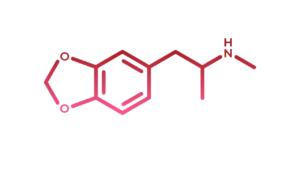
Structure of MDMA therapy in scientific research
In clinical studies, MDMA therapy is usually administered according to a fixed protocol carried out. This protocol is necessary to make the research reliable.
A typical research design consists of:
-
multiple preparatory therapy sessions
-
two or three MDMA sessions
-
integration sessions after every MDMA experience
The MDMA sessions often last 6 to 8 hours and take place under the guidance of two therapists. The integration conversations help participants process the insights from the experience.
This fixed structure is used so that researchers can effectively compare the effect of the treatment.
Structure of MDMA sessions in practice
In practice, it is often worked more flexibly than in research. The emphasis then lies more on customization and personal needs.
A common structure is, for example:
-
Preparation
Prior to the session, there is approximately one hour preparation. In this, intentions are discussed and the participant is mentally prepared. -
MDMA session
This is followed by the MDMA session itself. This usually lasts several hours, during which the participant is supervised. -
Integration
Afterwards, the following usually follows approximately one hour of integration, in which the experience is discussed and initial insights are recorded.
Number of sessions
Contrary to many scientific studies, it states In practice, the number of sessions is usually not determined in advance..
After each session, the following is reviewed together:
-
whether further sessions are useful
-
whether integration has sufficient effect
-
whether there are any themes that require further exploration
Many people experience a change after just one session. In practice, we often see that people one to three sessions to do to support a therapeutic process.
Interim period and recovery
Between MDMA sessions, there is usually a break of at least four weeks detained. There are several reasons for this:
-
The body needs time to recover neurochemically.
-
Space is needed for the integration of the experience
-
insights can be applied in daily life
To respect the recovery, a maximum is often maintained of approximately three sessions per half year.
Guidance is essential
An important point that is emphasized in both research and practice is that psychedelic therapy always takes place in safe conditions with supervision.
At Triptherapie, for example, sessions are guided by experienced therapists and trip coaches with a background in psychology, psychosocial therapy, or mental healthcare. In addition, much attention is paid to:
-
intake and screening
-
preparation of the session
-
guidance during the experience
-
post-integration
This approach helps to increase both safety and therapeutic depth.
Summary
MDMA therapy is a form of psychedelically assisted (psycho)therapy that is primarily being researched for trauma and PTSD. Scientific research employs a strict protocol consisting of multiple preparatory sessions, two to three MDMA sessions, and integration conversations.
In practice, a more flexible approach is often used. A session usually consists of an hour of preparation, the MDMA experience itself, and an hour of integration. The number of sessions is assessed on an individual basis, with most people undertaking one to three sessions. There is typically a minimum of four weeks between sessions, and often a maximum of three sessions per six months.
Through this combination of preparation, experience, and integration, MDMA-assisted therapy can be a valuable support for some people in processing trauma and other psychological issues.
Posted : 11 March 2026 14:06