
Topic starter
Psilocybin is a natural psychedelic substance found in certain types of mushrooms and truffles. This compound is known to be able to temporarily alter consciousness. Users may experience changes in their perception, emotions, thoughts, and sense of time. Some people describe this experience as a deep introspective journey, while others experience it as a spiritual or philosophical discovery.
In recent years, interest in psilocybin has increased significantly. Whereas it was formerly viewed primarily as a recreational psychedelic drug, scientists are now investigating whether psilocybin can help in the treatment of mental disorders such as depression, anxiety, and addiction.
In this comprehensive article, you will read what psilocybin is, how it works in the body, what effects it can cause, and what the current state of the science is.
What is psilocybin?
Psilocybin is a psychedelic compound belonging to the tryptamine family. This group of molecules is chemically very similar to serotonin, a neurotransmitter that plays an important role in mood, emotions, and cognitive processes.
The substance occurs naturally in more than two hundred species of mushrooms. The best-known species belong to the genus Psilocybe. Examples include Psilocybe cubensis and Psilocybe semilanceata. These mushrooms are often called magic mushrooms or psilocybin mushrooms.
In addition to mushrooms, so-called magic truffles also contain psilocybin. Truffles are underground structures of the same fungi and contain the same active substances.
Chemically, psilocybin has the molecular formula C12H17N2O4P and is also referred to as O-phosphoryl-4-hydroxy-N,N-dimethyltryptamine. On its own, psilocybin has little psychoactive effect. The psychedelic effects only occur after the body converts it into psilocin.
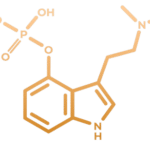
More about: Psilocybin as a molecule
How psilocybin works in the body
When psilocybin is ingested, for example via truffles or magic mushrooms, the substance is absorbed through the digestive system. Subsequently, the molecule is converted into psilocin by enzymes in the body.
This process is called dephosphorylation. During this process, a phosphate group is removed from the psilocybin molecule. The enzyme phosphatase plays an important role in this.
Psilocin is the active molecule responsible for the psychedelic effects. This substance is very similar to serotonin and can bind to serotonin receptors in the brain.
The most important receptor in this context is the 5-HT2A receptor. Activation of this receptor is strongly associated with psychedelic experiences. In addition, psilocin also affects other receptors such as 5-HT1A and 5-HT2B.
These interactions change the communication between brain regions and produce the characteristic effects of psilocybin.
Effects of psilocybin on the brain
Under the influence of psilocybin changes the way brain networks to communicate with each other. Normally, certain brain areas work according to fixed patterns. During a psychedelic experience, these patterns seem to change temporarily.
Researchers have determined that psilocybin can reduce the activity of the so-called default mode network. This network is involved in self-reflection, memories, and the sense of identity.
When the activity of this network decreases, people may feel that their usual thought patterns become looser. This can contribute to new perspectives and insights.
In addition, there are indications that psilocybin increases neuroplasticity. Neuroplasticity refers to the ability of brain cells to form new connections. This may potentially contribute to long-lasting changes in behavior and emotions.
Psilocybin also appears to influence brain waves and blood flow in certain brain regions. Some studies show that brain activity under the influence of psilocybin resembles a dreamlike state.
How a psilocybin trip unfolds
After ingesting psilocybin, the first effects usually begin after twenty to sixty minutes. The peak of the experience often occurs after about one to two hours.
The total duration of a psilocybin trip is usually between four and six hours. The intensity and duration can vary depending on the dose, the person, and the environment.
Common experiences during a truffle trip among other things
altered perception of colors and shapes
visual patterns or geometric figures
change of sense of time
more intense emotions
strong introspection
sense of connection with nature or other people
spiritual or mystical experiences
At higher doses, the sense of individual identity may temporarily diminish. Some people call this ego loss or ego dissolution.
Set and setting
The quality of a psychedelic experience is strongly influenced by two factors often referred to as set and setting.
Set refers to the user's mental state. Think of mood, expectations, and personal background.
Setting refers to the environment in which the experience takes place. A quiet and safe environment can contribute to a positive experience.
When someone feels anxious or is in a turbulent environment, the experience can actually become more difficult. Therefore, it is often advised to use psychedelics only in a comfortable and safe setting.
History of psilocybin
The use of psilocybin-containing mushrooms date back thousands of years. In various cultures, these mushrooms were used in religious and spiritual rituals.
In modern science, psilocybin became known after the ethnologist R. Gordon Wasson reported in the 1950s on a ceremony in Mexico in which these mushrooms were used.
Shortly thereafter, the Swiss chemist Albert Hofmann managed to isolate the active substances from these mushrooms. Hofmann had previously also discovered LSD.
In the 1960s, psilocybin was investigated within psychiatry. Researchers wanted to know whether psychedelic experiences could have therapeutic value. However, due to societal and political developments, this research largely came to a standstill.
Since the beginning of this century, scientific interest has once again increased significantly.
Psilocybin therapy and scientific research
Psilocybin is currently being investigated as a potential treatment for various mental disorders.
Researchers are studying, among other things, the effect of psilocybin on
depression
treatment-resistant depression
anxiety disorders
addiction problems
obsessive-compulsive disorder
post-traumatic stress disorder
cluster headache and migraine
The results are particularly striking for treatment-resistant depression. Some studies show that a single guided session can lead to long-term improvement in a subset of patients.
Interesting results have also been found in addiction treatment. In some studies, alcohol consumption decreased or participants quit smoking after a supervised psilocybin session.
Despite these promising results, psilocybin is not yet a standard medical treatment. In most countries, its use is still limited to scientific research.
Possible therapeutic mechanisms of action
There are various theories as to why psilocybin can have therapeutic effects.
An important factor is the change in brain networks. Through this change, people can break ingrained thought patterns.
In addition, the experience can yield strong emotional insights. Some people gain new perspectives on personal problems during a session.
Neurobiological effects may also play a role. Research suggests that psilocybin can increase the production of certain growth factors such as BDNF. These factors support the growth of new neuronal connections.
Safety and risks
Psilocybin is often considered a relatively safe substance in scientific literature when used under controlled conditions.
However, there are risks. Intense emotions can occur during a psychedelic experience. Some people experience fear or confusion.
Possible physical side effects include
nausea
dizziness
increased heart rate
dilation of the pupils
mild headache
Additionally, use is discouraged for people with a personal or family history of psychotic disorders.
Certain medications can also have a negative interaction with psilocybin.
Legality of psilocybin
The legal status of psilocybin varies worldwide.
In many countries, psilocybin is banned because it falls under international drug laws.
In the Netherlands, psilocybin-containing mushrooms have been banned since 2008. Magic truffles, however, do not fall under the same regulations and may still be sold.
In some parts of the world, laws are currently being reconsidered. In a few US states, programs have been launched in which psilocybin can be used under supervision.
Frequently asked questions about psilocybin
What does psilocybin do to you
Psilocybin temporarily changes the way the brain processes information. As a result, perception, emotions, and thoughts can be experienced differently.
How long does a psilocybin trip last?
An average psilocybin experience usually lasts four to six hours. The peak of the experience often occurs after one to two hours.
Is psilocybin addictive
Psilocybin is generally not considered addictive. The substance does not cause physical dependence, and use usually does not lead to a strong urge to repeat.
Is psilocybin therapy legal
In most countries, psilocybin therapy is still experimental. Some countries and regions permit therapeutic use under specific conditions.
What is the difference between magic mushrooms and truffles?
Both contain the same active substances. The difference lies mainly in the form in which the fungus grows. Truffles are underground structures of the same fungi.
Conclusion
Psilocybin is a natural psychedelic substance that has been used for centuries and is currently receiving renewed attention from scientists. Due to the way it affects the brain, it can lead to profound changes in consciousness, emotions, and perception.
Scientific research suggests that psilocybin may play a role in the treatment of certain mental disorders. At the same time, caution remains important, as the effects can vary widely and not everyone is suitable for psychedelic use.
In the coming years, more studies will likely appear that will help us better understand how psilocybin works and what place it might potentially have in modern medicine.
Posted : 16 March 2026 13:57