11 January 2025 11:25
Topic starter
1

What is the Default Mode Network (DMN) and what does that have to do with trip sessions?
1 Answer
1
29 March 2025 09:55

The Default Mode Network (DMN) is a network of brain regions in the cortex that is normally active during resting states. The DMN is involved in various cognitive functions, such as recalling events, social and emotional judgment, and future planning. This network is often seen as the opposite of the 'task-oriented' network, which is active when the brain is engaged in specific tasks or commands. The main brain regions that make up the DMN include the medial prefrontal cortex, the parietal cortex, the temporal cortex, the cingulate cortex, and the hippocampus.
Recent research has shown that DMN activity may be elevated in people with mental disorders such as depression and anxiety disorders. This has led to the hypothesis that the DMN can serve as a biomarker for these conditions, as changes in DMN activity can help determine the severity of the condition and the effectiveness of treatments.
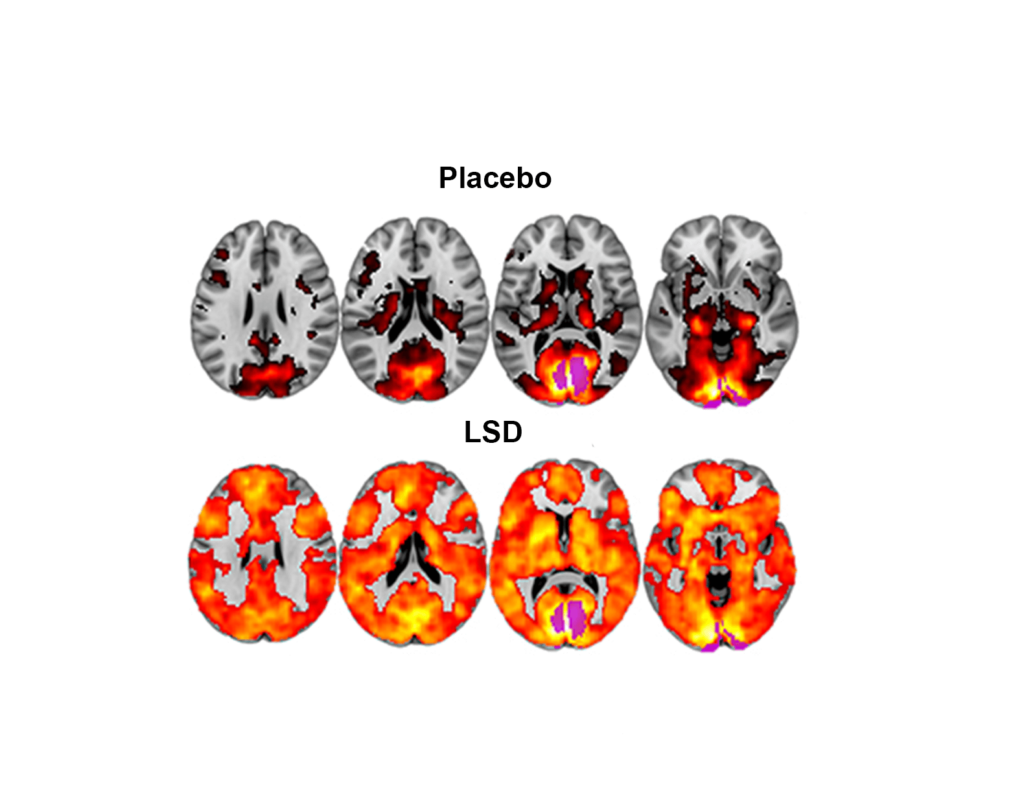
Psychedelics, such as LSD and psilocybin, influence brain function and have been shown to reduce DMN activity. This may occur by strengthening communication between different brain regions that are normally less connected, leading to a reduction in DMN activity. Lower DMN activity can result in reduced self-awareness and a decrease in anxiety about the future, which can contribute to a heightened state of consciousness and creativity during trip sessions.
The reduced activity of the DMN during psychedelic experiences can also help to gain new perspectives and insights, which is often experienced as a 'reset' of the mind. This makes psychedelics a potentially valuable tool in therapeutic settings, where they can contribute to the treatment of mental health issues and the promotion of personal growth.