4 December 2024 09:51
Topic starter
Q&A
3
posts
4
users
1
Reactions
852
views
0

Do you get synesthesia from LSD?
3 Answers
1
4 November 2025 12:27

Depending on the LSD dosage and sensitivity to synesthesia of a person, this effect can occur. Synesthesia is a fascinating phenomenon in which a person's senses are intertwined in an unusual way. This means that someone can, for example, 'smell' colors or 'see' sounds. During an LSD experience, synesthesia can be particularly intense, leading to unique and often profound perceptual experiences.
The mechanism of action of LSD (Lysergic acid diethylamide) is complex and affects various neurotransmitters in the brain, particularly serotonin receptors. LSD binds primarily to 5-HT2A receptors, which play a crucial role in the regulation of mood, perception, and cognition. When LSD stimulates these receptors, changes can occur in the way information is processed between different brain regions. This can lead to increased connectivity between areas that do not normally communicate with each other, which can evoke synesthetic experiences.
During an LSD trip, users can often experience a variety of visual and auditory hallucinations. The intensity of these hallucinations can vary depending on the dose and individual sensitivity. In some people, this can lead to synesthesia, where they can, for example, 'see' the color of a sound or 'taste' the flavor of a particular color. This phenomenon can significantly enrich the experience of the trip, giving the user a deeper insight into their own perception and the world around them.
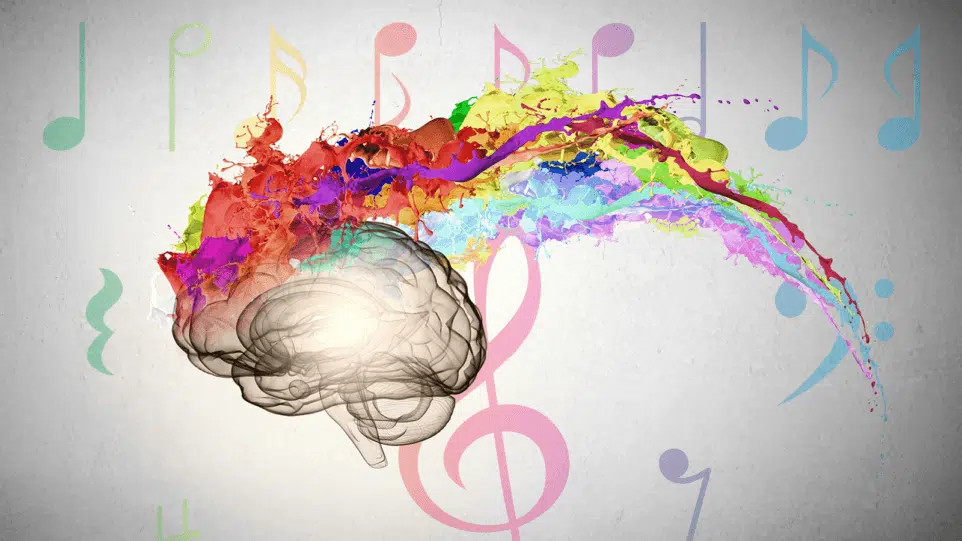
Biologically, there are several processes that contribute to the experience of synesthesia during an LSD trip. First, there is increased activity in the visual cortex, which is responsible for processing visual information. When LSD stimulates these areas, visual stimuli can be amplified, leading to vivid colors and patterns. Simultaneously, the auditory cortex can also be activated, causing sounds to be experienced as more intense and layered. This combined activation can result in a synesthetic experience, where the senses merge into one another.
Additionally, the amygdala, a brain region involved in emotional processing, also plays a role. LSD can reduce amygdala activity, which can lead to a decrease in anxiety and an increase in positive emotions. This can enable the user to open up to new experiences and explore the boundaries of their perception. The combination of heightened sensory perception and reduced anxiety can create fertile ground for synesthetic experiences.
Not everyone who uses LSD will experience synesthesia. Sensitivity to synesthesia can vary from person to person, depending on genetic factors, previous experiences with psychedelics, and the specific context of the trip. Some people may have a strong synesthetic experience, while others may experience only mild or no synesthetic effects.
0
4 November 2025 12:24

It is important to distinguish between true synesthesia and what we call synesthesia-like perception. True synesthesia is a permanent neurological condition in which sensory signals automatically activate other sensory modalities. With LSD use, we are dealing with something more accurately called a synesthesia-like experience—it is temporary and caused by the heightened brain connectivity described by Marcel.
What Marcel mentions regarding cross-activation between cortices is precise. On LSD, we see a great deal of communication between the visual cortex and other areas—not just auditory, but also emotional-sensory. People report hearing colors in music, but also feeling shapes and movements as emotions, smells as colors, etc. This is because LSD increases the network integration of your brain.
An additional important mechanism: psilocybin and LSD also reduce the activity of the default mode network (DMN)—that is, the network that is active when you are not focused on external tasks. This DMN normally helps maintain the separation between different sensory modalities. When this network is less active, that separation blurs, causing synesthesia-like experiences.
Also interesting: not everyone who takes LSD experiences synesthesia. This is related to individual differences in receptor occupancy, genetic variations in neurotransmitter systems, and also simply how sensitive someone is to these types of perceptual shifts. Some people report strong synesthesia-like experiences at low doses, while others do not have this even at high doses.
Another point: time plays a role. Synesthesia-like experiences are usually most intense during the peak of the LSD experience (around 4-6 hours after ingestion) and diminish as the drug wears off.
Finally, one more thing: synesthesia-like experiences can be very instructive because they show how flexible and interpretable your perception actually is. For creative processes (music, art), these types of experiences can be inspiring, but it is also good to keep in mind that these are temporary perceptual shifts, not permanent changes in your brain.
0
6 November 2025 09:31

Yes, LSD can cause synesthesia-like experiences, especially at higher doses. This happens because LSD increases communication between different brain regions. However, it is usually temporary and varies greatly from person to person, depending on sensitivity and genetic factors. Not everyone experiences it, even at the same dosage.