9 March 2024 18:05
Topic starter
0

Does the LSD analogue work differently than LSD?
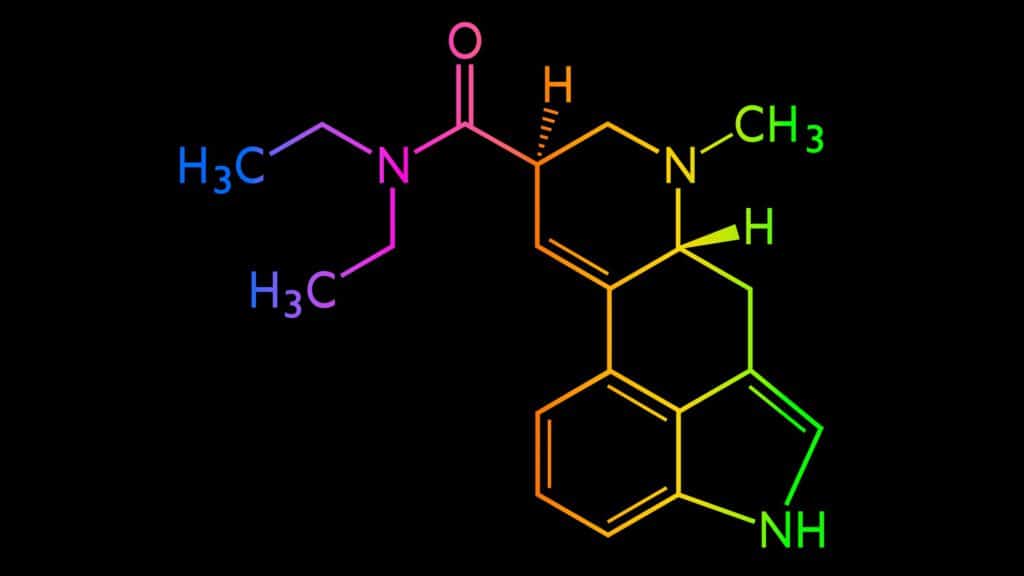
The only known difference between LSD and the LSD analogue is that it takes slightly longer for the first effects to appear. The fact that it takes a little longer to become active is due to the fact that some extra atoms, such as propionyl, have been added to LSD analogues. After ingestion, enzymes cause these extra atoms to split off, leaving LSD behind; consequently, the availability of LSD is somewhat delayed.
Some say that LSD analogs have a less potent effect. If you adjust the analogs for the amount of LSD per analog, there will be no difference. In the case of an extra propionyl group, 1 mole of analog weighs 56.06 grams more than LSD itself, with a total of 327.43 grams per mole. Relatively speaking, therefore, there is just as much LSD in 327.43 grams as in the 383.49 grams of propionyl-LSD. In micrograms, 100µg of LSD would correspond to 117µg of propionyl-LSD.
See also: Effects of LSD | LSD therapy
1 Answer
1
26 May 2025 20:35

The LSD analog used in Triptherapie works in practice almost the same as LSD-25, with one subtle but important difference: The start of operations is slightly delayed. This is because LSD analogues often contain an extra chemical group, such as a propionyl group (for example in 1P-LSD). After ingestion, this group is enzymatically cleaved off in the body, after which regular LSD is released and becomes active.
Chemically speaking, there is hardly any difference in effect when correcting for molecular mass. For instance, 100 micrograms of LSD would correspond to approximately 117 micrograms of an analog like 1P-LSD. After this conversion, the visual, emotional, and introspective effects are virtually identical.
User experiences and therapeutic practice show that the analog is just as potent and effective as regular LSD, provided it is properly dosed. The advantage of the analog is primarily legal: it is (for the time being) legal to use in the Netherlands, making guided sessions such as those at LSD therapy via Triptherapie can take place in a responsible and safe manner.
In short: the LSD analogue works essentially the same as LSD, but takes effect slightly later and can be legally used for therapeutic purposes.