11 May 2022 15:48
Topic starter
0

What happens to you when you are tripping (e.g. brain activity)?

11 May 2022 16:15
What happens to you when you are tripping (e.g. brain activity)?
You can answer this question on several levels.
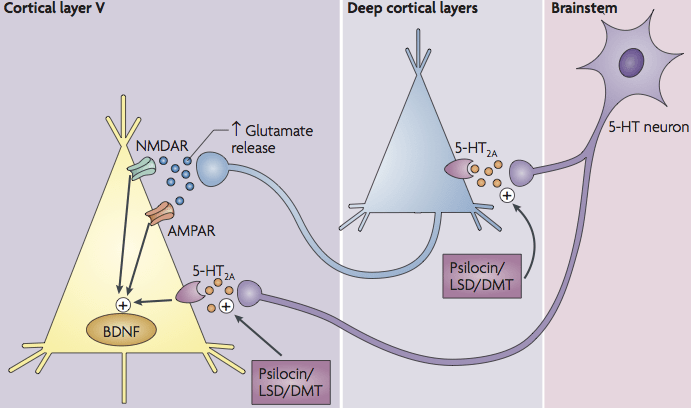
There is increased stimulation of the serotonin receptors, particularly the 5HT2a receptor. This triggers multiple responses, including the production of BDNF, a neurotrophin that promotes neuronal repair and growth. Thus, the brain forms new connections while a part of the brain actually becomes less active.
Here is the full story of the post: psychedelic drug therapy:
1: BDNF
Almost all various psychedelics are known to increase activity on serotonin receptors. This is typically done because the psychedelics resemble serotonin and therefore fit into the same receptors. With some drugs, such as MDMA, activity is increased because more of the body's own serotonin reserves are released. All in all, most effects are achieved through the stimulation of the serotonin receptor 5HT2a. The degree of stimulation of the 5HT2a receptor in particular, as well as a mix of other receptors, causes a change in perception, mood, and the formation of new connections in the brain. These new connections in the brain are, in turn, attributed to the increased production of the neurotrophin BDNF. When the body releases more BDNF, it flips a switch on a series of genes that allow brand-new brain cells, nerve cells, and connections to grow. Slightly higher BDNF levels ensure that you learn faster, remember better, age more slowly, and that your brain quickly rearranges connections with the different parts of the brain and the body.
BDNF also increases brain plasticity. When brain cells are damaged or subjected to a stressful situation, BDNF protects them and helps them come back stronger. The neural pathways become more flexible instead of breaking down, which could explain why higher levels of BDNF are associated with warding off depression.
2: DMN activity
The Default Mode Network (DMN) comprises brain regions in the cortex that are normally active during rest and is involved in recalling events, social and emotional judgment, and future planning. Reducing DMN activity causes the sense of time to disappear and leads to living more in the here and now. This means that worries and fears about the future vanish.
Lower DMN activity therefore leads to lower stress levels and thus lower cortisol. Low cortisol allows the body to utilize its self-healing capabilities, enabling it to combat diseases and inflammation. Thanks to reduced inflammation levels, more serotonin is released, which in turn releases more BDNF, while also reducing anxiety and depression.
Read more about being in the now
3: Less ego
Psychedelics in higher doses cause self-awareness to take a back seat because a higher degree of connectedness can be experienced. The ego generally wants to be fed with increasingly more and often unhealthy things. The ego makes us restless and anxious, since self-preservation is the ego's greatest goal. Without an ego, we will not survive, but an overactive ego leads to separation, loneliness, and addictions.
Less ego means more connectedness, less depression, more serotonin, more BDNF, more healthy choices, less stress, and less DMN activity.
4: Emotions are allowed
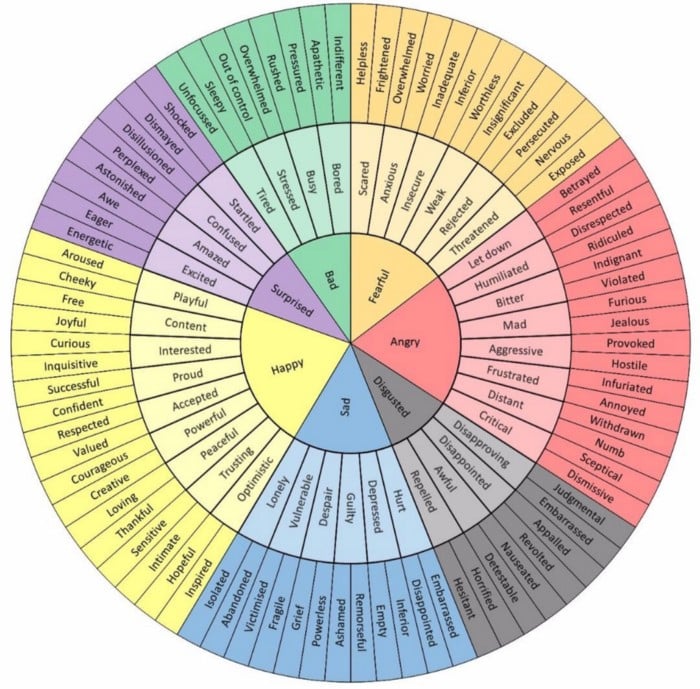
It regularly happens during a psilocybin session that emotions surface that have been blocked for a long time. It is precisely the release of this “old pain” that leads to the loosening of emotional blockages and sometimes also psychosomatic complaints. It can sometimes feel like a liberation to feel uninhibitedly everything that needs to be felt. Because psychedelics can also provide a sense of satisfaction, “negative” emotions can often be felt more easily and processed into something one can be satisfied with.
5: Hallucinations
At normal doses, MDMA causes almost no hallucinations, whereas other well-known psychedelics do. LSD, psilocybin, and DMT (ayahuasca), on the other hand, are known to induce hallucinations. The hallucinations, combined with the effects described above, can lead to new insights that can be helpful, spiritual experiences, or a truly beautiful experience that cannot be put into words. In our view, it also offers a glimpse into how the subconscious works, and with this new knowledge, one can make healthier choices sooner. Would you like to learn more about the hallucinations? Then read on via the link:
23 May 2024 21:41
Recent research shows that psilocybin can also have anti-inflammatory effects. You can read more about this latest research via the link below.
More about: Psilocybin as an anti-inflammatory | Psilocybin