
Topic starter
What are amino acids?
Amino acids are the building blocks of proteins. Multiple amino acids linked together form peptides, and multiple peptides, polypeptides, form proteins. Hormones and neurotransmitters can also consist of amino acids. Each protein has a different sequence and quantity of specific amino acids.
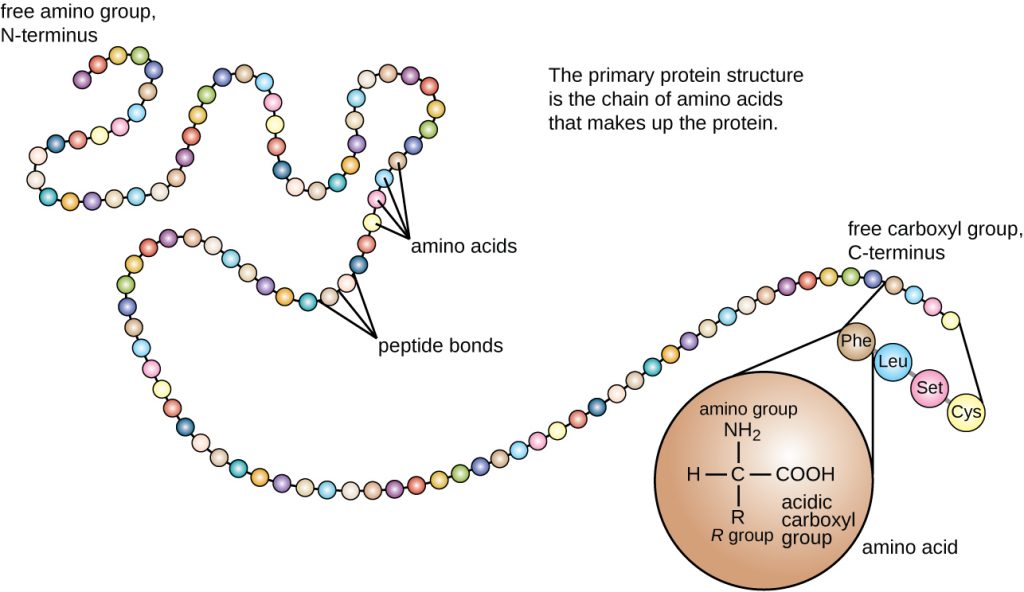
Which amino acids are there?
Approximately 500 different amino acids occur in nature. The human body essentially uses only 20 of them, which we call fundamental amino acids. Of those 20, we can produce 11 from other amino acids or reuse the amino acids we obtain through food. We really must obtain the other 9 amino acids through our diet, and these are called essential amino acids.
Here is a list of fundamental amino acids
| Name | 3-Letter Symbol |
1-Letter Symbol |
Molecular Formula |
| Alanine | Ala | A | C3H7NO2 |
| Arginine** | Arg | R | C6H14N4O2 |
| Asparagine | Asn | N | C4H8N2O3 |
| Aspartic acid | Asp | D | C4H7NO4 |
| Cysteine** | Cys | C | C3H7NO2S |
| Glutamic acid | Glu | E | C5H9NO4 |
| Glutamine | Gln | Q | C5H10N2O3 |
| Glycine** | Gly | G | C2H5NO2 |
| Histidine* | His | H | C6H9N3O2 |
| Hydroxyproline | Hyp | O | C5H9NO3 |
| Isoleucine* | Island | I | C6H13NO2 |
| Leucine* | Leu | L | C6H13NO2 |
| Lysine* | Lys | K | C6H14N2O2 |
| Methionine* | Of | M | C5H11NO2S |
| Phenylalanine* | Phe | F | C9H11NO2 |
| Proline | Pro | P | C5H9NO2 |
| Pyroglutamatic | Glp | U | C5H7NO3 |
| Serine | Ser | S | C3H7NO3 |
| Threonine* | Thr | T | C4H9NO3 |
| Tryptophan* | Trop | W | C11H12N2O2 |
| Tyrosine** | Tyr | Y | C9H11NO3 |
| Valine* | Val | V | C5H11NO2 |
Essential amino acid
Semi-essential amino acid
What does a healthy body need?
A healthy body never has a shortage of the amino acids it needs to function. Generally speaking, people get enough non-essential amino acids. It is often the essential amino acids that a person lacks, because these cannot be produced from other amino acids in the event of a deficiency.
Daily protein requirement
To meet the daily protein requirement, and thereby the amino acids, there should actually be some protein in every meal to ultimately satisfy our needs. An adult with a normal activity level needs approximately 1 gram of net protein per kilogram of body weight per day. If someone weighs 75 kg, they therefore need to consume 75 grams of protein containing the correct amino acids.
Some people need more protein.
- Elite athletes, and particularly in strength training
- People who perform heavy physical work
- COPD patients
- People with serious illnesses
- People who are recovering or have had surgery
- Pregnant women and breastfeeding women
- Children who are growing
- To lose weight
Not all proteins contain the correct proportions of amino acids.
The body can utilize dietary protein most optimally if it best matches the human amino acid profile. These are proteins that closely resemble the body's own proteins in terms of structure and ratio of essential amino acids. The more amino acids present, the better. Therefore, the essential amino acids must be obtained through the diet to ultimately produce all 20 amino acids our body needs.
The quality of a protein-rich food is indicated by the term Biological Value of the proteins. Animal proteins generally have a higher Biological Value than plant proteins, because animal proteins are more similar to our own proteins in terms of structure and the amino acids used. Therefore, it is even more important for vegetarians to consume proteins (or combinations of proteins) that result in a high Biological Value!
Protein / Biological value
| Whey isolate | 140 |
| Whey concentrate | 120 |
| Breast milk | 100 |
| Egg white | 100 |
| Egg (whole) | 94 |
| Cheese | 84 |
| Chicken | 79 |
| Turkey | 79 |
| Casein (milk protein) | 77 |
| Soy | 74 |
| Fish | 70 |
| Lean meat | 69 |
| (Cow) milk | 60 |
| Unprocessed rice | 59 |
| Brown rice | 57 |
| White rice | 56 |
| Peanuts | 55 |
| Garden peas | 55 |
| Wheat | 49 |
| Soybeans | 47 |
| Flower | 41 |
| Corn | 36 |
| Brown beans | 34 |
| Potatoes | 34 |
Foods you can combine
If different protein sources are consumed together, it is possible that amino acids deficient in one product are replenished by the other. Some well-known combinations are, for example.
| Product | Combine with |
| Grain products | Legumes, acidified dairy, meat, fish, cheese or egg |
| Vegetables | Oats, Rye, egg or sesame seeds |
| Potatoes | Egg, Wheat or acidified dairy |
Varying your food intake is therefore recommended to obtain the right amino acids. However, keep in mind that some foods score well on protein content while performing less well in others. Nowadays, it is easier and more beneficial for the body to buy a supplement of essential amino acids and BCAAs and eat a healthy diet alongside them. This way, you get the benefits of everything without too much of the drawbacks of, for example, certain animal products.
Just a quick note on protein supplements
If you want to be absolutely sure that you are getting the right amino acids in the correct amounts, there are a few supplements, such as protein powders, that are recommended.
Whey hydrolysate is a pre-digested milk protein with high absorbability and a high bioavailability of 140. For athletes and people with increased protein requirements, this protein is ideal for obtaining the right amino acids in high quantities.
Pepto Pro is pre-digested casein protein that has been broken down into peptides, and these are even more absorbable, but the biological value is slightly lower than whey.
Silverback Protein is a plant-based pea protein supplemented with extra essential amino acids so that it has just as good a biological value as whey, but is plant-based and lactose-free.
Essential amino acid mix is a mix of amino acids to supplement the proteins in your diet without actually adding extra protein. This option is especially useful if you think you are eating enough protein but not the right amino acids. Some manufacturers also add glutamine and BCAAs to the essential amino acids, which we prefer. You can also add them yourself (through food).
Attention to these essential amino acids
Lysine, involved in concentration, calcium absorption, bone tissue growth, collagen formation, and support of the immune system, it is important to have ample lysine in your diet, especially if you are susceptible to viral infections such as cold sores. .
Sources: fish, meat, egg, dairy such as quark, ricotta, yogurt, avocado, nuts & seeds, legumes, shellfish, brewer's yeast, beans, wheat germ, pulses, bean sprouts.
Tryptophan, involved in resistance, stress management, good sleep, pain, constipation, and depression.
Sources: egg, bananas, milk, rice, quark, meat, oats, nuts, lentils, seeds, legumes.
Leucine, involved in growth/repair of muscle tissue, wound and bone healing, sugar metabolism.
Sources
: egg, rye, lima beans, almonds, cashews, dairy, rice,
chickpeas, beef, chicken, fish, shellfish, whole wheat,
almonds, cashews, lentils, beans.
Valine, growth and repair of muscle tissue, functioning of the nervous system, addictions, and in people with a constant feeling of hunger.
Sources
: egg, brown rice, quark, meat, lima beans, mushrooms, almonds,
cashews, peanuts, sesame seeds, lentils, mushrooms, soybeans.
Isoleucine, involved in the formation and growth of muscle tissue and energy production at the cellular level.
Sources: egg, meat, dairy, shellfish, beans, rye, almonds, cashews, chickpeas, sunflower seeds.
Methionine, involved in the health of skin, hair, and nails, counteracting fat deposits in the body, liver detoxification, histamine breakdown, and as an antioxidant.
Sources: egg, meat, sardines, eggs, oats, bean sprouts, sprouts, nuts, avocado, seeds, dairy products, fish, shellfish, wheat germ, oat flakes, nuts, sesame seeds, lentils, soybeans, avocado.
Threonine, involved in brain metabolism, digestion, and the production of collagen and tooth enamel.
Sources:
egg, fish, meat, almonds, peanuts, beans, dairy products, meat, fish,
crustaceans and shellfish, wheat germ, oat flakes, nuts,
legumes.
Phenylalanine, certainly important for people with a lot of stress/pain/depression and being overweight.
Sources: dairy products, meat, poultry, fish, shellfish, wheat germ, oat flakes, nuts, lentils, soybeans.
Histidine, especially in children who are growing rapidly or people with a lot of anxiety.
Sources: egg white, meat, poultry, wheat germ, peanuts, sesame seeds.
Not essential, yet often lacking
Glutamine, It is not essential but can certainly be essential in cases of, for example, leaky gut, addiction susceptibility, or ammonia-smelling sweat. Glutamine deficiencies can lead to various allergies and intolerances to cow's milk, soy, nuts, and peanuts, but also to deficiencies in GABA, our body's own 'tranquilizer'.
Sources of glutamine: liver, dairy products, cabbage, cottage cheese, ricotta, avocado, wheat germ, whey.
Arginine, is not essential but can be very essential for (wound) healing, high blood pressure, fertility problems, athletes, or slow regeneration after exercise.
Sources: cheese, meat, poultry,
eggs, fish, shellfish, nuts & seeds (especially walnuts, peanuts,
pumpkin seeds, sesame seeds/Tahini, macadamia, hazelnuts and
almonds), buckwheat, chocolate, peas, avocado, soy, garlic,
ginseng.
Tyrosine, particularly essential in cases of depression, liver, thyroid, and/or adrenal gland disorders.
Sources: herring, avocado, meat, almonds, sesame seeds, chickpeas, pecans.
Specific amino acids for depression, compulsive behaviors, addictions, and inflammatory diseases
There are a number of forms of amino acids that have been proven to be very effective against certain conditions. These specific forms of amino acids often have an extra atom (or group of atoms) attached to the molecule so that they reach specific sites in the body more effectively. Below are the specific forms of amino acids that work particularly well.
N-acetyl cysteine
N-acetyl cysteine works against addictions, premature aging, inflammatory diseases, depression, compulsive behavior (OCD), stress, and also increases fertility in men and women. N-acetyl cysteine can help combat:
- Mucus in the airways and/or sinuses, respiratory diseases (respiratory infections, emphysema, chronic bronchitis, cystic fibrosis, asthma, sinusitis, hay fever, pulmonary fibrosis)
- Chronic liver diseases
- Aging
- HIV/AIDS (improvement of glutathione status)
- Immunosenescence in the elderly (aging of the immune system resulting in reduced resistance and chronic low-grade inflammation)
- Cardiovascular diseases
- Sports (better endurance, faster recovery)
- Addictions (smoking, gambling, cannabis, cocaine, methamphetamine, heroin)
- OCD (obsessive-compulsive disorder)
- Sjögren's disease (eye problems)
- Sickle cell disease
- Cancer (prevention)
- Diabetes mellitus (improvement of glycemic control, prevention of complications including thrombosis)
- Pancreatitis
- Kidney diseases
- PCOS (polycystic ovarian syndrome)
- Endometriosis
- Infection with Helicobacter pylori (cause of peptic ulcer, stomach cancer)
- Arthritis
- Crohn's disease
- Autism
Depression, bipolar disorder (depressive phase) - Schizophrenia
- Brain injury, spinal cord injury, stroke
- Prevention of noise-induced hearing loss
N-acetyl cysteine does not occur in our diet, but the body produces it from L-cysteine. In many cases of the previously described conditions, too little N-acetyl cysteine is produced from L-cysteine, and then supplementation is a solution.
The daily dosage of N-acetyl cysteine (NAC) is 1000 mg and as a therapeutic daily dosage about 2000 mg. Best taken on an empty stomach with water.
Caution with medication. N-acetyl cysteine (NAC) may increase the effects of antidepressants, nitroglycerin and anticoagulants. Consult your doctor first if you are taking medication.
Acetyl-L-carnitine
Acetyl-L-carnitine works particularly well against depression and inflammatory diseases. Acetyl-L-carnitine (ALCAR) increases the synthesis of serotonin (low serotonin actually causes depression) and ensures that the mitochondria, the energy factories in the cells, function better, thereby preventing depression caused by exhaustion. Acetyl-L-carnitine can help with the following conditions:
- Aging (decreased endogenous carnitine synthesis)
- Low dietary carnitine intake (vegetarianism, veganism)
- Chronic fatigue (including in cancer, multiple sclerosis, celiac disease, old age, chronic fatigue syndrome, hepatitis C, beta-thalassemia)
- Depression in the elderly
- Age-related cognitive decline, dementia
- Cardiovascular diseases (intermittent claudication, angina pectoris, myocardial infarction, congestive heart failure, myocarditis, premature ventricular contractions, cardiomyopathy, hypertension, stroke, Raynaud's disease)
- Diabetes mellitus, obesity, metabolic syndrome
Neuropathy (diabetes, chemotherapy, HIV medication) - Age-related macular degeneration
- Reduced fertility
- Fibromyalgia
- Cancer cachexia
- Hyperthyroidism (not hypothyroidism!)
- Sport (improving endurance)
- COPD (for increasing exercise capacity)
- Hepatic encephalopathy, liver cirrhosis
- Non-alcoholic fatty liver disease and steatohepatitis
- Kidney failure/kidney dialysis
- HIV infection
The recommended dosage is 1 to 3 grams per day, on an empty stomach, preferably not in the evening.
Caution with medication. Acetyl-L-carnitine (ALCAR) may increase the effects of antidepressants, nitroglycerin and anticoagulants. Consult your doctor first if you are taking medication.
Posted : 16 February 2019 17:26