
Topic starter
Much research has been conducted with psilocybin focused on depression, trauma, and addiction, but researchers are now also looking at another fascinating subject: aging and longevity.
Longevity means not only living longer, but above all healthy aging. New studies suggest that psilocybin may influence biological processes involved in aging. Although this research is still in an early phase, the initial results are striking enough to be taken seriously.
What do we mean by longevity?
In longevity research, scientists look at processes that accelerate aging. These include, for example:
-
oxidative stress
-
chronic inflammation
-
damage to DNA
-
telomere shortening
-
reduced cell renewal
These processes are often the “hallmarks of aging” mentioned. Much longevity research focuses on ways to slow down or restore these mechanisms.
Bryan Johnson's experiment
One of the most well-known figures in longevity research is Bryan Johnson. Johnson earned hundreds of millions from the sale of his payment company Braintree to PayPal and currently invests more than two million dollars a year in slowing down his own aging.
His so-called Blueprint protocol consists of an extremely extensive biohacking strategy. Johnson takes more than a hundred supplements a day, follows a very strict diet, and undergoes all kinds of medical tests and treatments to keep his biological age as low as possible.
In 2025, he also decided to investigate psilocybin.
The most measured psychedelic experiment
Johnson organized a very extensive self-experiment in which he livestreamed a psilocybin experience while scientists analyzed his body. During the experiment, 249 different biomarkers measured.
He first took about 4.67 grams of dried Psilocybe cubensis, which amounts to approximately 25 mg of psilocybin. Three weeks later, he repeated the experiment with a higher dose of approximately 5.35 grams.
During the sessions, Johnson was equipped with, among other things:
-
a Kernel Flow brain scanner
-
a continuous glucose monitor
-
thermal cameras for body temperature
-
extensive blood, saliva, and urine analyses
According to Johnson, the experience felt extremely clear and energetic. He described a sense of intense curiosity and mental alertness.
What did the measurements show?
Although this experiment involved only one person, some measurements were striking.
Anti-inflammatory
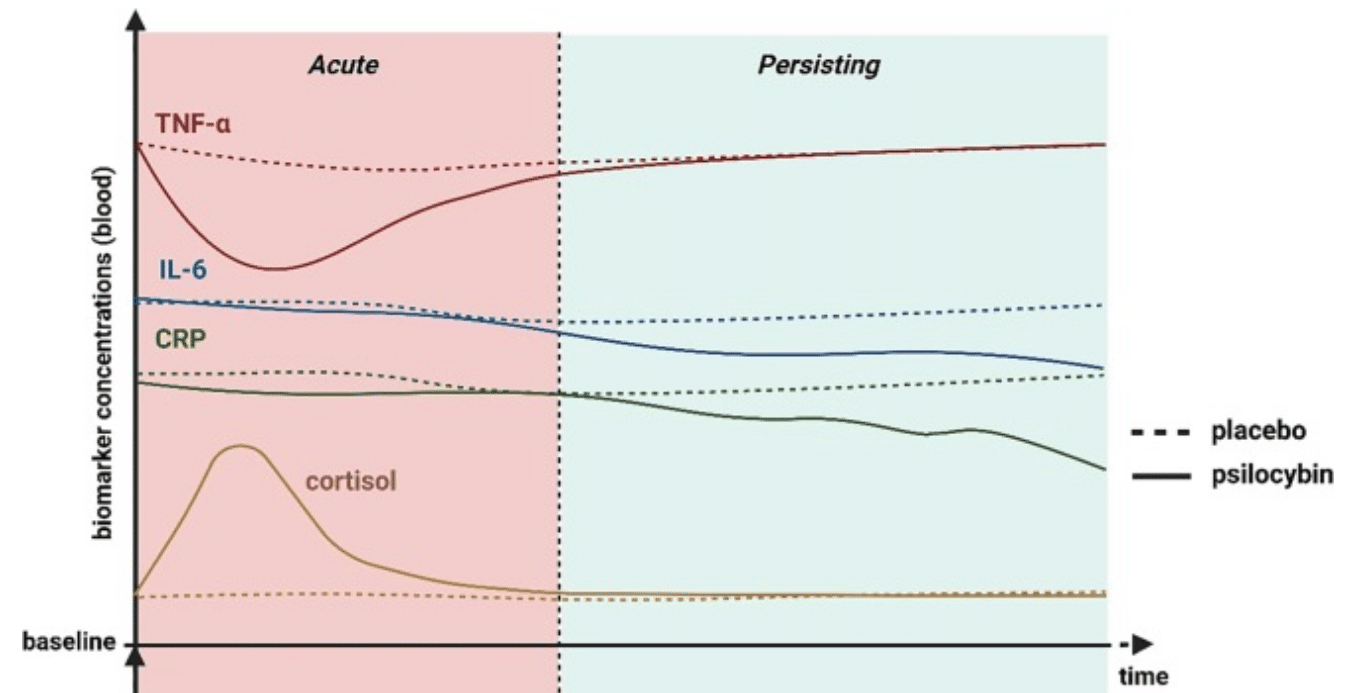
Five days after his first session, Johnson's hsCRP level, an important marker for inflammation, dropped below the detection level. Chronic low-grade inflammation is considered a major driver of aging.
As described here: Psilocybin as an anti-inflammatory
Stress hormones and recovery
During the peak of the experience, his cortisol temporarily rose sharply, but five days later his morning levels were approximately 42% bearing than before the session. The hormone DHEA-S also dropped significantly. Johnson described this as a feeling of deep calm in the week after the experience, something that often the psychedelic afterglow effect is mentioned.
Blood sugar regulation
His continuous glucose monitor showed that his metabolic control improved. His estimated HbA1c value decreased from approximately 4.7% to 4.4%. This suggests that psilocybin may also affect metabolism and insulin sensitivity.
Changes in brain networks
During the experience, a so-called entropic brain state observed. This means that brain networks function more flexibly and less rigidly. The Default Mode Network, which is often involved in self-reflection and fixed thought patterns, temporarily became less dominant.
It was striking that some of these changes were still visible weeks later.
The science behind psilocybin and aging
Johnson's experiment does not stand alone. In 2025, a study appeared in the scientific journal. npj Aging in which researchers of Emory University and Baylor College of Medicine investigated the effects of psilocybin on aging.
Mice that lived longer
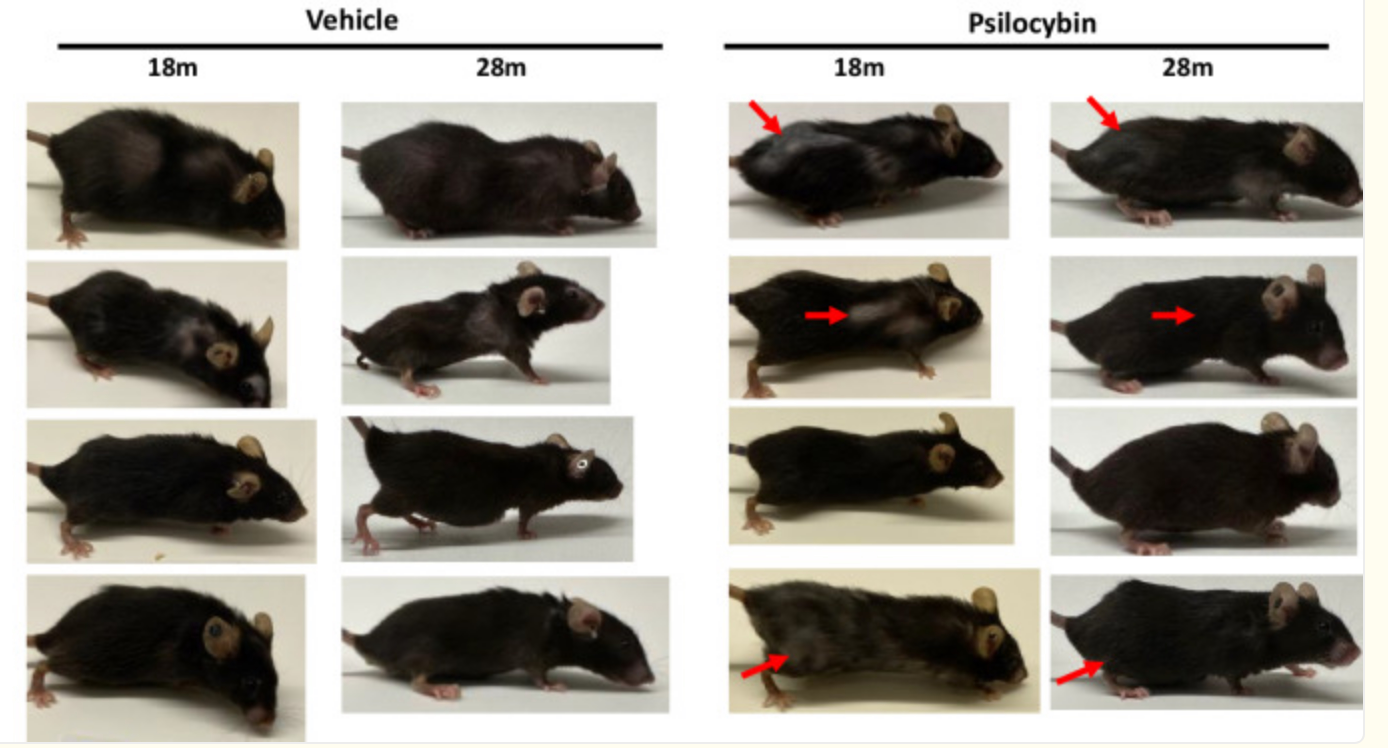
In this study, older mice were administered psilocybin monthly for ten months. The results were striking:
-
about 80% of the treated mice were still alive
-
only 50% of the control group was still alive
In addition, the mice looked physically healthier, with a better coat and fewer signs of aging.
Cell rejuvenation in the laboratory
The researchers also tested human fibroblasts, connective tissue cells that play a role in aging. When these cells were exposed to psilocin, the active metabolite of psilocybin, they remained up to 57% vital longer.
This occurred via multiple mechanisms:
-
Protection of telomeres
The protective ends of chromosomes remained better intact. -
Less oxidative stress
The production of harmful reactive oxygen molecules decreased. -
Increased SIRT1 activity
Sirt-1 plays an important role in DNA repair and lifespan. -
Less cellular aging
Cells showed fewer signs of aging.
How could psilocybin do this?
Psilocybin works primarily through activation of 5-HT2A serotonin receptors. These receptors are found not only in the brain, but also in many other body tissues such as immune cells, blood vessels, and skin cells.
Activation of these receptors may potentially lead to:
-
fewer inflammatory signals
-
improved DNA repair
-
better mitochondrial function
-
increased neuroplasticity
These processes are all relevant to healthy aging.
Important notes
Despite the promising results, caution is important.
The investigation is still in an early phase. We currently have primarily:
-
laboratory research with cells
-
animal studies
-
individual self-experiments
That means that there There is no clinical evidence yet that psilocybin extends human lifespan..
In addition, there are still many unknown factors, such as:
-
optimal dosage
-
long-term effects
-
differences between individuals
-
psychological risks at high dosages
The connection between mental health and aging
Mental and physical health are strongly interconnected. Chronic stress, depression, and anxiety increase inflammation levels and disrupt hormonal balance, which can accelerate the aging process.
Psilocybin is already being investigated for its effects on:
-
depression
-
fear
-
addiction
-
trauma processing
If these mental improvements lead to less stress and better sleep, that can indirectly contribute to aging healthier.
What does this mean for the future?
Research into psychedelics is developing rapidly. Universities such as Johns Hopkins University and Imperial College London have been studying the therapeutic effects of psilocybin for years. Now, longevity research is also starting to gain momentum.
It is still too early to consider psilocybin as an anti-aging therapy, but the first indications show that psychedelics may have much broader biological effects than previously thought.
Summary table: what can psilocybin mean biochemically?
| Mechanism of action | Biochemical route | Possible applications |
|---|---|---|
| Anti-inflammatory | ↓ TNF-α, IL-6, CRP via NF-κB inhibition | Anxiety, depression, post-COVID, MS |
| Neuroplasticity | ↑ BDNF, mTOR, glutamate | Depression, burnout, Parkinson's |
| Antioxidation & rejuvenation | ↑ SIRT1, ↓ oxidative stress | Aging, IPF, cell repair |
| Protection of β-cells | ↓ TXNIP, ↓ STAT1/3, preserve insulin function | Type 2 diabetes, metabolic syndrome |
| Immunomodulation | 5-HT2A on T-cells and microglia | Autoimmune diseases, encephalitis |
Conclusion
Psilocybin is primarily known as a psychedelic substance that alters consciousness and perception. However, new research suggests that its effects may extend far beyond just psychology.
Laboratory studies show that psilocybin:
-
can extend the lifespan of human cells
-
can slow down aging processes
-
can improve the survival of older mice
Additionally, self-experiments by longevity biohackers such as Bryan Johnson show that psilocybin may also influence inflammation, stress hormones, and metabolism.
Whether these effects actually lead to a longer lifespan in humans, Future research still has to show this. What is becoming clear, however, is that psychedelics could play an unexpected role in research into healthy aging.
Practical example Marcel
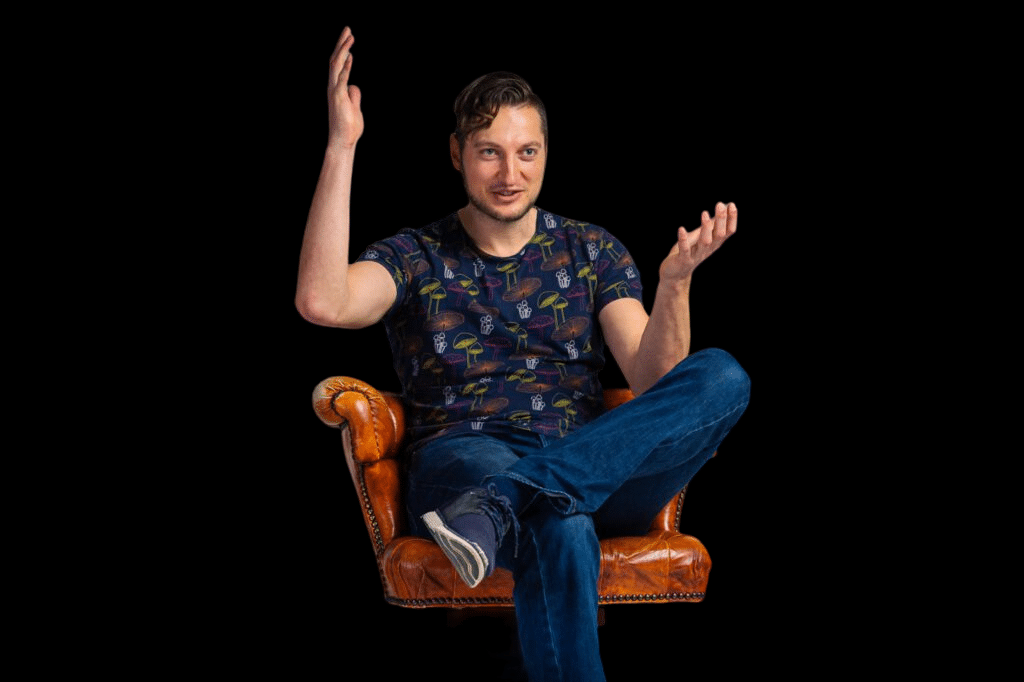
In addition to the 2,300+ psychedelic sessions he has led, Marcel van der Putten has used psilocybin himself more than 170 times. It often happens that people don't believe he is already 42; his health is in top condition. This is also a case of n=1.
See the profile page on Triptherapie here:
Posted : 15 March 2026 19:08