
Topic starter
Since the Dutch ban on magic mushrooms In December 2008, so-called sclerotia or magic truffles gained popularity. There is confusion among many people: are these “trip tubers” also mushrooms? How exactly do they work? What species exist, are they legal and what are the risks? This article provides a comprehensive overview of the biology, action, legislation and therapeutic potential of sclerotia, so you can make informed choices.
What are sclerotia?
Definitions
In mycology, a sclerotium a compact clump of mycelium formed by some fungi to survive adverse conditions. It consists of thickened fungal filaments, has a drought-resistant coating and is rich in fat and polysaccharides. Under favourable conditions, fruiting bodies can grow from such a sclerotium for several consecutive years. Bee Claviceps purpurea (ergot) consumption of sclerotia can lead to poisoning, but with other species, sclerotia form the basis for what is sold in smartshops as magic truffles.
Magic truffles or psychedelic truffles are actually the sclerotia of certain psilocybin-producing fungi. They contain the same psychoactive compounds as magic mushrooms - mainly psilocybin and psilocin - and are used by consumers for the hallucinogenic effects. Because sclerotia are not botanically considered mushrooms, they are outside the Opium Act and may be sold fresh. Dried truffles or extracting psilocybin is banned though.
An evolutionary survival organ
Sclerotia are a clever evolutionary adaptation. In difficult conditions, the fungal filaments (mycelium) thicken and store food and moisture to grow again later. These are compact “protective bunkers” in which mycelium stores nutrients and a small amount of moisture (about 5-10 %). Once the drought or food shortages have passed, the sclerotium can sprout again and form fruiting bodies. The hard outer layer allows the truffles to survive for years underground.
This survival strategy also has legal implications: sclerotia are not technically a mushroom and for a long time attracted less attention from lawmakers. In the Netherlands, the mushroom ban led to sclerotia becoming popular as a legal alternative.
How are magic truffles created?
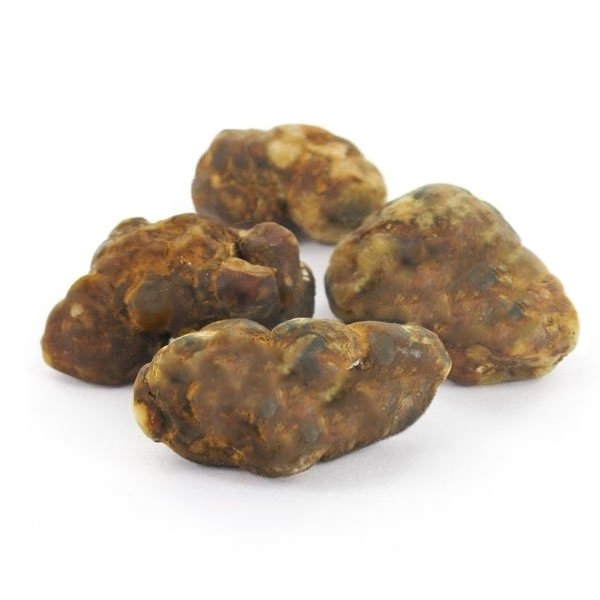
The RIVM report shows that only a limited number of the over 20,000 species of mushrooms form sclerotia. Growers put the right fungal variety in a plastic bag with grain; after about 14 weeks, small tubers develop in a warm room. Due to their lower content of psychotropic substances, sclerotia have a milder effect than magic mushrooms, but the effect is very similar to that of shrooms.
Differences between truffles and magic mushrooms
| Feature | Magic truffles (sclerotia) | Mushrooms (psilocybin mushrooms) |
|---|---|---|
| Botany | Thickened parts of the mycelium; have no stem/hat | Fruit body of fungi with stem and cap |
| Appearance | Lumpy, light to dark brown nuggets | Small mushrooms; often dried |
| Formation phase | Are formed as survival organ during drought/food shortage | Arises from mycelium as fruiting body for spore dispersal |
| Psychoactive substances | Psilocybin, psilocin and baeocystin | Psilocybin, psilocin and baeocystin |
| Legal status in NL | Fresh allowed; drying or psilocybin extraction prohibited | Sales banned since 1 December 2008 |
| Sales quantity | Trays of ±15 g; price ± €12-€25 | Grow kits and dried mushrooms may not be sold; cultivation for personal use possible |
Types of truffles
There are different trade names for truffles, such as Mexicana, Dragon's Dynamite, Tampanensis and Atlantis. Biologically, however, they often involve a limited number of species and the different names are partly marketing. RIVM lists the main types offered in smartshops: Psilocybe mexicana, Psilocybe tampanensis, Psilocybe pajateros and Psilocybe atlantis.
Composition and potency
- Psilocybin content: Mushrooms and truffles contain both psilocybin and psilocin. The RIVM report states that a standard portion of sclerotia weighs 10-15 grams and fresh mushrooms contain about 1-2 mg psilocybin per gram. Italian research found levels of 0.059-0.168 mg psilocybin per 100 mg of fresh sclerotia in psilocybe sclerotia. So the psychoactive content can vary from strain to strain and cultivation to cultivation.
- Strongest truffles: The strongest truffles are fresh truffles. Magic truffles Triptane would contain the most psilocybin per gram of truffle according to Triptherapie
- Mild flavour: Many users find truffles nutty with a sour aftertaste; they generally taste less foul than shrooms.
Effect of truffles
Effects and duration
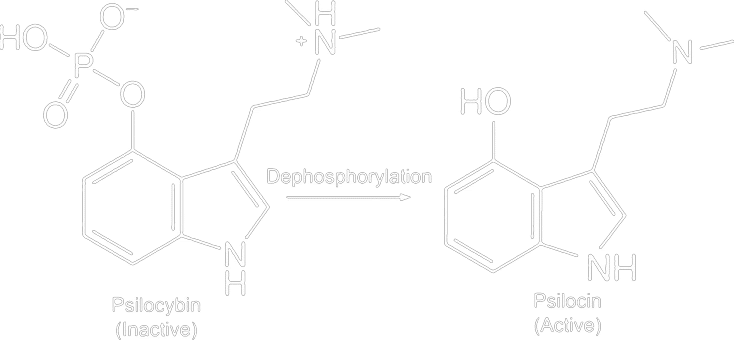
The fabric psilocybin is converted in the body into psilocin, an agonist of serotonin receptors. It stimulates different areas of the brain and causes changes in perception, emotion and thinking. Psilocin mimics serotonin and so the receptors are affected.
According to most people, the effect often starts 30-60 minutes after consumption; if you use tea, it can start sooner (15 minutes). The trip is jerky and usually lasts 3-6 hours, after which it can take up to 16 hours for the reaction rate to return to normal. The VNN information page describes the typical sensations: seeing colours more intensely, perceiving patterns that are not there, enhanced perception of music, smell and touch, changes in perception of time and deep thoughts. Truffles cause euphoria, relaxation and sometimes muscle weakness. Visual effects are little short of magic mushrooms.
Dosage
The RIVM recommends as a normal trip dose 5-15 g fresh sclerotia (approx. 10-30 mg psilocybin + psilocin). Higher doses of 15-25 g give a solid trip. The trip starts after about 30 minutes and lasts for three to six hours. 15-30 g fresh mushrooms give a similar effect.
Novice users would do well to start with a low dose, as advised by the VNN, and to wait to overdose because effects may occur with a delay.
Mechanism of action
Truffles stimulate the serotonergic receptors in the central nervous system, causing changes in autonomic functions (chills, headaches, nausea), motor reflexes (muscle weakness), perception (sharpening of colour, time, space and sound) and behaviour (restlessness, anxiety, euphoria, confusion). These effects resemble the effects of LSD.
Risks and side effects
Acute effects and bad trips
A bad trip occurs when the user becomes anxious, confused or paranoid. VNN lists anxiety, panic, loss of sense of reality, psychosis, nausea, vomiting, balance problems and increased heart rate as risks, among others. The RIVM report describes that incidents often include panic attacks, hyperventilation, paranoia, psychosis and sometimes trauma (from falls). Severity increases with combination use with other drugs or alcohol.
Incidents and target group
The number of health incidents caused by sclerotia is very limited nationwide, but in Amsterdam, problems occur mostly among foreign tourists. The RIVM notes that 3-day tourists often combine truffles with alcohol without sufficient preparation and do not have a sober companion. Between 2007 and 2011, three quarters of mushroom/truffle incidents took place in the centre of Amsterdam, mostly among men aged 18-24. 37 % of the incidents involved combinations with other substances; cannabis (43 %) and alcohol (24 %) were the most common combinations.
Dependency
There are no reports of dependence on magic mushrooms or sclerotia. Due to rapid tolerance, developing a physical addiction is exceptional.
Legislation and supply
Mushroom ban and legality of truffles
Since 1 December 2008, psilocybin mushrooms have been banned in the Netherlands. Sclerotia are not considered mushrooms and are therefore not covered by the Opium Act. Sales are legal as long as they are fresh; drying or extracting psilocybin is prohibited. Truffles may only be sold to persons over 18 years of age.
Sales channels and prices
Truffles are mainly sold through smartshops, headshops and the internet. A container usually contains 15g and costs €12-€25 per serving. The four main species are Psilocybe mexicana, P. tampanensis, P. pajateros and P. atlantis.
After the mushroom ban, the standard portion halved (15g truffles vs 30g shrooms). Truffles are more difficult to grow at home than magic mushrooms, which is why they are mainly sold through smartshops. In Amsterdam, sales in tourist shops are limited to a small number of licensed smartshops. RIVM recommends licensing system and better information for tourists.
User characteristics and popularity
After the mushroom ban, the popularity of truffles increased. According to a panel study by the University of Amsterdam, only four types of sclerotia exist in smartshops; new variants rarely appear. Use among Dutch nationals remains limited; tourists are the largest outlet. Ever-use data show that most people try magic mushrooms/truffles only once.
Therapeutic use and research
Sclerotia and psychotherapy
Triptherapie.co.uk, a professional provider of guided sessions, describes that truffles and magic mushrooms are both psychoactive fungi of the same organism. They explain that truffles are the sclerotia are - compact globular masses of mycelium and nutrients that form underground during drought and food shortages. The psychoactive effects are attributed to psilocybin, which is converted to psilocin in the body. Other components such as baeocystine and norbaeocystine occur in lower amounts.
Triptherapie points to ongoing scientific research on psilocybin as a potential treatment for conditions such as depression, anxiety disorders, addiction problems, PTSD and cluster headaches. In clinical settings, researchers use precisely measured doses of psilocybin to study its effects on brain activity and emotion. The site stresses that synthetic psilocybin can be more accurately dosed for research than natural truffles.
However, the therapeutic use of truffles is not magic: results depend on set and setting, supervision and aftercare. Moreover, psilocybin is still on list I of the Opium Act; only possessing fresh truffles is allowed. Who truffle therapy considering, should seek guidance from experts and comply with legal rules.
Trade-offs for a ban
RIVM warns that a ban on sclerotia could lead to users switching to other, potentially more dangerous psychoactive substances. As the number of incidents involving truffles is limited and mainly takes place in Amsterdam, the RIVM recommends regulation, permits and better education rather than a total ban.
Tips for safe use
- Know your mental state: Only use truffles if you feel good about yourself. People with mental health problems, epilepsy or pregnancy should not use them.
- Note the set & setting: Choose a calm and familiar environment and provide a sober companion (trip-sitter). RIVM stresses that incidents are common among tourists who use truffles impulsively in strange surroundings.
- Start low and don't mix: Start with a low dose (5 g) and do not mix with alcohol, cannabis or other drugs.
- Hold off on overdosing: Effects start after 30-60 minutes and develop in a jerky way. Wait at least two hours before you consider taking supplementary.
- Avoid traffic: During and after the trip, motor skills and reaction speed are impaired; do not drive a vehicle and avoid risky activities.
Conclusion
Sclerotia are fascinating survival organs of psilocybin-producing fungi. Their compact structure makes them resistant to drought and environmental stress, while containing the same psychoactive compounds as magic mushrooms. Through a combination of biological survival and legal loopholes, magic truffles have become the legal alternative to magic mushrooms in the Netherlands since 2008.
From the RIVM report shows that sclerotia have a milder effect and less variation in psilocybin content than magic mushrooms, that the number of health incidents is limited and mainly affects tourists, and that a ban might be counterproductive. For most users, truffles, if used in the right dose and setting, are a relatively safe drug with little risk of dependence.
At the same time, one should be aware of the psychoactive nature of truffles. Good preparation, responsible dosing, a safe environment and sober supervision reduce the chances of a bad trip. For those considering therapeutic use, it is advisable to contact professionals and respect current legislation.
Being well informed will help you better understand the magic of sclerotia and, if desired, treat it with respect and caution.
Posted : 26 March 2026 17:41