
Topic starter
Long-term depression and BDNF
In cases of recurrent or long-term depression, doctors generally do not focus so much on the hormone BDNF. However, particularly in men, it appears that BDNF plays a role in depression. When we offer a client a treatment method, we examine what we can do to alleviate or resolve the depression by increasing BDNF as well.
What is BDNF?
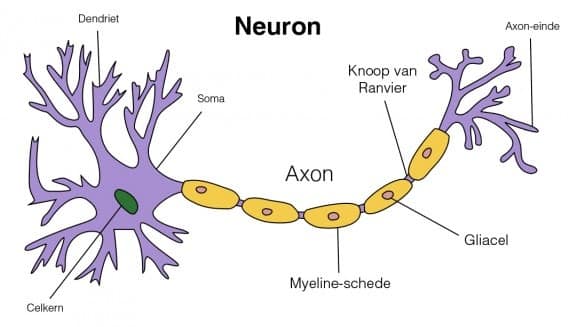
Brain-derived neurotrophic factor, BDNF, is a neurotrophin. Neurotrophins are important for the survival, repair, and growth of neurons. Neurons are nerve cells that process, transmit, or process information in the brain or nervous system. Neurons can be seen as the data cables between parts of the brain and the body. An average body has approximately 100,000,000,000 neurons (100 billion).
Too little BDNF and depression
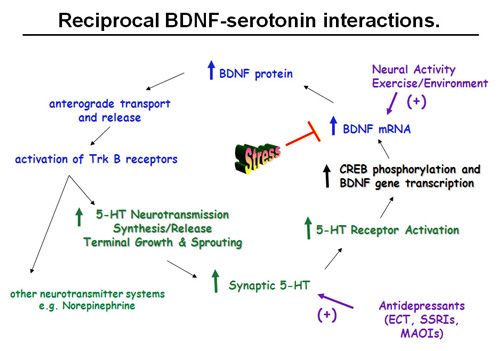
A deficiency of neurotrophins such as BDNF contributes to the development of neurodegenerative disorders. The lack of BDNF prevents neurons from repairing damage. This can lead to the development of depression when there is insufficient BDNF present for an extended period. The degeneration (breakdown) of neurons in the frontal lobe appears to be the culprit, as this causes a decline in consciousness. Furthermore, low serotonin levels contribute to depression. The depression is exacerbated because low serotonin levels, via the 5HT2A receptor, prevent the release of sufficient BDNF (see also the image below and bear in mind that the 5-HT receptor is not stimulated, or only minimally stimulated).
More BDNF for depression
Producing more BDNF is therefore possible by stimulating the 5HT receptor. When the body releases more BDNF, it flips a switch on a series of genes that allow brand-new brain cells and nerve cell connections to grow. Slightly higher BDNF levels ensure that you learn faster, remember better, age more slowly, and that your brain quickly rearranges connections with the various parts of the brain and the body.
BDNF also increases your brain plasticity. When your brain cells are damaged or find themselves in a stressful situation, BDNF protects them and helps them come back stronger. The neural pathways become more flexible instead of breaking down, which could explain why higher levels of BDNF are associated with warding off depression.
With a few changes in daily habits, the brain can be programmed to release increasing amounts of BDNF, making the brain more resilient and stronger in the face of any setbacks that are part of life. The strongest way to increase BDNF is through psilocin (from magic mushrooms) because it directly stimulates 5-HT2a to release BDNF.
Posted : 25 April 2019 20:30
Topic starter
Supplement to this older post on BDNF: newer studies make the story even more interesting, because in addition to serotonin and 5-HT2A, there is an increasing focus on the BDNF-TrkB route. TrkB is the receptor on which BDNF acts. So you can think of BDNF as a kind of growth factor signalling agent, while TrkB is the receptor that can further transmit that signal in cells.
A key study from 2023 in Nature Neuroscience showed that psychedelics such as LSD and psilocin, the active metabolite of psilocybin, could potentially bind directly to the BDNF receptor TrkB. According to this research, psychedelics could thereby enhance the action of BDNF and thus neuroplasticity may support it. Interestingly, the researchers partially decouple this from the hallucinogenic effect via 5-HT2A, suggesting that the plasticity pathway need not be exclusively via the classical serotonin route.
This does not mean that we can now say that psilocybin cures depression via TrkB. For that, the human clinical translation is still too complex. However, it does provide a more modern explanation of why psychedelics are linked in research to temporary increased brain flexibility, changes in network activity and possibly better receptivity to new experiences, insights and behavioural patterns. A recent review on mechanisms of psilocybin-induced neuroplasticity therefore also mentions TrkB as an additional pathway alongside 5-HT2A-dependent processes.
Posted : 24 April 2026 09:35