
Topic starter
Long-term depression and BDNF
In cases of recurrent or long-term depression, doctors generally do not focus so much on the hormone BDNF. However, particularly in men, it appears that BDNF plays a role in depression. When we offer a client a treatment method, we examine what we can do to alleviate or resolve the depression by increasing BDNF as well.
What is BDNF?
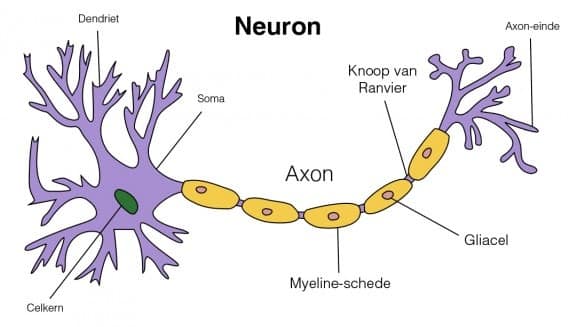
Brain-derived neurotrophic factor, BDNF, is a neurotrophin. Neurotrophins are important for the survival, repair, and growth of neurons. Neurons are nerve cells that process, transmit, or process information in the brain or nervous system. Neurons can be seen as the data cables between parts of the brain and the body. An average body has approximately 100,000,000,000 neurons (100 billion).
Too little BDNF and depression
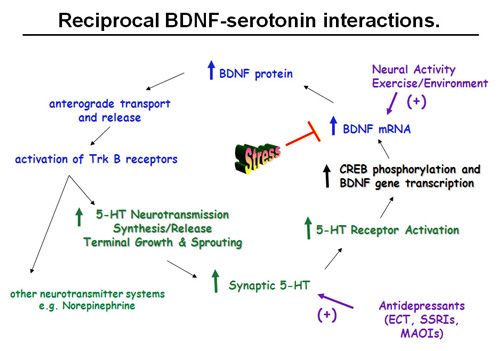
A deficiency of neurotrophins such as BDNF contributes to the development of neurodegenerative disorders. The lack of BDNF prevents neurons from repairing damage. This can lead to the development of depression when there is insufficient BDNF present for an extended period. The degeneration (breakdown) of neurons in the frontal lobe appears to be the culprit, as this causes a decline in consciousness. Furthermore, low serotonin levels contribute to depression. The depression is exacerbated because low serotonin levels, via the 5HT2A receptor, prevent the release of sufficient BDNF (see also the image below and bear in mind that the 5-HT receptor is not stimulated, or only minimally stimulated).
More BDNF for depression
More BDNF Production is therefore possible by stimulating the 5HT receptor. When the body releases more BDNF, it flips a switch on a series of genes that allow brand-new brain cells and nerve cell connections to grow. Slightly higher BDNF levels ensure that you learn faster, remember better, age more slowly, and that your brain quickly rearranges connections with the various parts of the brain and the body.
BDNF also increases your brain plasticity. When your brain cells are damaged or find themselves in a stressful situation, BDNF protects them and helps them come back stronger. The neural pathways become more flexible instead of breaking down, which could explain why higher levels of BDNF are associated with warding off depression.
With a few changes in daily habits, the brain can be programmed to release increasing amounts of BDNF, making the brain more resilient and stronger in the face of any setbacks that are part of life. The strongest way to increase BDNF is through psilocin (from magic mushrooms) because it directly stimulates 5-HT2a to release BDNF.
Our services
At Trip Therapy, we have various protocols, and we do things slightly differently for every client. Everything is done in consultation, and our advice is merely advice. With every form of psychedelic therapy, we also try to look at what we can do regarding nutrition, supplements, and exercise. We do this because by addressing every aspect of well-being, we achieve even better results than with psychedelic therapy alone.
Overview of the trip therapy procedure
Generally, with most clients, we use a schedule that looks as follows:
- Advice on nutrition exercise and supplements based on point 1
- A period of 2-3 weeks of progress reviewing point 2
- Individual psychedelic therapy* (Unless a group offers additional benefit or preference)
- Follow-up discussion of the psychedelic therapy on the same day
- After about 1-2 weeks, another follow-up discussion
During psychedelic therapy, in addition to the use of psilocybin, we also utilize aromatherapy, color therapy, carefully selected music, herbs, and stimulating supplements. All of this is tailored to the client and the goal.
You will find here our prices for psychedelic therapy
Contact details
Would you like to know more about what we do and who we are first? You can ask us anything. You can do this via the options below. Choose a medium that you feel comfortable with.
Public questions via forum: Click here
Phone and Whatsapp: +31640898455
Email: info@triptherapie.nl
Contact form:
Facebook:
Twitter:
Posted : 25 April 2019 19:30