
Topic starter
Long-term depression and BDNF
In cases of recurrent or long-term depression, doctors generally do not focus so much on the hormone BDNF. However, particularly in men, it appears that BDNF plays a role in depression. When we offer a client a treatment method, we examine what we can do to alleviate or resolve the depression by increasing BDNF as well.
What is BDNF?
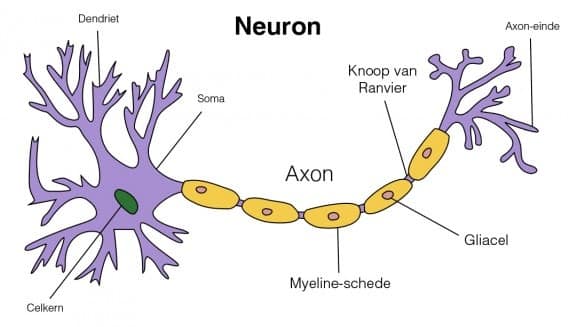
Brain-derived neurotrophic factor, BDNF, is a neurotrophin. Neurotrophins are important for the survival, repair, and growth of neurons. Neurons are nerve cells that process, transmit, or process information in the brain or nervous system. Neurons can be seen as the data cables between parts of the brain and the body. An average body has approximately 100,000,000,000 neurons (100 billion).
Too little BDNF and depression
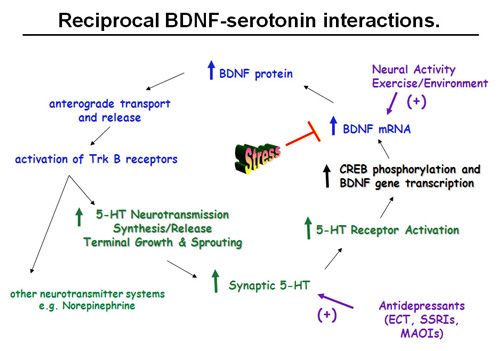
A deficiency of neurotrophins such as BDNF contributes to the development of neurodegenerative disorders. The lack of BDNF prevents neurons from repairing damage. This can lead to the development of depression when there is insufficient BDNF present for an extended period. The degeneration (breakdown) of neurons in the frontal lobe appears to be the culprit, as this causes a decline in consciousness. Furthermore, low serotonin levels contribute to depression. The depression is exacerbated because low serotonin levels, via the 5HT2A receptor, prevent the release of sufficient BDNF (see also the image below and bear in mind that the 5-HT receptor is not stimulated, or only minimally stimulated).
More BDNF for depression
Producing more BDNF is therefore possible by stimulating the 5HT receptor. When the body releases more BDNF, it flips a switch on a series of genes that allow brand-new brain cells and nerve cell connections to grow. Slightly higher BDNF levels ensure that you learn faster, remember better, age more slowly, and that your brain quickly rearranges connections with the various parts of the brain and the body.
BDNF also increases your brain plasticity. When your brain cells are damaged or find themselves in a stressful situation, BDNF protects them and helps them come back stronger. The neural pathways become more flexible instead of breaking down, which could explain why higher levels of BDNF are associated with warding off depression.
With a few changes in daily habits, the brain can be programmed to release increasing amounts of BDNF, making the brain more resilient and stronger in the face of any setbacks that are part of life. The strongest way to increase BDNF is through psilocin (from magic mushrooms) because it directly stimulates 5-HT2a to release BDNF.
Posted : 25 April 2019 20:30
Topic starter
Aanvulling op dit oudere bericht over BDNF: nieuwere studies maken het verhaal nog interessanter, omdat er naast serotonine en 5-HT2A ook steeds meer aandacht is voor de BDNF-TrkB-route. TrkB is de receptor waarop BDNF werkt. Je kunt BDNF dus zien als een soort groeifactor-signaalstof, terwijl TrkB de ontvanger is die dat signaal in cellen verder kan doorgeven.
Een belangrijk onderzoek uit 2023 in Nature Neuroscience liet zien dat psychedelica zoals LSD en psilocine, de actieve metaboliet van psilocybine, mogelijk direct kunnen binden aan de BDNF-receptor TrkB. Volgens dit onderzoek zouden psychedelica daardoor de werking van BDNF kunnen versterken en zo neuroplasticity kunnen ondersteunen. Interessant is dat de onderzoekers dit deels loskoppelen van de hallucinogene werking via 5-HT2A, wat suggereert dat de plasticiteitsroute niet uitsluitend via de klassieke serotonineroute hoeft te lopen.
Dat betekent niet dat we nu kunnen zeggen dat psilocybine via TrkB depressie geneest. Daarvoor is de menselijke klinische vertaalslag nog te complex. Wel geeft het een modernere verklaring waarom psychedelica in onderzoek worden gekoppeld aan tijdelijke verhoogde flexibiliteit van het brein, veranderingen in netwerkactiviteit en mogelijk betere ontvankelijkheid voor nieuwe ervaringen, inzichten en gedragspatronen. Een recente review over mechanismen van psilocybine-geïnduceerde neuroplasticiteit noemt TrkB daarom ook als een aanvullende route naast 5-HT2A-afhankelijke processen.
Posted : 24 April 2026 09:35