4 December 2024 09:35
Topic starter
0

What are the similarities between LSD, psilocybin, and ayahuasca?

5 December 2024 11:18
What are the similarities between LSD, psilocybin, and ayahuasca?
Similarities between LSD, psilocybin, and ayahuasca
LSD, psilocybin and ayahuasca (DMTare all psychedelic substances that influence brain chemistry and can cause similar effects. The main similarities between these substances are found in their chemical structures and the way they interact with specific receptors in the brain.
Chemical structures
LSD (lysergic acid diethylamide), psilocybin (a prodrug that is converted to psilocin in the body), and DMT (dimethyltryptamine, the active substance in ayahuasca) belong to the class of compounds known as tryptamines. Tryptamines have a similar basic structure, which is derived from the amino acid tryptophan.
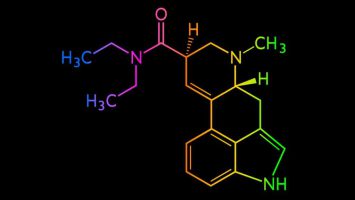
The chemical structures of DMT and psilocin are remarkably similar to those of serotonin, an important neurotransmitter in the brain. This is crucial because the similarity in structure means that these substances can bind to the same receptors as serotonin, specifically the 5-HT2A receptors.

Receptors and function
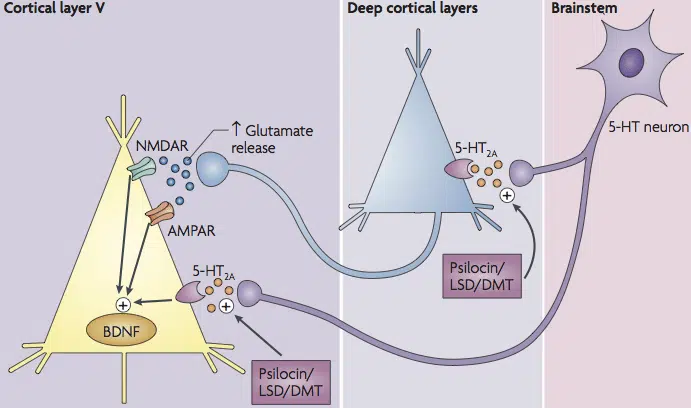
The psychedelic effects of LSD, psilocybin and DMT are primarily due to their interaction with the 5-HT2A receptors in the brain. These receptors are a subtype of serotonin receptors and play an important role in the regulation of mood, perception, and cognition.
When LSD, psilocybin, or DMT bind to these receptors, they cause increased stimulation, leading to the hallucinogenic and mind-altering effects often experienced during psychedelic sessions. The binding of these substances to the 5-HT2A receptors results in changes in neurotransmission, which can lead to increased synaptic plasticity and changes in the way information is processed in the brain.
Visual hallucinations
Because DMT, psilocybin, and LSD act on the same receptors, it leads to similar visual experiences, although the intensity and nature of the hallucinations can vary.
LSD is known for its complex, algorithmic visual effects that are often brightly lit, colorful, and synthetic in nature. The hallucinations can be large, fast-moving, and sharply defined, lacking depth. This results in a visual experience often compared to that of 2C-B, but with greater intensity.
Psilocybin, derived from magic mushrooms and truffles, can also cause strong hallucinations, but these are often more dreamlike and organic in nature. The visual effects of psilocybin can vary from subtle changes in color and texture to intense visual hallucinations that can transport the user to an altered reality.
Ayahuasca offers a unique visual experience that is often described as a dream with deep meaning. The hallucinations can be emotionally charged and bring up old traumas or repressed memories, which can further deepen the visual experience.
See also: