31 May 2024 15:14
Topic starter
0

What is the effect of passionflower during psilocybin use?
2 Answers
1
13 June 2025 13:34

Passiflora, also known as passion flower, is a natural herb that has calming and soothing effects. In combination with psilocybin, the active ingredient in magic truffles or mushrooms, passiflora can enhance the psychedelic experience in various ways.
1. Calming effectPassiflora has a calming and relaxing effect on the nervous system, which can help reduce anxiety and promote a sense of calm during the trip. This can be particularly beneficial for individuals who experience anxiety or nervousness when using psychedelics.
2. Deeper tripPassiflora can deepen the psychedelic experience by enhancing the effects of psilocybin. It can intensify the visual and sensory aspects of the journey, leading to a deeper and more immersive experience.
3. Longer durationPassiflora has mild MAO-inhibiting properties, which can prolong the effects of psilocybin. This means that the trip can last longer than normal, allowing for a longer period of introspection and exploration.
4. Clearer tripPassiflora can help promote mental clarity and focus during the psychedelic experience. It can improve cognitive function and enhance the ability to process and integrate the insights gained during the journey.
5. Visual improvementIt has been reported that Passiflora enhances the visual effects during the psychedelic experience. Colors may appear more vivid, patterns may become more complex, and visual hallucinations may be more pronounced.
The effects of passiflora during a psilocybin session can vary from person to person. During our truffle ceremonies, participants can choose to add passiflora. This combination is called psiloflora. You can read more about whether this is right for you via the links.
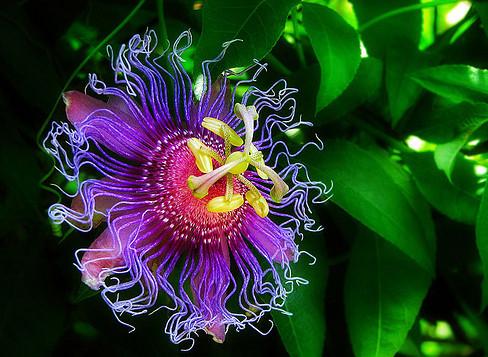
Left: Psiloflora | Truffle ceremony
1
13 June 2025 13:33

1. Pharmacological perspective
Passiflora incarnata contains various active substances that can act synergistically with psilocybin (the prodrug of psilocin). Important constituents are flavonoids (such as vitexin, isovitexin, schaftoside) and alkaloids (including β-carbolines such as harmine and harmaline). The flavonoids and related glycosides have a calming effect by enhancing GABA activity in the central nervous system. Furthermore, the β-carboline alkaloids in Passiflora act as reversible MAO-A inhibitors (RIMA). For example, harmaline—also present in Passiflora incarnata—is a known RIMA. Passiflora therefore contains MAO-inhibiting constituents to some extent (comparable to Peganum harmala or Banisteriopsis caapi), albeit often in lower concentrations than in classic ayahuasca components.
Psilocybin is converted into psilocin in the body, a portion of which (approximately 4–33% in human studies) is broken down via monoamine oxidase A (MAO-A). Inhibition of MAO-A can slow down the metabolism of psilocin, potentially resulting in a longer or more intense psychoactive effect. Literature suggests that co-ingestion of MAO inhibitors (e.g., the β-carbolines harmine/harmaline) can enhance the effects of MAO-sensitive psychedelics. In one clinical study, brief pretreatment with the MAO inhibitor tranylcypromine resulted in a slight enhancement of peripheral side effects of psilocybin (such as blood pressure elevation and mydriasis), without a major change in the hallucinogenic effects. This suggests that mild MAO-A inhibition by Passiflora might slightly prolong or deepen the trip, but not necessarily radically exceed it.
In summary, pharmacology suggests that Passiflora incarnata can inhibit the breakdown of psilocin via MAO-A through its β-carbolines. This would theoretical can increase the duration/intensity of psilocybin (comparable to a mild ayahuasca effect), and can also cause additional sedation and anxiolysis. Additionally, the flavonoids in passionflower contribute to relaxation via GABA action. However, there are no systematic pharmacokinetic studies for this specific combination. Anecdotal reports do suggest that passionflower “makes the trip longer and milder” (via mild MAO inhibition), but that caution is advised with excessive dosing of combined MAO inhibitors.
Key points: The active ingredients harmine/harmaline inhibit MAO-A; psilocybin (psilocin) is partially broken down by MAO-A; MAO inhibition can enhance psychedelic effects. Additionally, passionflower flavonoids provide an extra calming, GABA-modulating effect. However, there is no clear published research on pharmacokinetic interactions or serious contraindications for the combination, although standard caution applies with MAOIs.
2. Therapeutic perspective
On a therapeutic level, there are no Randomized clinical trials specifically examine the Passiflora + psilocybin combination. Passionflower itself does have traditional and clinical applications. Passiflora incarnata has long been used as a natural anxiolytic and sleep aid. For instance, “[passionflower] supports falling asleep and ensures a deeper, restful sleep” and “reduces nervousness and promotes inner peace.” A meta-analysis concludes that passionflower may be effective for mild anxiety disorders, likely via GABA regulation. Psilocybin itself is being investigated in clinical research as a treatment for depression, anxiety, and PTSD, among others, but studies of a combination with passionflower are lacking to date.
Nevertheless, anecdotal claims regarding potential synergy circulate in therapeutic circles (particularly within Dutch “truffle and mushroom ceremonies”). For example, Triptherapie describes that Passiflora can enhance the psychedelic session. deepen and extendThe calming effect reduces anxiety, while mild MAO inhibition prolongs and deepens the trip effects. Claims are made that the trip becomes “more visual and intense” (more vivid colors, more complex patterns) and that the user can integrate more clearly. An example from a Q&A list: “Passiflora has a calming effect… Can deepen the psychedelic experience… and prolong the effects of psilocybin.” Such statements are primarily anecdotal; they have not yet been substantiated by controlled research. There is no scientific literature that unequivocally confirms whether passionflower increases or decreases the therapeutic outcome of psilocybin psychedelic therapy.
Some therapists and experts by experience recommend passionflower as an accompaniment to psilocybin: for example, as preparation (to reduce tension) or in a low dosage prior to a session. This practice stems from the folklore and herbal medicine tradition: passionflower is known for anxiety reduction and relaxation. A clinical anecdote (unpublished) suggests that combined MAOI trips add some intensity, but that it may also increase the likelihood of restless or confusing reactions.
Therapeutic summary: Formal evidence for improved therapy outcomes due to Passiflora is lacking. However, Passionflower itself is traditionally used for anxiety and sleep problems. Some experimental programs combine it with psilocybin (see, for example, “Psiloflora ceremonies”), claiming that Passionflower calms and prolongs the trip experience. However, clinical or preclinical data regarding the combination are lacking; most information is anecdotal or theoretical.
3. Spiritual perspective
In entheogenic and ceremonial contexts, the combination is often referred to as “PsiloFlora”. In this context, Passiflora incarnata is used as a mild MAO inhibitor to give a psilocybin ceremony an ayahuasca-like character. Users and facilitators describe Psiloflora ceremonies as a spiritual journey, often compared to ayahuasca but without strict dietary restrictions. For instance, Triptherapie notes that Psiloflora can be a legal alternative to ayahuasca: both induce altered states of consciousness, but Psiloflora places “slightly more emphasis on inducing a spiritual experience”.
Reports and promotional material describe intense mystical effects. The passion flower is said to induce the trip. deeper make and the visions strengthen, while the “calming” element facilitates the acceptance of the journey. In a PsiloFlora ceremony, participants often report an abundance of loving feelings, amazement at vibrant colors and patterns, reliving of inner experiences, and unexpected insights. (See for example: “flooded with love, wonder at the most beautiful colors… overcome by emotion, reliving… surprised by insights”.) Traditionally, passionflower holds a sacred status in some cultures; it is used in ritual contexts due to its calming, intuitively stimulating effect.
An important difference with ayahuasca is that Passiflora a milder MAOI contains (usually harmala alkaloids) more than Banisteriopsis caapi. As a result, the ritual is generally “less physically demanding” (lower risk of vomiting or a sharp rise in blood pressure) while still allowing the experience to deepen. Some facilitators note that clients at PsiloFlora specifically choose a profound, mystical trip involving introspection. In a spiritual sense, the combination therefore seems to serve primarily as a means in ceremonies to foster spiritual openness and inner exploration.
In short: Spiritually, Passiflora+psilocybin is described as a ceremonial tool (“PsiloFlora”) to deepen and soften a psychedelic session. It is linked to ayahuasca experiences but “prolonged and relaxing”. User reports speak of strong emotional, visual, and insightful trip experiences under the influence of this combination, partly thanks to the calming effect of the passionflower.
Sources: The above information is derived from scientific literature on Passiflora incarnata and psilocybin (e.g., pharmacology and metabolic research), combined with experiential sources and professional publications (herbalist behavior, therapy organizations, and forums). This indicates that, pharmacologically speaking, an MAO-inhibiting effect is plausible; however, therapeutic evidence for synergy is lacking, and spiritually/experientially, the combination is viewed as a mild alternative to ayahuasca ceremonies. Any use outside of controlled conditions remains experimental and requires caution.