
Topic starter
How do you know what color is if you have never seen it? In Frank Jackson’s famous thought experiment, the brilliant color scientist Mary spends her entire life in a black-and-white room. She knows all the physics of light and the neurophysiology of color perception, but the moment she leaves the room and sees a color for the first time, she experiences something new.. David Chalmers used this story as a stepping stone to formulate the hard problem of consciousness: besides the “easy” questions – how information is processed, how attention works – there is the question of why all those processes feel anything at all.. This article explores how neuroscientists and philosophers approach this enigma and zooms in on the role of the predictive brain, the Default Mode Network (DMN), and the influence of psychedelics such as psilocybin. We combine insights from philosophy, cognitive science, and clinical research and show how fractal patterns and hallucinations may play a role in this.
The hard problem of consciousness
Mary's room and feeling reality
The idea that all knowledge about the physical world does not prepare you for feeling an experience is central to Jackson’s argument against a purely physical view of the mind. According to Jackson, Mary had all the information about color vision but lacked the qualitative aspect, namely the “qualia” of seeing colors.. Philosophers speak of qualia as the raw experiential components of consciousness. Chalmers calls the lack of an explanation for this quality of experience the “hard” problem..
The Skeptics: Dennett and the Illusion of Qualia
Not everyone is impressed by the hard problem. Daniel Dennett argued that qualia do not exist as philosophers describe them. He views the sensation of an inexplicable inner richness as a user illusion of the brain – comparable to a desktop interface that hides the underlying processes of a computer.. For Dennett, the problem evaporates as soon as we understand how the brain works; for Chalmers, it is precisely subjective experience that remains elusive. This tension forms the background of contemporary consciousness research.
You see what you expect – predictive coding
The brain as a prediction machine
Our brains receive enormous amounts of signals every second from our eyes, ears, skin, and organs. Processing those bits and bytes completely would be impossible. According to the predictive coding model, the brain therefore builds an internal model of the world and uses it to predict sensory input. The model is adjusted only when the incoming signals deviate from expectations (prediction error).. Karl Friston describes this mechanism as minimizing “free energy”: top-down predictions suppress most sensory activity, while prediction-error neurons report anomalies, after which higher levels adjust their priors.. In this way, the internal simulation remains stable while the organism reduces surprises.
Multiple time scales of forecasting
Recent research indicates that the predictive brain operates on different time scales. In a study with 304 participants who listened to stories, it was found that frontoparietal areas predict longer time windows, while temporal areas make shorter predictions.. The authors argue that this hierarchical structure helps explain why humans can anticipate better than language models that only predict nearby words – the human brain anchors expectations in larger contexts and internal models. The brain you feel is therefore not a passive receiver but an active prediction machine.
What this means for “reality”
Because sensory information is largely filtered by predictions, what we experience is an interpretation rather than a snapshot of the outside world. This explains phenomena like the cocktail party effect: your own name stands out in a crowded bar because your brain predicts that anomaly as relevant. A language model like ChatGPT predicts the next words purely based on statistics; your brain links predictions to physical actions and emotions. The metaphor makes it clear that you never have an unbiased view – you see what you expect to see.
The Default Mode Network: the director of your inner story
What is the DMN?
The default mode network (DMN) is an extensive network of brain regions, including the medial prefrontal cortex, the posterior cingulate cortex, the precuneus, and the angular gyrus.. These areas are most active when you are not focused on the outside world – during daydreaming, musing, or planning the future.. The DMN is associated with self-reflection, autobiographical memory, and the construction of an internal narrative.. For a long time, the network was labeled “task-negative” because it was suppressed during remote tasks., but more recent research shows that the DMN can also be active during internal goal-oriented tasks, such as considering another person's perspective or moral dilemmas.
The role in the experience of a “self”
The DMN acts as the director of the story you tell about yourself. DMN areas are most active when you imagine yourself, relive past events, or plan the possible future. As a result, the patterns of your inner monologue form a stable anchor for your identity. At the same time, this network also makes you susceptible to ingrained beliefs; when your brain repeatedly walks the same paths, those connections become stronger—a process called Hebbian learning.. The DMN is therefore both a source of continuity and a potential source of rigidity.
What psilocybin does to the brain
The entropic brain
Psychedelics such as psilocybin – the active ingredient in “magic mushrooms” – can temporarily disrupt these fixed patterns. Functional MRI studies show that psilocybin reduces blood flow and BOLD activity in core areas of the DMN. Carhart-Harris and colleagues found that activity in the medial prefrontal cortex decreased significantly and that connectivity between the medial prefrontal cortex and the posterior cingulate cortex weakened.. This led to a state in which brain activity is less synchronized; the DMN temporarily loses its directorial role.
Later research showed that the variation (entropy) of activity in high-order networks increased significantly after psilocybin.. The brain then exhibits greater metastability: functional connectivity fluctuates and new connections form between normally separated areas.. This supports the entropic brain hypothesis, in which Robin Carhart-Harris argues that psychedelics increase informational entropy and thus liberate a rigid system. The apparent disorder is not damage but a temporary phase in which the brain is open to new configurations.
Long-term effects and personality
In addition to the acute changes in connectivity, there is evidence of lasting psychological effects. In a study with 51 adults, participants who had a mystical experience during a psilocybin session reported a significant increase in the personality trait of openness months later.. This is remarkable because personality usually remains stable after the age of thirty. Moreover, animal studies suggest that psilocybin can stimulate synaptic growth.; The translation to humans, however, is even more cautious.
Brain connectivity after a high dose
A recent study in Nature A 2024 study compared the effects of psilocybin and a stimulant on brain connectivity. Using precision functional mapping, the researchers found that a single high dose of psilocybin not only disrupts the DMN but also has a broad impact on cortical and subcortical areas. They observed both reduced correlations within networks and reduced anticorrelations between networks, particularly in the DMN. Connectivity between the hippocampus and the DMN remained reduced for weeks after administration, and the strength of this change correlated with subjective experience.. These findings support the idea that psilocybin puts the brain in a more plastic state.
REBUS: relaxed beliefs among psychedelics
To explain how psychedelics cause these effects, Carhart-Harris and Karl Friston developed the REBUS model (Relaxed Beliefs Under Psychedelics). Friston's free-energy theory describes the brain as a system that minimizes surprise by making predictions.. According to REBUS, psilocybin temporarily weakens the precision of the highest hierarchical priors: your deep-seated beliefs about yourself and the world become less compelling. As a result, prediction errors from lower levels carry more weight and new connections are formed. The ego dissolution that many participants report—the feeling that the “I” is dissolving—can therefore be seen as a physiological consequence of less tight top-down control.
Hebbian learning and neuroplasticity
Fixed pathways in the brain
Donald Hebb stated in 1949 that “neurons that fire together, wire together”. This simple principle explains how repeated co-activation of neurons leads to strengthened synaptic connections.. Thanks to this mechanism, we learn skills and form beliefs. It also explains why negative assumptions or traumatic experiences can become ingrained: the more often your brain repeats an anxious pattern, the stronger that network becomes.
Why psychedelics can break patterns
When psilocybin disrupts synchronization in the DMN and increases entropy, stuck circuits literally become looser. This offers a window in which old beliefs—such as “I am unsafe” or “nothing will change”—can be called into question. This temporary disorder can lead to synaptic rearrangement, after which the individual develops new behavioral patterns. This idea underlies clinical applications of psilocybin for depression and addiction treatment, where, alongside the pharmacological intervention, integration sessions take place in which patients process their experiences.
Neurophenomenology: bringing together subjective experience and brain data
The philosopher and neuroscientist Francisco Varela pointed out as early as the 1990s that first-person experiences should not be regarded as noise but as full-fledged scientific data. The neurophenomenology program combines disciplined introspection with neuroimaging; participants' experiential reports are used to interpret neural data.. In research into psychedelics, this is essential: brain images show patterns, but the meaning of those patterns depends on what participants feel. The integration of “inner world” and “outer world” is an example of how consciousness research requires both objective measurements and subjective experience.
Geometry, fractals and hallucinations
Nature as fractal
The world around us is full of fractal-like patterns. The mathematician Benoît Mandelbrot stated that clouds are not spheres and mountains are not cones; natural structures consist of self-repeating patterns on different scales. Fractal-like structures appear in the edges of clouds, the jagged lines of mountain ridges, and the shape of coastlines.. In our body, nerve cells and blood vessels branch out as fractal networks to reach everywhere; without these branched structures, the heart would fail with every heartbeat.. Even lung tissue and some cancer cells exhibit fractal-like patterns..
Fractals in subconscious imagery
When the brain is in a hyperconnected state—for example, during dreams or under the influence of psychedelics—the processes that recognize shapes can come into more direct contact with the visual cortex. This explains why people often see geometric patterns and fractals at low doses of psychedelics. At higher doses, these patterns become more complex and can transition into lifelike images; just as computer animations use fractal algorithms to generate mountains and trees, the brain uses its own “fractal library” to reconstruct the world. Hallucinations are therefore not external intrusions, but an amplification of the patterns the brain has always used to give meaning to sensory input.
Example: a fractal image
The image below shows a Mandelbrot fractal. Patterns like this illustrate how simple iterative rules can yield an infinitely complex form. The image can be seen as a metaphor for the way the brain constructs rich phenomenological worlds from simple neural principles.
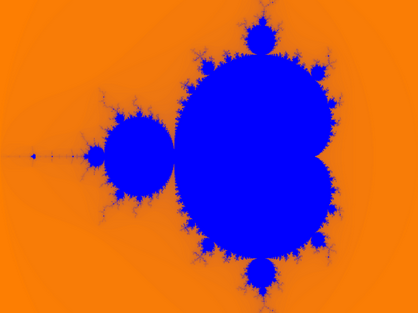
Figure 1 – Mandelbrot fractal: a visual representation of the self-repeating patterns in nature.
Multiple theories and interpretations of hallucinations
Psychedelic experiences are interpreted by people in diverse ways. Some view hallucinations as an entry point to other dimensions, energy fields, or the divine. Others—such as the author of the accompanying text—consider hallucinations as products of a conditioned brain that uses ancient knowledge and evolutionary patterns to structure chaos. These positions need not be mutually exclusive: the meaning you attribute to an experience depends on your background, your mindset and setting, and the cultural context. What all theories share is the recognition that psychedelics can broaden your perspective and teach you that the reality you experience is always an interpretation.
What we can learn
Psychedelics do not solve the hard problem—no theory does. Models such as Integrated Information Theory, Global Workspace Theory, and the predictive processing framework offer important insights but leave questions unanswered. Yet research into psilocybin shows that the brain is less fixed than ever thought and that the patterns that determine how we see and think can be temporarily let go. The experience of ego dissolution—in which the boundaries of the self fall away yet a kind of presence remains—emphasizes what Metzinger called “Being No One”: the self is not a thing but a model that the brain constructs for practical purposes. If that model is briefly switched off, pure experience remains—an echo of the hard problem.
Practical implications
The clinical applications of psychedelics are still in their infancy. Protocols emphasize the importance of set and setting, and of professional guidance during and after the session. Integration conversations help participants give meaning to their experiences and anchor new patterns in their lives. Research suggests that psilocybin is most effective when combined with psychological support and when the experiences are viewed as opportunities for growth, not as miracle cures.
Conclusion
Mary’s story shows that a gap exists between objective description and subjective experience. Neuroscientific research reveals that our brains do not register reality but predict it; the DMN directs an internal narrative that shapes our identity. Psychedelics such as psilocybin can temporarily disrupt this narrative, increase entropy, and break old patterns. They offer an empirical window into how the brain constructs its own reality and how fragile the sense of a “self” actually is. Yet the hard problem remains: why does it feel bad at all to be a brain? Perhaps psilocybin does not show us a solution, but it does show that the boundaries of our consciousness and our self-images are less absolute than we think.
Sources used
- Chalmers, D. J. (1995). Facing up to the problem of consciousness.
- Jackson, F. (1982). Epiphenomenal qualia.
- Dennett, D.C. (1991). Consciousness Explained.
- Carhart‑Harris, RL et al. (2012). Neural correlates of the psychedelic state as determined by fMRI studies with psilocybin.
- Carhart‑Harris, R.L. (2014). The entropic brain.
- Carhart‑Harris, R. & Friston, K. (2019). REBUS and the anarchic brain.
- MacLean, KA et al. (2011). Mystical experiences occasioned by psilocybin lead to increases in openness.
- Lutz, A., Thompson, E. & Varela, F.. The embodied mind and neurophenomenology.
- Science News Explores. “Fractals describe patterns hidden all around us”.
- What are psychedelic hallucinations? Triptherapie
Posted : 15 April 2026 16:08