
Topic starter
There is a new scientific article appeared that examines whether psilocybin-assisted therapy can help cocaine addiction. This is the first randomised clinical trial of psilocybin in cocaine use disorder, a condition for which there are still no approved drugs.
What were the researchers investigating?
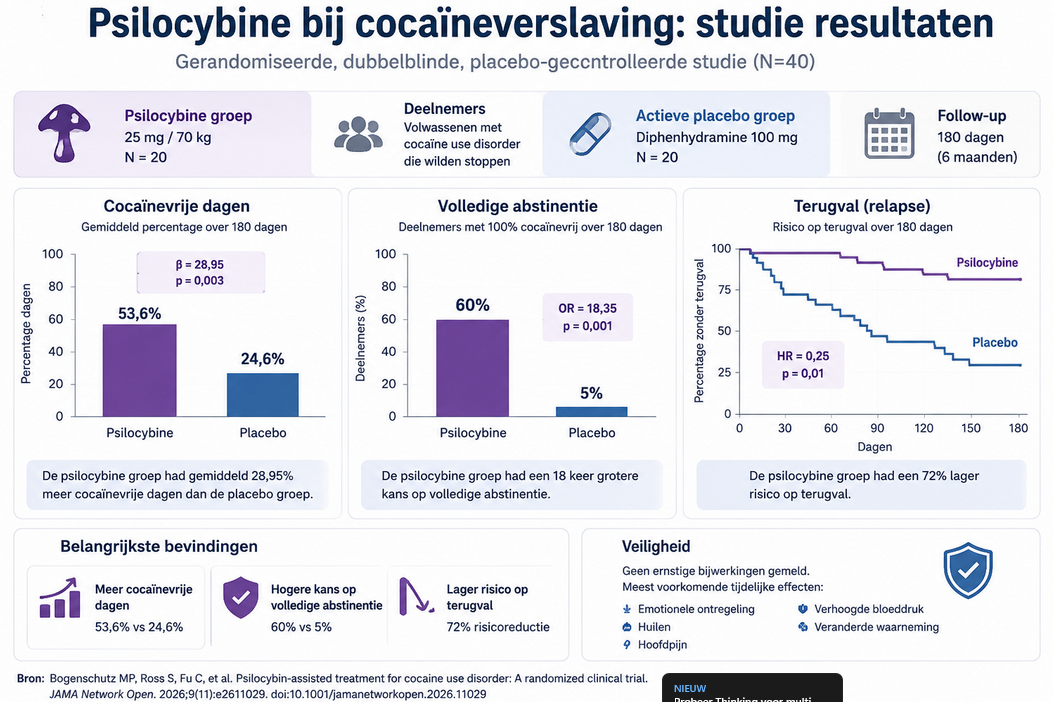
The study was conducted at the University of Alabama at Birmingham and included 40 adults with cocaine addiction who wanted to quit. All participants received a comprehensive psychotherapy course with cognitive behavioural therapy before and after a full session day. One group then received a high dose of psilocybin of 25 mg per 70 kg body weight, while the control group received an active placebo, namely 100 mg of diphenhydramine. The study was randomised, placebo-controlled and even quadruple-blind design.
The results were remarkably strong
The group that received psilocybin showed significantly better results than the placebo group. Participants who received psilocybin had a much higher percentage of cocaine-free days during the 180-day follow-up period. In addition, they were significantly more likely to be completely abstinent and the risk of relapse was much lower.
The researchers reported:
- significantly more cocaine-free days with a β of 28.95
- an approximately 18 times greater chance of complete abstinence
- a 72% lower risk of relapse over time
These differences were statistically significant.
Also important: the target audience
What makes this study extra interesting is that many participants came from groups normally underrepresented in psychedelic research. About 83% of the participants were black and 65% had an annual income of $20,000 or lower. This makes this study different from many previous psychedelic trials that examined mostly highly educated participants with higher socioeconomic status.
No serious side effects
No serious side effects were reported. However, temporary effects such as emotional dysregulation, crying, headache, increased blood pressure and altered perception during or shortly after the session did occur. This fits with previous psilocybin studies.
Important nuance
Despite the strong results, both the researchers and the accompanying commentary emphasise that this is still a relatively small pilot study. There were only 40 participants and the psychotherapy component was intensive. In addition, blinding remained difficult, as many participants could correctly guess whether they had received psilocybin.
It is also still unclear to what extent these results are generalisable to people with severe psychiatric comorbidity, as people with active depression, anxiety disorders or other psychiatric conditions were largely excluded.
Why this research is important
Cocaine addiction remains a major problem for which there are hardly any effective drug treatments. The results of this study are therefore remarkably strong, especially since a single psilocybin session together with therapy already showed such long-lasting effects.
The treatment consisted not only of psilocybin, but a full therapeutic course of several weeks. This shows that psychological support can provide additional effect.
In one sentence
This first randomised study suggests that psilocybin-assisted therapy may be highly effective in cocaine addiction, but larger and more rigorous follow-up studies remain necessary.
Posted : 11 May 2026 09:58