14 November 2024 15:51
Topic starter
0

What is 3-MMC? What does it do to you?
3 Answers
1
13 October 2025 17:24

3-MMC, also known as 3-Methylmethcathinone, is a synthetic stimulant belonging to the cathinone class. It is chemically related to other cathinones, such as mephedrone and 4-MMC (also known as mephedrone). 3-MMC is often sold as a "research chemical" and has psychoactive effects similar to those of other stimulants, such as amphetamines.
However, the specific effects of 3-MMC can vary depending on factors such as the dose, the purity of the substance, and individual sensitivity. In general, 3-MMC is known for causing increased alertness, energy, euphoria, and reduced appetite. Some users also experience increased social interaction, heightened empathy, and an improved mood.
It is important to note that 3-MMC carries a potential risk of side effects and health risks. As it is a stimulant, the use of 3-MMC can lead to cardiovascular problems, such as increased blood pressure and heart rate. It can also lead to overheating, dehydration, and sleep problems. Prolonged or frequent use can lead to tolerance, dependence, and addiction.
Moreover, limited scientific information is available regarding the pharmacological properties and safety of 3-MMC, as it is a relatively new substance. There is a lack of rigorous research into the long-term effects and toxicity of 3-MMC in human use.
For therapeutic sessions, we never use 3-MMC because there are other substances that are safer and work better, such as MDMA and the analogues of this. Are you curious about a MDMA session? Then check out this page:
1
13 October 2025 17:51

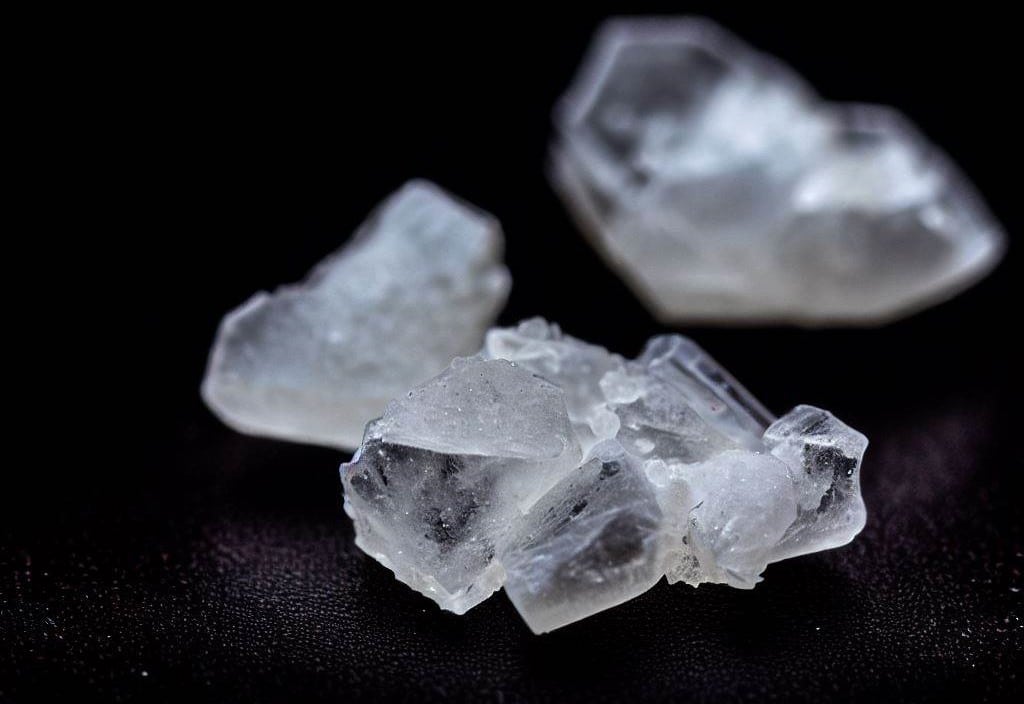
3-MMC, also known as 3-methylmethcathinone or street names such as “cat” and “"Meow"”, is a synthetic cathinon-drug from the amphetamine family. It is a so-called new psychoactive substance (NPS) that emerged around 2012 as an alternative to the then-banned variant 4-MMC (mephedrone). 3-MMC usually appears as a white crystalline powder or in crystalline form. and is sold as a designer drug. Below, we discuss in turn the chemical properties and effects of 3-MMC, the health risks, any (absent) medical use, and experiences from clinical practice.
1. Chemical information
Figure: 3-MMC is usually sold as a white powder or crystals. After the ban, the substance is often contaminated with other cathinones..
Chemical structure and formula: 3-MMC belongs to the synthetic cathinones – these are β-ketone derivatives of amphetamines, related to cathinone (the active ingredient in khat). The empirical formula of 3-MMC is C_11H_15NO and the molecular mass ~177.3 g/mol. Chemically, 3-MMC is a structural isomer of mephedrone (4-MMC): the only difference is that in 3-MMC, the methyl group is located at the 3-position of the benzene ring instead of the 4-position. Due to this nearly identical structure, the properties of 3-MMC and 4-MMC are very similar. For instance, 3-MMC is explicitly developed and sold as a replacement for 4-MMC following its ban in the EU.
Mechanism of action in the brain: Like other stimulant cathinones, 3-MMC acts on the monoamines (dopamine, norepinephrine, and serotonin) in the brain. The substance blocks re-uptake of particularly dopamine and noradrenaline (via the DAT and NET transporters) and, to a lesser extent, serotonin. This increases the availability of especially dopamine and noradrenaline in the synapse, which leads to stimulating effects. Additionally, at higher concentrations, 3-MMC acts as a releaser: it therefore promotes the delivery of dopamine, noradrenaline, and serotonin from neurons. Compared to 4-MMC, 3-MMC appears to be slightly more selective for dopamine/noradrenaline release and less strong on serotonin. This means that 3-MMC relatively more stimulating (amphetamine-like) has effects and slightly fewer entactogenic (empathic) effects than 4-MMC or MDMA. Furthermore, in vitro research shows that both 3-MMC and 4-MMC also bind to some receptors (such as 5-HT2A/C and adrenergic receptors); notably, 4-MMC can activate the 5-HT2A serotonin receptor, whereas 3-MMC does not. not does. Broadly speaking, however, the pharmacological profile of 3-MMC is comparable to that of 4-MMC, which implies that the effects and risks are expected to correspond.
2. Risks and health consequences
Acute health risks: Use of 3-MMC brings various immediate dangers entails. Common acute side effects include accelerated heart rate, high blood pressure, palpitations, elevated body temperature (overheating), sweated heavily and a dry mouth. Also muscle tension (for example, jaw clenching or teeth grinding) occurs. Mental side effects during intoxication may include: restlessness, panic attacks, anxiety or paranoid thoughts, and in rare cases even hallucinations or a psychosis. At high doses, serious medical complications may occur, including epileptic seizures, cardiac arrhythmias (and in some cases acute heart failure) or a stroke. An overdose can be life-threatening; multiple deaths have been reported in Europe in which 3-MMC (often in combination with other drugs) played a role. For instance, up to early 2022, at least 27 fatal incidents involving 3-MMC were reported (some of which occurred in the Netherlands), in addition to hundreds of non-fatal intoxications.
Chronic effects and addiction potential: Because 3-MMC has only recently come onto the market, the long-term effects have not yet been extensively scientifically studied. Nevertheless, there are clear signs of a high addiction potential. 3-MMC causes strong craving (urge to repeat) even during use. Due to this urge, users often continue to redose and stay awake longer than intended. With frequent use, tolerance increases, meaning that more and more is needed for the same effect. As a result, side effects can worsen and the risk of exhaustion or complications increases. Some experts estimate that 3-MMC can be at least as addictive as cocaine. Psychological consequences after frequent or high-threshold use may include: deep gloominess or depression, serious anxiety symptoms and irritability in the days afterward (a “Tuesday slump” similar to that after ecstasy, although the precise neurochemical profile is different). In a few cases, users have been reported to feel so depressed afterwards that suicidal thoughts or even attempts occurred. Physically, chronic intensive use can lead to exhaustion, weight loss (due to suppressed appetite) and possible cardiovascular damage or neurotoxicity, although there is still little hard data on this.
Uncertainty and adulthood: Because 3-MMC is a relatively new drug, experts warn that not all risks are yet known – “many risks only become clear later”. Moreover, since the ban, the composition of “3-MMC” offered on the street has become unreliable. Tests show that the vast majority of samples sold as 3-MMC actually contain other substances or mixtures. Chemically similar substances are often used as 2-MMC or 3-CMC (chlorine analogues) found as contamination or substitute. This increases the risks, as users may experience unpredictable (sometimes more dangerous) effects than expected. The general consensus among health authorities is therefore that any consumption of 3-MMC entails risks, and that failure to use is the only way to completely avoid risks.
3. Medical use
3-MMC has no legitimate applications in medicine. The substance has never been registered as a medicine and is not used in the medical or pharmaceutical industry. Unlike some other stimulants (such as amphetamines for ADHD or cathine in some weight-loss products), 3-MMC is purely a recreational designer drug. Historically or experimentally, there have been no known attempts to use 3-MMC therapeutically – partly due to the lack of research and the unfavorable risk profile (highly addictive and neurotoxic potential). Official medical authorities have assessed 3-MMC as a substance without medical value but with a significant danger to health. For example, the Assessment and Monitoring Coordination Point (CAM) concluded in 2021 that 3-MMC poses a risk to public health, which has led to stricter regulation. In the Netherlands, as of October 28, 2021, 3-MMC is List II of the Opium Act placed, making its manufacture, trade, and possession punishable. Addiction care and health organizations (such as the Trimbos Institute and addiction clinics) actively warn against 3-MMC and strongly advise against its use, given the absence of any health benefit and the significant risks.
4. User experiences
Positive effects according to users: Despite the risks, 3-MMC is found attractive by users for its stimulating and entactogenic effects. Many recreational users describe 3-MMC's effects as a cross between MDMA (Ecstasy) and cocaine. The drug can produce mild euphoria and feelings of empathy reminiscent of a lighter version of MDMA, combined with the energy and talkativeness of cocaine. Specifically, users often experience:
-
Euphoria and cheerfulness: a greatly improved mood and a blissful, cheerful feeling. One feels sociable, gets urge to talk and seek contact with others, and music is experienced more intensely.
-
Increased self-confidence and fewer inhibitions: Anxiety or social inhibition decreases, making one feel freer to dance, talk, or approach others. This is sometimes accompanied by increased libido/desire for sex, causing some to perceive the substance as erotic.
-
Energy and alertness: Fatigue and sleepiness fade into the background. Users feel physically energetic and mentally clear, making it popular for parties or long nights out. Appetite also decreases significantly (comparable to other stimulants), allowing one to stay active longer without feeling hungry.
Negative experiences during use: In addition to the desired effects, unwanted effects often occur – especially at higher dosages. During or shortly after use, users report, among other things:
-
Physical side effects: An hard pounding heart, elevated blood pressure and sometimes chest pain. One may sweat profusely and the very warm get (overheating). Dry mouth, Dilated pupils and tense muscles (for example, a tight jaw, teeth grinding) are common. Nausea and headaches also occur, especially with prolonged continuous drug use.
-
Restlessness and insomnia: many users feel nervous or restless. It is difficult to sit still or relax. Additionally, one cannot sleep at night due to the stimulating effect, which leads to exhaustion as the effect wears off.
-
Anxiety, irritability and gloom: during the elaboration can anxious or paranoid thoughts arise – one feels watched or threatened without provocation. One also becomes easily irritated. In some cases, acute panic attacks or confusion (psychotic symptoms) reported at high doses. Afterwards, many users feel empty, gloomy, or emotionally unstable for a while (the comedown or hangover).
-
Strong urge to take more: one of the most striking negative experiences is the uncontrollable craving. During the party or session, users often feel a strong urge to take another line or dose of 3-MMC as soon as the effects wear off slightly. This can lead to binges where someone uses multiple times in a row and consumes much more than planned. Users describe it as difficult to “put the bag down” once they have started.
Methods of use and differences in experience: 3-MMC can be taken in various ways, which affects the experience:
-
Sniffing (insuffluffing): This is the most common route of administration. With nasal use, one notices after 5–15 minutes effect, but the operating time is relatively short, about 2–4 hours. Snorting provides a quick, strong “rush,” but also a sharper aftertaste and often a stronger craving. Due to the rapid peak, users often take another line sooner when snorting.
-
Swallowing (oral): If swallowed (for example via a bomb or capsule), it takes 15–60 minutes before the effects are clearly noticeable, but they do last. 4–6 hours on. Oral intake results in a more gradual onset and sometimes a slightly less intense peak. Users often report a slightly milder experience when swallowing, with less of an urge to take more, than when snorting.
-
Inject (inject): This is rare, but a small group “slams” 3-MMC intravenously. The effects then occur almost immediately The effects are high and very intense, but little is known about the duration and safety of this administration. Injecting 3-MMC is considered extremely risky (due to, among other things, overdose and the risk of infection) and is therefore strongly discouraged in harm-reduction circles.
The table below summarizes the differences:
| Method of administration | Rise of effect | Duration of effect |
|---|---|---|
| Snorting (nose) | approx. 5–15 minutes | approx. 2–4 hours |
| Swallow (oral) | approx. 15–60 minutes | approx. 4–6 hours |
| Inject (IV) | almost immediately | (unknown / shorter) |
Usage patterns and context: 3-MMC is often recreational used in nightlife settings. The typical user is young (teenager/young adult) and takes 3-MMC, for example, at parties, in clubs/festivals, or at house parties with friends. The substance has become very popular among young people going out in the Netherlands in recent years; studies show a sharp increase in the percentage of users in the nightlife scene. For example, in 2023, approximately one in three surveyed clubbers admitted to having used 3-MMC at some point – a large increase compared to a few years earlier. It is striking that some of the users use it very frequently: approximately 5% of 3-MMC users take it weekly, a high proportion compared to other party drugs. Moreover, use is often accompanied by repeated dosing on one evening: more than half of the clubbers who take 3-MMC, reports multiple “lines” or doses per session (often 3 or more). This binge-like usage is associated with the aforementioned craving and can lead to prolonged stay-at-home sessions. Some users even describe 3-MMC as “a stealth assassin” because of how quickly and unnoticed an addiction can develop, whereby one soon loses control and continues to use.
User experiences range from very positive (“Nice and energetic and social, fantastic at a party”) to extremely negative (“terrible hangover, depressed for days”In summary, 3-MMC offers some recreational users temporary euphoria and a sense of connection, but these benefits are accompanied by significant acute side effects and a risk of addiction and severe crashes afterward. Both the medical community and experienced users therefore emphasize the importance of caution—or better yet, abstinence—regarding 3-MMC, given the unpredictability and dangers of this relatively new drug.
0
31 October 2025 20:50

3-MMC is a synthetic cathinone that is chemically classified as a β-ketone derivative of amphetamine. This means that, in terms of molecular structure, it is related to khat but much more potent. The molecular formula is C11H15NO, and it usually exists as a white powder or crystal form. Important to note: 3-MMC is virtually identical to 4-MMC (mephedrone), with only a difference in the position of a methyl group on the benzene ring. This is why it was introduced commercially as a 'replacement' after the ban on 4-MMC.
Mechanism of action in the brain
In your brain, 3-MMC acts primarily on monoamines, particularly dopamine and noradrenaline. It blocks their reuptake into the synapse, causing these neurotransmitters to remain active longer and accumulate. At higher concentrations, 3-MMC also increases the release of dopamine and serotonin. This explains why users experience both stimulating effects (energy, alertness) and entactogenic effects (warmth, empathy) – although the stimulation likely predominates compared to MDMA or XTC.
Effects reported by users
To put it more positively: many people feel euphoric, social, and energetic. They experience fewer inhibitions, more self-confidence, and can stay active for hours without fatigue. Some describe it as a cross between cocaine (the energy) and MDMA (the social warmth).
On the other hand, physical side effects appear quite quickly: your heart starts pounding harder, your blood pressure rises, you sweat excessively, and your mouth becomes dry. Many users experience muscle tension, jaw clenching, and teeth grinding. Psychologically, restlessness, anxiety, and paranoia can occur, especially at higher doses. One of the most striking negatives is the extremely strong craving: while you are still using it, you already want to repeat. This leads people to redose much sooner than planned.
Short- and long-term risks
Acutely, there are risks of cardiac arrhythmias, epileptic seizures, strokes, and states of overheating. Several deaths have been reported in Europe. The comedown is also intense: many users feel very depressed, anxious, and exhausted in the following days. The addiction potential appears comparable to cocaine – it is not just a party drug, but something with a real risk of physical and psychological dependence. Chronic users report weight loss, exhaustion, and deep depressive episodes. Finally, because 3-MMC has only been circulating since 2012, the true long-term effects are not yet fully understood. What we see happens primarily through user experiences and warning signs from healthcare providers.
Advice
The strongest advice is simply to avoid it. But realistically: if you have already used it, make sure you are not alone, drink plenty of water, monitor your body temperature, and try to limit yourself before the urge strikes. After use: take good care of yourself in the following days, eat well, get some exercise, and sleep. If you notice that you are craving it more and more, seek professional help.