
Topic starter
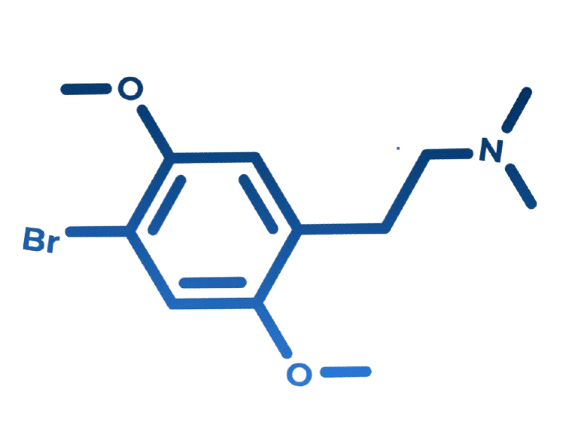
A new study in Molecular Psychiatry used 7 Tesla fMRI to investigate how 2C-B and psilocybin influence the functional organisation of the brain. Both psychedelics reduced the cohesion within certain brain networks whilst increasing the connections between networks. The complexity of brain signals also increased. The study shows that 2C-B resembles classic psychedelics such as psilocybin in some respects, but also has its own distinct profile. This is not a treatment study, but rather fundamental brain research involving healthy volunteers.
2C-B and psilocybin under the brain scanner
A new publication in Molecular Psychiatry investigated what happens in the brain following administration of 2C-B and psilocybin. The study was published on 3 February 2026 and is entitled Spatiotemporal mapping of brain organisation following the administration of 2C-B and psilocybin. The study is interesting because 2C-B has been much less thoroughly researched than psilocybin, even though it belongs to the class of psychedelic phenethylamines and may, in terms of subjective effects, overlap to some extent with classic psychedelics.
The researchers used 7 Tesla resting-state fMRI to compare the acute effects of 20 mg of 2C-B, 15 mg of psilocybin and a placebo. This was a double-blind, randomised, placebo-controlled crossover study involving healthy volunteers. A total of 22 participants took part, with 20 usable datasets ultimately obtained following quality control of the fMRI data.
What was the subject of the study?
The researchers did not look at therapeutic effects, but at brain organisation. Among other things, they investigated static functional connectivity, dynamic functional connectivity, global connectivity and the complexity of spontaneous brain signals. These are technical measures that allow you to see how stable, flexible, separate or, conversely, integrated brain networks function at any given moment
A key objective was to determine whether 2C-B exhibits effects on the brain consistent with those of classical psychedelics, and whether differences between 2C-B and psilocybin might be related to their pharmacological profiles. The study examined not only 5-HT₂A receptors, but also other serotonergic receptors and monoamine transporters such as DAT, SERT and NET
Key finding: less fragmentation within networks, greater connectivity between networks
Both psilocybin and 2C-B clearly altered the functional organisation of the brain compared with placebo. Both substances reduced connectivity within certain networks, particularly in visual networks and parts of the default mode network. At the same time, connections between networks and between subcortical and cortical areas increased. This is consistent with the idea that psychedelics temporarily loosen the normal boundaries between networks in the brain.
With psilocybin, some inter-network effects were broader and stronger than with 2C-B. 2C-B, by contrast, actually showed a greater increase in transmodal connectivity in some areas, such as connections between parts of the default mode network and the frontoparietal network. This suggests that the two substances do not simply have the same effect, but that each induces its own distinct spatial pattern in the brain.
Greater complexity in brain signals
A second key finding is that both 2C-B and psilocybin increased the complexity of spontaneous BOLD signals. This was observed, amongst other places, in visual and thalamic regions. The researchers found no clear difference between 2C-B and psilocybin on this measure.
This is relevant because increased signal complexity is often cited as a characteristic of psychedelic states. It does not automatically mean that the brain is functioning “better”, but it does mean that the normal predictability of brain signals is temporarily altered. Put simply: the brain appears, for a time, to function less rigidly within its usual patterns.
Psilocybin produced more dysphoria or intense subjective effects
The researchers attempted to determine the doses of 2C-B and psilocybin to make them comparable in terms of psychoactive potency. At the time of the fMRI scan, the real-time intensity measurements were comparable. Nevertheless, participants subsequently reported more general altered-state effects and more anxiety-inducing ego dissolution under the influence of psilocybin than under 2C-B.
This supports the idea that two psychedelics can feel different even when their acute intensity is comparable. This is important for future research, as tolerance, emotional distress and subjective intensity can all play a part in determining a substance’s suitability for use in a supervised setting.

The pharmacological profile appears to play a part in determining where the brain changes
An interesting aspect of this study is that the researchers compared the fMRI results with PET maps of receptor and transporter density. They found that changes in dynamic connectivity for both substances were spatially correlated with 5-HT₂A receptor density. At the same time, they observed that differences between 2C-B and psilocybin were also associated with other systems, including 5-HT₁A and DAT.
This is in line with a broader trend in psychedelic research: 5-HT₂A is not the only important factor. Differences between substances may also arise from interactions with other serotonergic, dopaminergic and noradrenergic systems. As a result, different psychedelics may each have their own neurobiological profile, even if they are all experienced as “psychedelic”.
Why this research is important
This study shows that 2C-B may be of scientific use in gaining a better understanding of how different psychedelics affect the brain. 2C-B exhibited properties similar to those of classic psychedelics, such as network desegregation and increased brain signal complexity. At the same time, 2C-B also exhibited patterns distinct from those of psilocybin.
This is relevant to psychedelic science because future applications may not simply revolve around “whether or not there is a psychedelic effect”, but rather around which substance has which profile. For example, some substances may have a shorter duration of action, feel subjectively less intense, or influence different neural network patterns. Whilst this study does not yet prove a clinical application, it does help us to understand the differences between substances.
Important limitations
The study had a small sample size. The researchers themselves state that a larger group is needed to detect differences between 2C-B and psilocybin more reliably. Non-significant differences should therefore not be interpreted as evidence that the two substances are the same.
A second limitation is that no reliable in vivo receptor occupancy data are yet available for 2C-B. Consequently, the pharmacological interpretations remain indirect. The researchers also point out that PET-based receptor maps primarily show spatial overlap and do not automatically prove that a particular receptor or transporter system is causally responsible for the effect.
Furthermore, it remains difficult to compare psychedelics fairly with one another. The experience, duration, intensity and pharmacology differ from one substance to another. Comparing a single dose of 2C-B with a single dose of psilocybin is scientifically valuable, but it remains an approximation.
Conclusion
This study shows that 2C-B and psilocybin both cause acute changes in the functional organisation of the brain. Both substances temporarily reduce the usual separation within certain brain networks, increase connections between networks and enhance the complexity of brain signals. At the same time, the patterns are not identical. In this study, psilocybin appears to induce broader network changes in some respects, whilst 2C-B exhibits a distinct profile that may be related to different pharmacological mechanisms of action.
The correct conclusion is therefore: this is not a treatment trial and does not provide evidence for the therapeutic use of 2C-B, but it is an important neuroscientific study that shows that different psychedelics can have both similar and substance-specific effects on brain networks.
Posted : 21 May 2026 15:01